Endangered
Poecilotheria formosa
Poecilotheria formosa
The Salem ornamental (Poecilotheria formosa) is a large tree-dwelling tarantula from the Eastern Ghats of southern India. The IUCN Red List assessed it as Endangered in 2008, citing a tiny, shrinking range. It is a hobbyist favourite, and collection for the pet trade adds to the pressure.
How to recognise it
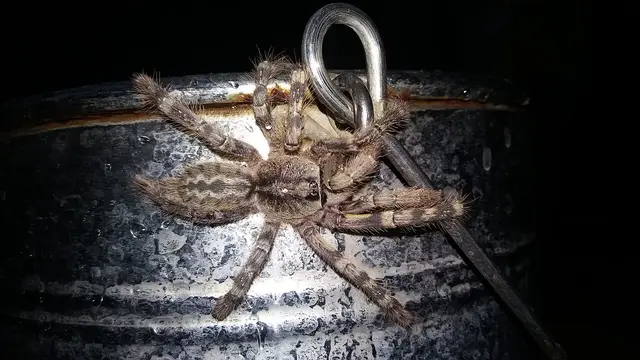
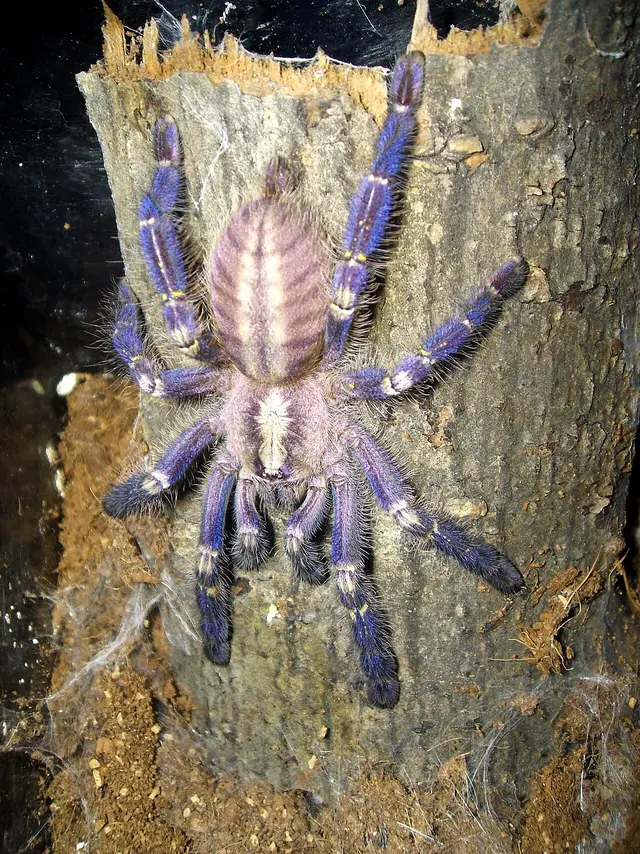
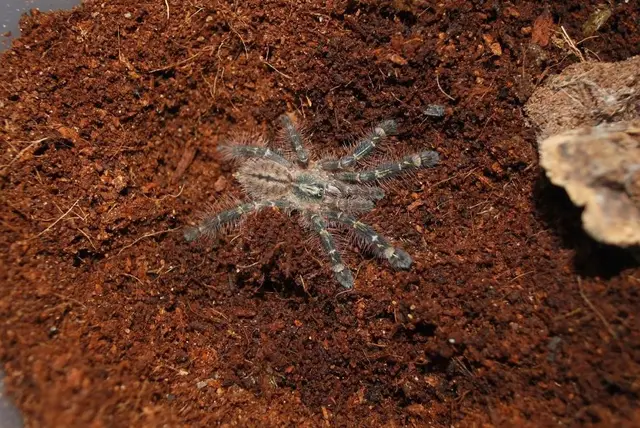
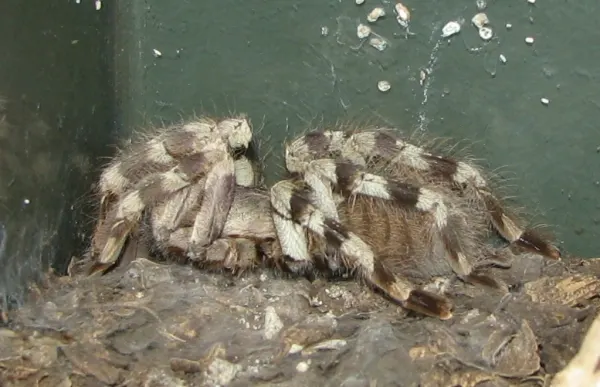
Keepers describe a spider with a black and white pattern and a purple sheen, with pale yellow undersides to the legs. A hobbyist guide says adults can reach up to about 8 inches (20 centimetres), a loose figure rather than a field measurement.
Reginald Pocock described it in 1899. Its common names include beautiful parachute spider.
Where it lives
India's southern Eastern Ghats are its only home. The IUCN lists Tamil Nadu and Andhra Pradesh, with an estimated extent of occurrence of up to 5,000 square kilometres and an area of occupancy of up to 500 square kilometres, at elevations up to 1,000 metres.
It uses moist and dry forest, and the assessment also records marginal use of plantations and heavily degraded former forest. A 2026 article from the Wildlife Conservation Trust says records come from only a handful of sites, all in degraded forest, and that it has not been found again at the places where it was first collected.
Pins are Wikidata “endemic to” fields. Orange dots, when present, are GBIF occurrence tiles — survey bias included.
How it lives
It is arboreal and nocturnal, hiding in tree hollows, under bark and in crevices by day, and ambushing prey rather than catching it in a web. It prefers to live and breed in the hollows of Albizia amara trees.
Researcher Gautam Kadam has observed that, unlike many tarantulas, it can live in groups, with a mature female sharing a cavity with her young, sometimes even into adulthood. He has also seen it share hollows with snails and cat snakes. Keepers rate it as fast and defensive, with a painful bite. A keeper guide gives females up to about 15 years and males about 4.
Why it is in trouble
The IUCN lists targeted collection for the pet trade, persecution, and housing development, and records a decreasing population trend. The Wildlife Conservation Trust adds logging, forest fires, firewood gathering and cattle grazing, and says the spider has probably already vanished from many places.
Reportedly it is listed in CITES Appendix II. Because it is kept as a pet, the rules for keeping tarantulas are covered in our guide to exotic pet laws at /exotic-pet-laws-by-state/.
What is being done
India protects it under Schedule II of its Wildlife (Protection) Act, one of only eight tarantula species with that cover, according to the Wildlife Conservation Trust. A project supported by the trust in 2024 and 2025 studies its ecology, taxonomy and local trade, and aims to work with the Forest Department toward small reserves. The IUCN notes it does not occur in any protected area and lists trade management and captive breeding among actions needed.
Sources
Written for this catalog in our own words from the sources below, checked against them on 12 November 2026. Population figures are estimates and carry the year they were made. Status and assessment year: IUCN. 2026. The IUCN Red List of Threatened Species. Version 2026-1. iucnredlist.org.