Endangered
Carmelita de Concepción
Percilia irwini
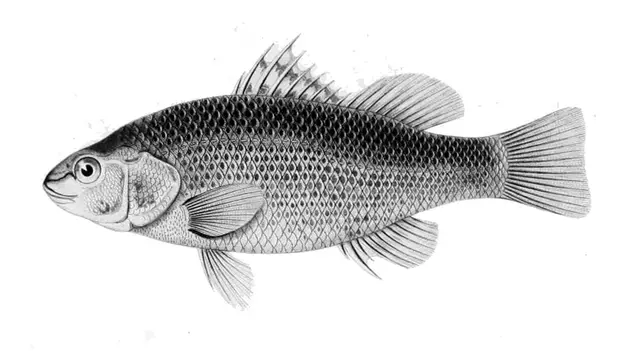
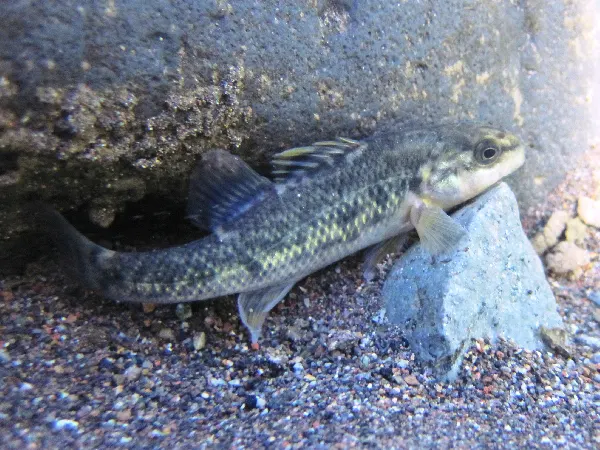
The carmelita de Concepción (Percilia irwini) is a small freshwater fish found only in the Biobío and Andalién river basins of central Chile. It rarely grows beyond about 10 cm. The IUCN Red List assessed it as Endangered in 2023, mainly because dams, pollution and introduced trout are hurting its populations.
What it is
The carmelita is a small perch-like fish that Carl Eigenmann described in 1928. The genus name comes from the Greek word for perch, and the species honours William Glanton Irwin, an Indiana philanthropist who funded an expedition to Chile and Peru. It sits in the order Centrarchiformes, alongside the temperate basses and perches.
The largest recorded fish measured 9.6 cm, and the oldest reported age is about 4 years. During the breeding season both sexes show bright orange colour on the body and fins.
Where it lives
This fish is found only in Chile, in the Biobío and Andalién basins. It lives in flowing rivers, often in rapids and riffles over rocky bottoms, and uses shallow margins less than 1 m deep. Juveniles stay in very shallow nursery areas, under 30 cm deep. Numbers are low in the headwaters and higher in the middle and lower reaches.
It currently occupies about 1,219 km of river network, according to a 2020 estimate cited by the IUCN.
Pins are Wikidata “endemic to” fields. Orange dots, when present, are GBIF occurrence tiles — survey bias included.
How it lives
It feeds on the bottom, mainly on the larvae of aquatic insects and on small molluscs. Spawning condition peaks from August to November, in late winter and spring. The IUCN gives a generation length of about 2 years, so populations turn over quickly, which also means damage shows up fast.
Why it is in trouble
Both river basins are among the most heavily altered in Chile. Dams, water extraction and contamination have cut its numbers, and studies cited by the IUCN recorded declines of two to four times after hydropower dams were built in the late 1990s and early 2000s. More dams are planned.
A genetic study of the whole Biobío basin by Valenzuela-Aguayo and colleagues found eight distinct population units. Both natural waterfalls and dams shaped how the populations differ, and fish had disappeared from two river stretches boxed in by dams upstream and downstream. The study concluded that the species is highly vulnerable to planned dam building.
Introduced brown and rainbow trout prey on it, and climate change is expected to add pressure. The IUCN also lists farm and sewage run-off, pesticides, sediment and drought. Its population is judged to be decreasing, and a 50 percent decline over 10 years is suspected.
What is being done
Chile has classed the carmelita as Endangered nationally since 1998, but the IUCN says no formal conservation actions or species recovery plan exist. There are no management and monitoring plans outside national parks and reserves, and published work on its basic biology is scarce.
Its assessment history shows how little was known: it was rated Endangered in 1994, moved to Data Deficient in 1996, and returned to Endangered in 2023.
Sources
Written for this catalog in our own words from the sources below, checked against them on 12 November 2026. Population figures are estimates and carry the year they were made. Status and assessment year: IUCN. 2026. The IUCN Red List of Threatened Species. Version 2026-1. iucnredlist.org.