Endangered
Percilia gillissi
Percilia gillissi
The carmelita (Percilia gillissi) is a small freshwater fish found only in the rivers of central and southern Chile. It is listed as Endangered on the IUCN Red List (2023 assessment), and its numbers are falling as rivers are dammed, drained and polluted.
How to recognise it
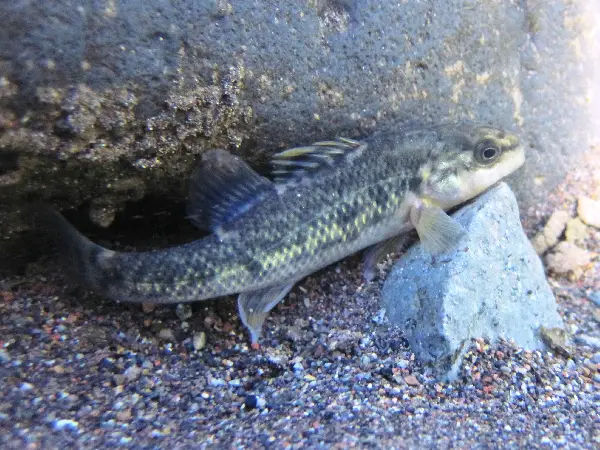
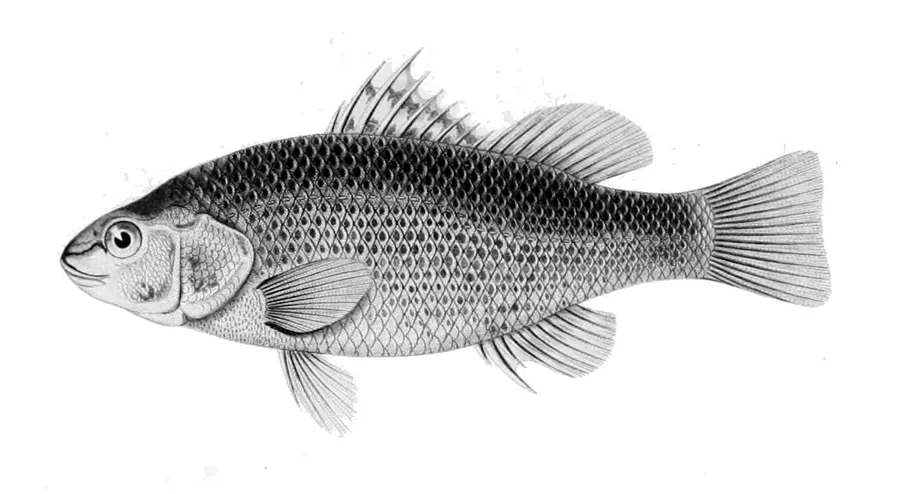
This is a tiny stream fish, usually under 6 cm long, with a recorded maximum of about 9 cm.
Most fish are grey with faint spots and dark bands that show best on the tail and its base, and the belly is white. Greenish and orange individuals have also turned up.
Where it lives
The carmelita lives only in Chile, in rivers west of the Andes. Its range runs from the Aconcagua River basin (around 32 degrees south) to the Los Lagos Region (around 41 degrees south), with records reaching Lake Llanquihue. It favours cool, well-oxygenated, fast-flowing stretches, and the IUCN also lists permanent freshwater lakes among its habitats.
A close relative, Percilia irwini, lives in the neighbouring Biobio basin. The two mostly live apart, and living side by side has been reported only in the Andalien River basin. Records from the La Ligua and Mataquito basins still need confirming.
Pins are Wikidata “endemic to” fields. Orange dots, when present, are GBIF occurrence tiles — survey bias included.
How it lives
It feeds mainly on molluscs, insects and crustaceans. Its breeding is only partly known. Spawning starts in October, in the southern spring, and many young fish are seen in midsummer. Most mature before the next summer, so a generation is short (about 2 years, by the IUCN's estimate).
Why it is in trouble
The IUCN records a decreasing population and an ongoing decline in the area it occupies, and puts the reduction at about 50%. The threats it lists are mostly about water: soil erosion and silt, nutrient and pesticide runoff, sewage, drought, small and large dams, and the drawing of river and groundwater for homes, farms and businesses.
A 2024 study in Scientific Reports modelled the habitat of both Percilia species. Under a high-emissions scenario for 2050 to 2080, it projected a loss of up to 62% of suitable habitat for the carmelita, and 99% for P. irwini. It also found that both fish already live in fairly low-quality habitat.
What is being done
The species occurs in at least one protected area, and the IUCN notes some control or prevention of invasive species. There is no species recovery plan and no systematic monitoring scheme. Chile moved the species from Vulnerable to Endangered on its national list in 2011.
Sources
Written for this catalog in our own words from the sources below, checked against them on 12 November 2026. Population figures are estimates and carry the year they were made. Status and assessment year: IUCN. 2026. The IUCN Red List of Threatened Species. Version 2026-1. iucnredlist.org.
- IUCN Red List assessment, Percilia gillissi (2023)
- Climate change can disproportionately reduce habitats of stream fishes with restricted ranges in southern South America, Scientific Reports 2024
- Percilia gillissi, Spanish-language encyclopedia article
- Percilia gillissi, English-language encyclopedia article
- FishBase, Percilia gillissi