Endangered
Daisy’s Ricefish
Oryzias woworae
Daisy's ricefish (Oryzias woworae) is a small, brightly coloured freshwater fish from Muna Island, off the southeast coast of Sulawesi, Indonesia. Scientists described it only in 2010. The IUCN rated it Endangered in 2019 because it lives in very few streams that are being drained and fished.
How to recognise it
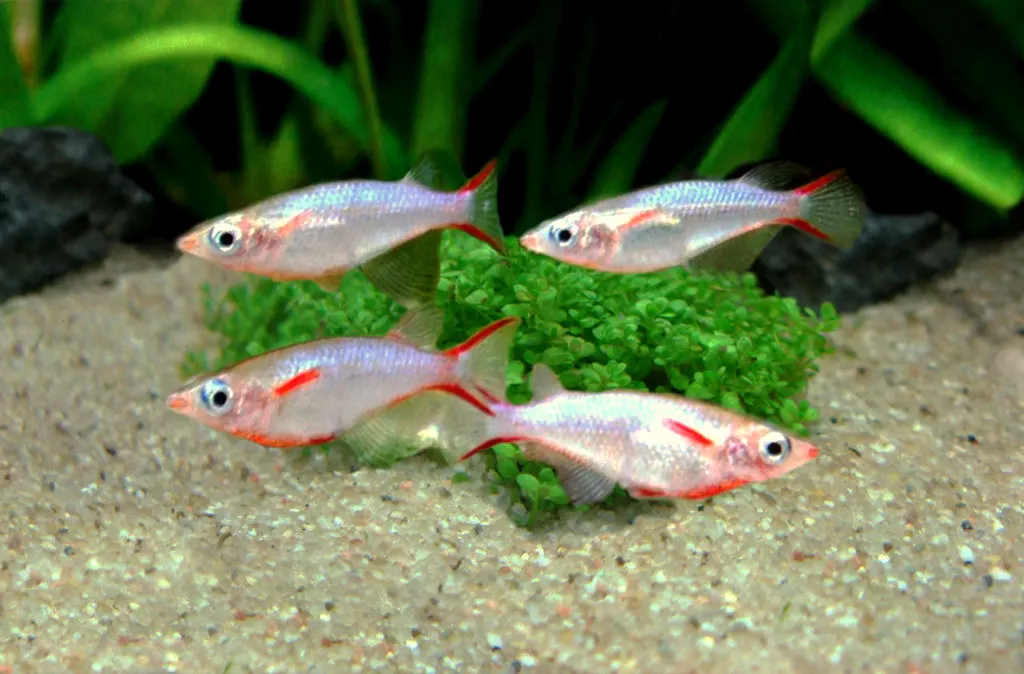
It is a very small fish. The largest specimen in the original description measured 28 mm without the tail fin. Males are steel blue, with bright red stripes along the belly and on the pectoral and tail fins. The tail fin has a squared-off edge.
Where it lives
The first specimens came from a stream at Wakumoro Village in the Parigi District of Muna, collected by the Indonesian crustacean specialist Daisy Wowor, whom the fish is named for. The stream was heavily shaded, about 80 percent canopy cover, with a bed of mud and sand covered in leaf litter and water of pH 6 to 7. The fish were schooling with a halfbeak of the genus Nomorhamphus.
The IUCN lists permanent streams as its habitat and counts four locations, with an extent of occurrence of about 52 square kilometres. FishBase records the type locality as the only known collection site. A 2023 genome study in Molecular Phylogenetics and Evolution found that ricefishes of this species group colonised Muna from Sulawesi more than once.
Pins are Wikidata “endemic to” fields. Orange dots, when present, are GBIF occurrence tiles — survey bias included.
How it lives
Almost nothing has been published about its life in the wild. Aquarists who keep a related population, sold as Oryzias cf. woworae, report that the female carries her eggs briefly after spawning and then attaches them to fine plants. Hatching takes two to three weeks at 22 to 30 °C, and the adults ignore the eggs. Fry swim near the surface right away and need very small foods.
Why it is in trouble
The IUCN reports a declining population, continuing loss of habitat and a continuing decline in its subpopulations, and records no protected area for it. The pressures it lists include the drawing of water from the streams and small-scale harvesting for use. Fish from Muna were already being caught and exported, at least to Taiwan, by the time a hobby magazine reported the description in 2010.
What is being done
The IUCN lists invasive species control, awareness campaigns and management at national and sub-national levels as the actions needed. The fish has been bred in aquariums since soon after its description, but no protection of the streams on Muna has been reported.
Sources
Written for this catalog in our own words from the sources below, checked against them on 12 November 2026. Population figures are estimates and carry the year they were made. Status and assessment year: IUCN. 2026. The IUCN Red List of Threatened Species. Version 2026-1. iucnredlist.org.




