Endangered
Magadi tilapia
Oreochromis grahami
The Lake Magadi tilapia (Magadi tilapia, listed by the IUCN as Oreochromis grahami) is a small cichlid that lives in the hot, soda-rich springs and lagoons of Lake Magadi in Kenya. The Red List rates it Endangered (2023 assessment). It is the only fish surviving in the lake.
How to recognise it
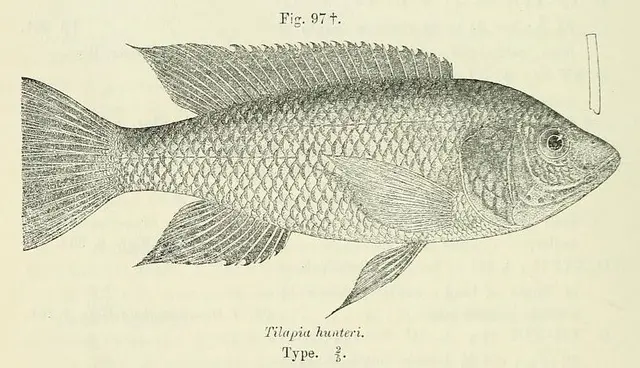
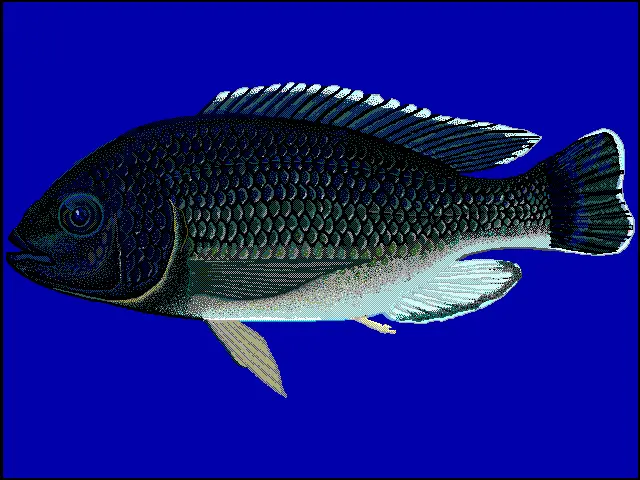
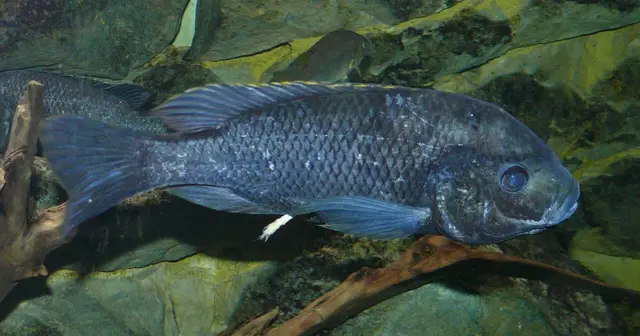
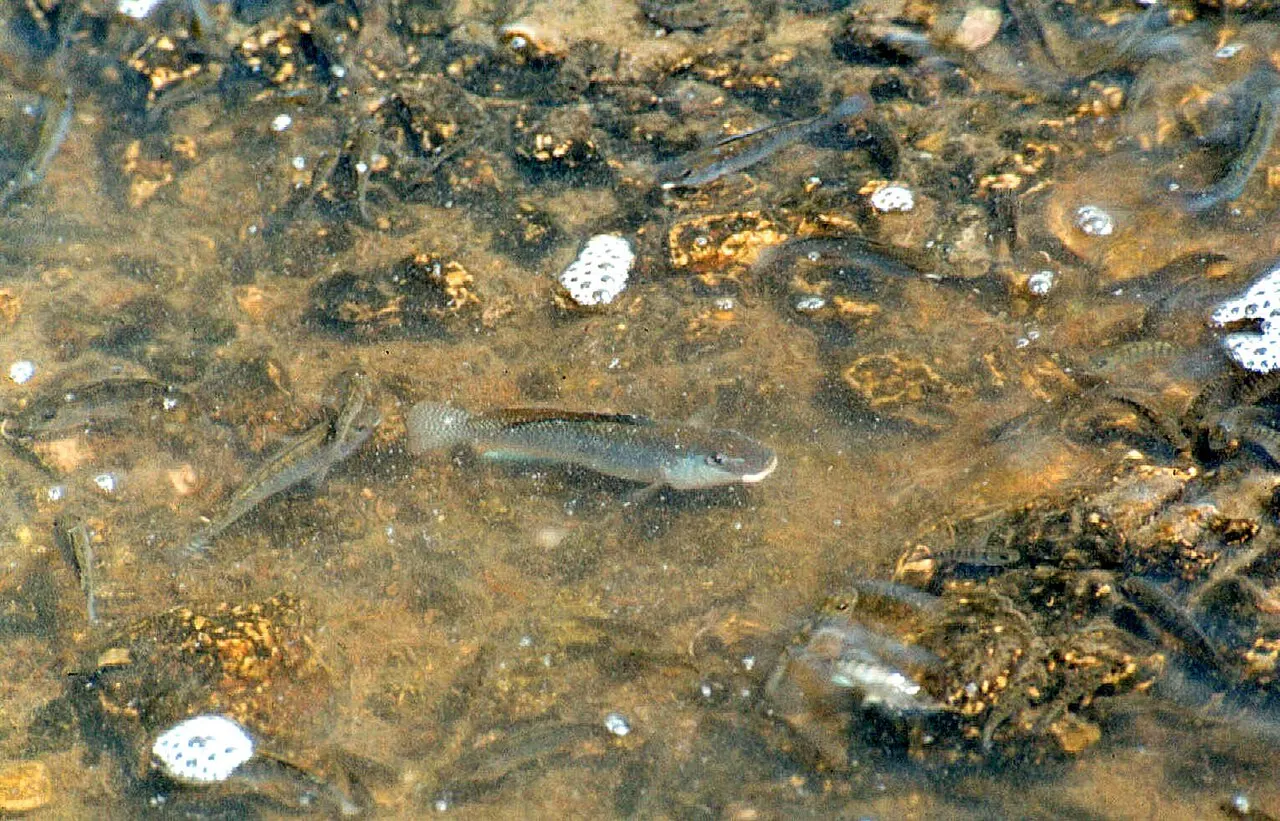
Mature females are golden, while males have pale blue flanks. Breeding males also show swollen white patches at the corners of the mouth, blue sparkles on the scales and a dark bar through the eye. FishBase gives a maximum length of 20 cm for males, though fish in the springs usually stay small and often look thin.
Where it lives
Lake Magadi sits in the Rift Valley of southern Kenya. It is one of the harshest water bodies on Earth, with a pH up to 10, very high alkalinity, and temperatures above 40 C at some sites. The tilapia lives in the springs and lagoons around the edge, where hot groundwater feeds the lake. The Red List counts a single location, with an extent of occurrence of about 959 square km and an area of occupancy of about 812 square km.
People moved the species to Lake Nakuru and Lake Elmenteita in Kenya. It was also reported as introduced to Lake Natron in Tanzania, but there is no evidence of a breeding population there, so Magadi remains the only natural home.
Pins are Wikidata “endemic to” fields. Orange dots, when present, are GBIF occurrence tiles — survey bias included.
How it lives
This fish has some unusual tricks. Unlike most freshwater bony fish, it excretes its nitrogen waste entirely as urea rather than ammonia, which is hard to shed at pH 10. Urea is costly to make, and so is keeping acid and salt balance, which a 2019 review of earlier work puts at 50 to 60% of routine metabolism. Its metabolic rate is 25 to 60% higher than in other tilapia at the same temperature. In springs near 41 C, it burns energy at a rate similar to a small mammal's.
It feeds mainly on cyanobacteria (blue-green algae) scraped from rocks, which made up about 90% of stomach contents in a 1966 study, with fly larvae and copepods the rest. In hot water, where oxygen is scarce, it gulps air at the surface.
Males dig a breeding pit, and females lay 3 to 10 eggs at a time and carry them in the mouth, brooding eggs and fry for roughly 12 to 16 days. Young fish eat eggs as they are laid, so the male spends much effort chasing them off.
Why it is in trouble
Everything depends on a few springs. The Red List names grazing, mining and quarrying, soil erosion and silt, and drought among the threats, and records a continuing decline in the area the fish occupies. Boreholes sunk around the lake for the local Maasai community and their cattle compete with the springs that feed it.
Silt may be the worst. A 2019 study in Conservation Physiology cited media reports of up to 8,000 tonnes of silt washing into the lake after storms, which could bury the rocks the algae grow on. The same study found the fish survived 5 days without food, but its metabolic rate rose rather than fell, which could hurt its chances if food stays scarce for longer.
What is being done
The Red List lists resource and habitat protection, habitat restoration and awareness work as conservation actions needed. It records no recovery plan, no systematic monitoring scheme and no protected area covering the fish. An earlier assessment in 2006 rated the species Vulnerable. It has since moved to Endangered.
Sources
Written for this catalog in our own words from the sources below, checked against them on 12 November 2026. Population figures are estimates and carry the year they were made. Status and assessment year: IUCN. 2026. The IUCN Red List of Threatened Species. Version 2026-1. iucnredlist.org.