Critically Endangered
Leith's softshell turtle
Nilssonia leithii
Leith's softshell turtle (Nilssonia leithii) is a large river turtle found only in peninsular India. The IUCN Red List rated it Critically Endangered in 2021, recording a declining, severely fragmented population and an estimated 90 percent reduction. It's rare even in protected areas, and hunting and river works are blamed.
How to recognise it
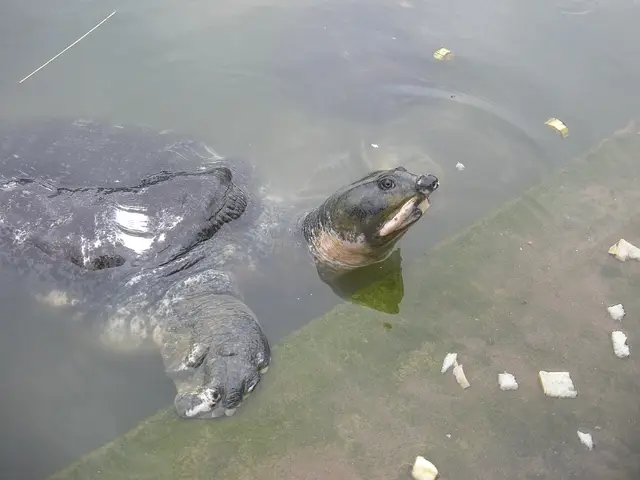
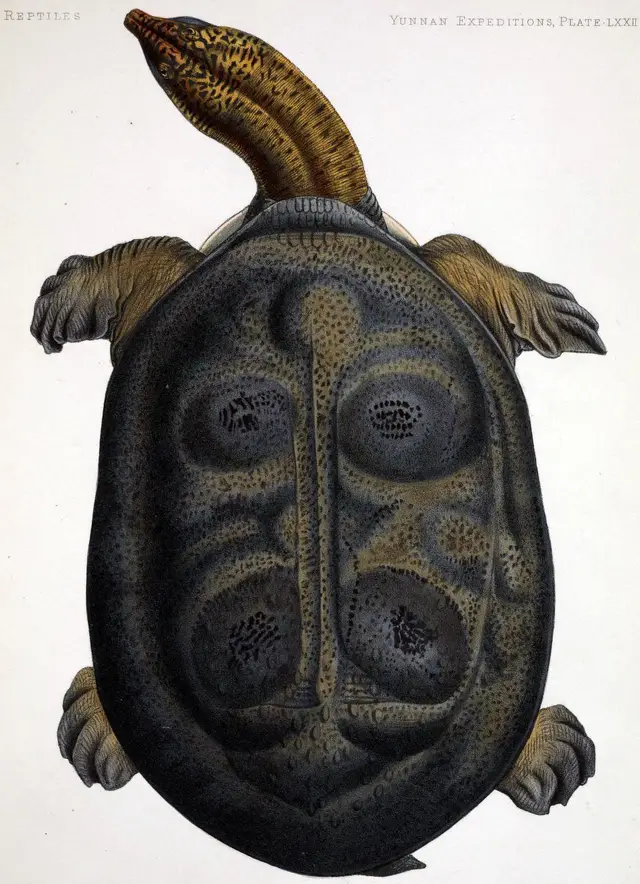
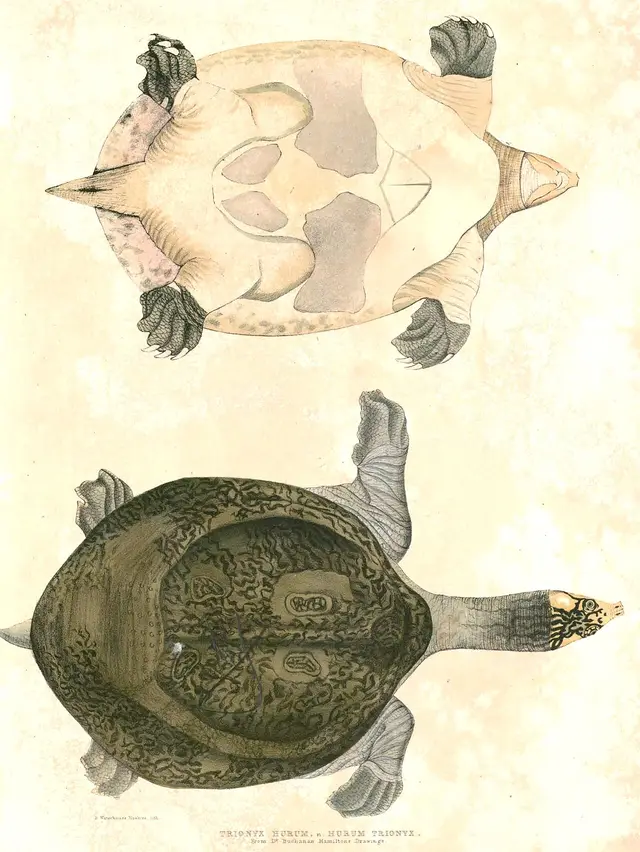
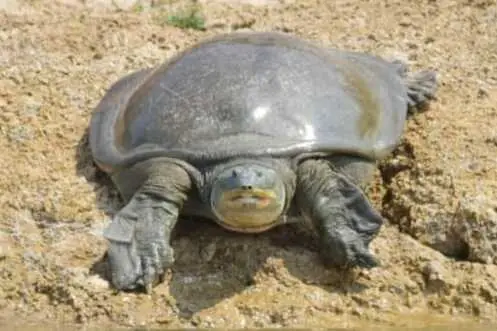
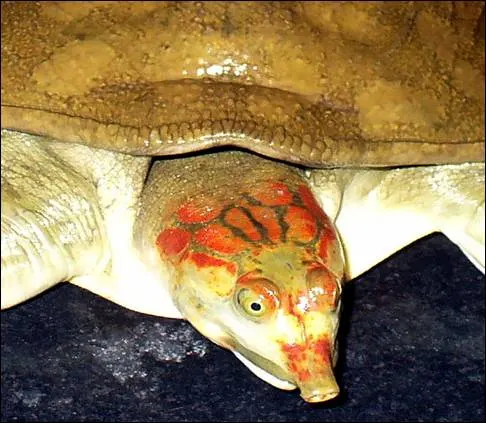
It's a softshell, so the shell is flat and leathery with no hard scutes. The snout is long and pointed, and its features fall between those of the Indian softshell turtle (Nilssonia gangetica) and the black softshell turtle (Nilssonia hurum). Young turtles carry four or more eye-like spots on the back, smaller than those of the black softshell.
Adults can reach a straight shell length of 64 cm. A 2014 expert account gives at least 72 cm, and possibly up to 100 cm, when the soft flap at the edge is included. Females are generally larger than males.
Where it lives
It is endemic to southern peninsular India. It has been recorded from the Cauvery (Kaveri), Tungabhadra, Ghataprabha, Bhavani, Godavari and Moyar river systems, across Andhra Pradesh, Karnataka, Kerala, Madhya Pradesh, Maharashtra, Odisha and Tamil Nadu.
The Red List gives its habitats as rivers, lakes, reservoirs and estuaries. Specialists describe it as apparently rare everywhere, including inside protected areas, and suspect past exploitation is the reason.
Pins are Wikidata “endemic to” fields. Orange dots, when present, are GBIF occurrence tiles — survey bias included.
How it lives
It eats fish, crabs, freshwater molluscs and mosquito larvae, and now and then small water plants. Turtles kept in temple tanks are often fed hibiscus flowers. The eggs are reportedly round, about 30 to 31 mm across, and specialists suspect that females lay at least two clutches a year. One source gives a nesting season from February to April, but another places egg laying in June, so the timing is uncertain. The Red List gives a generation length of 21 to 24 years.
Why it is in trouble
People eat it, and it has reportedly been taken for its meat and its calipee (the cartilage under the shell) for illegal trade abroad. Eggs are collected too.
The Red List names mining and quarrying, large dams, water abstraction for farming, droughts and recreational disturbance, and describes the species as split into small, severely fragmented pockets. It records an estimated 90 percent reduction in the population, both past and ongoing, linked to habitat decline and exploitation.
What is being done
In India it is listed on Schedule IV of the Wildlife (Protection) Act, and it occurs in at least one protected area. Its rating has worsened over time. A 2013 Red List entry showed it as Vulnerable (assessed in 2000), and the Critically Endangered rating followed the 2021 assessment. Harvest management, trade management, captive breeding and a genome resource bank are among the actions the Red List records.
Sources
Written for this catalog in our own words from the sources below, checked against them on 12 November 2026. Population figures are estimates and carry the year they were made. Status and assessment year: IUCN. 2026. The IUCN Red List of Threatened Species. Version 2026-1. iucnredlist.org.