Critically Endangered
Burmese peacock softshell
Nilssonia formosa
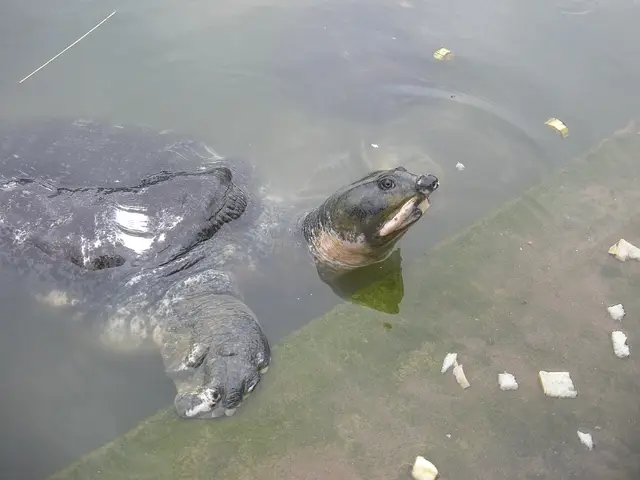
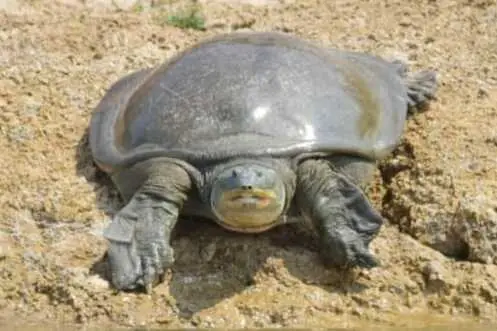
The Burmese peacock softshell (Nilssonia formosa) is a large freshwater turtle of Myanmar's rivers, with a possible foothold in southwest China. The IUCN Red List rated it Critically Endangered in 2021 after an estimated 80 percent decline, driven by harvest for food and river engineering. In 2023 protected nests at Indawgyi Lake produced wild hatchlings.
How to recognise it
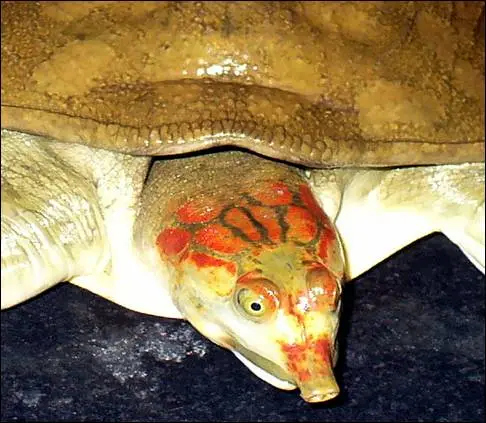
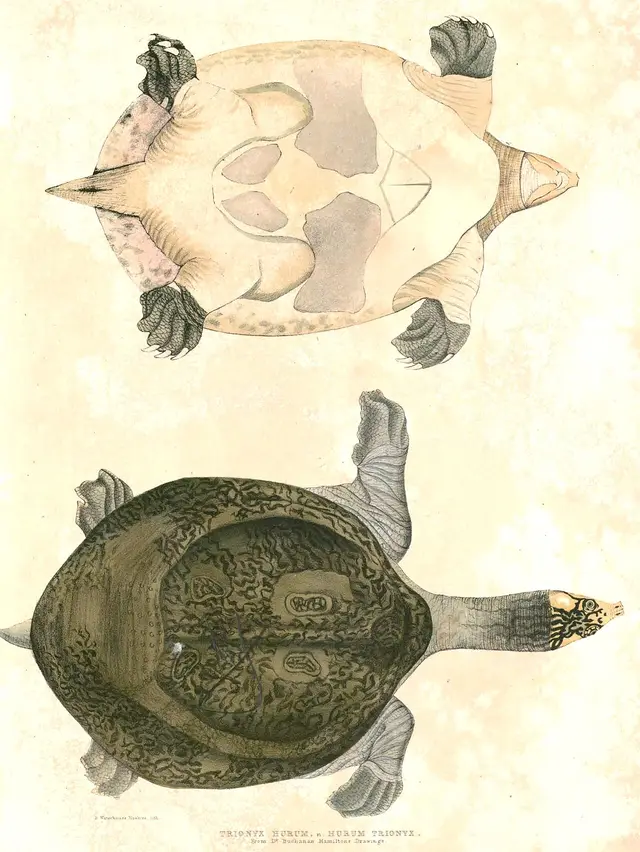
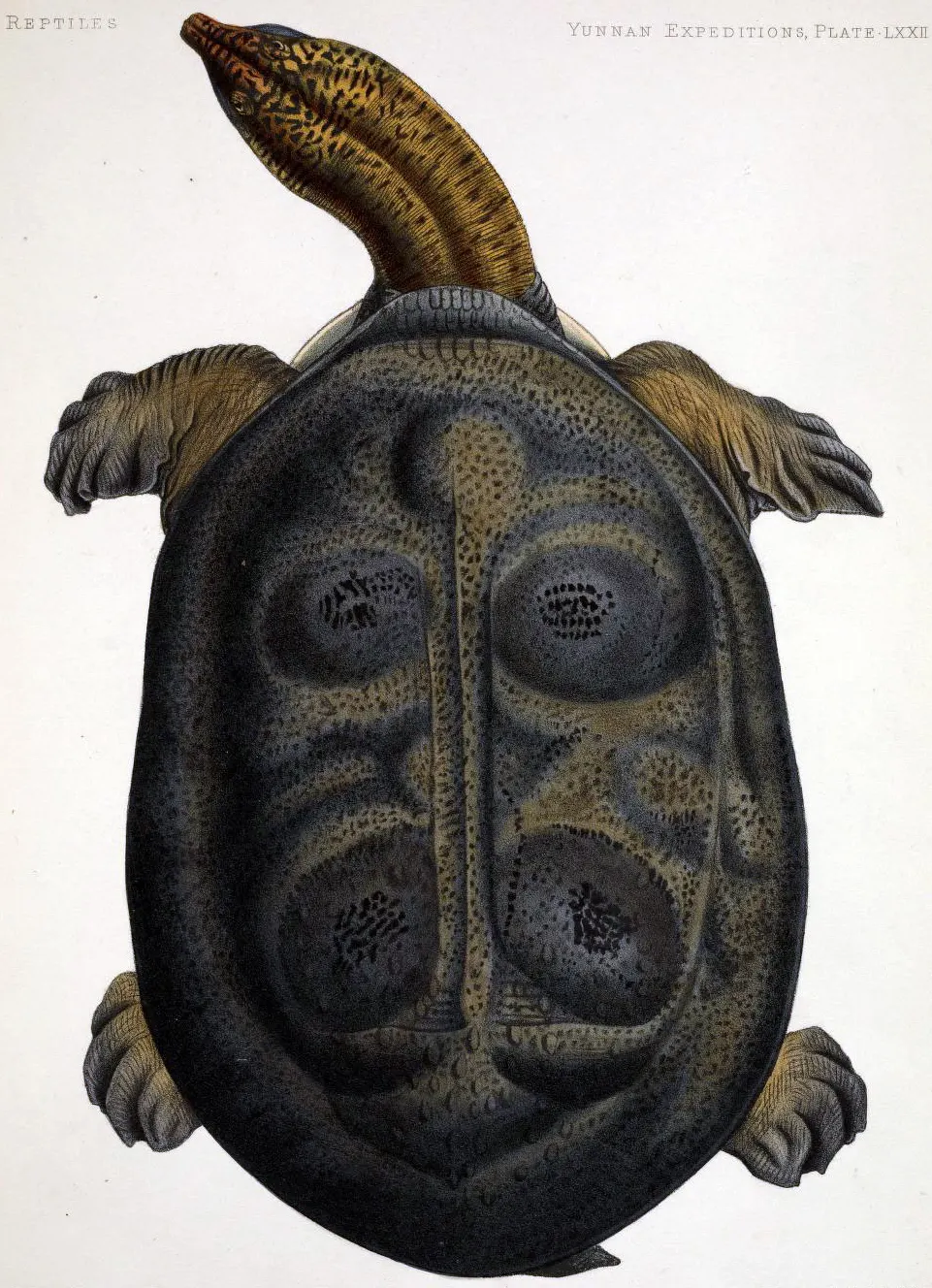
It's a softshell turtle (family Trionychidae), one of five species in the genus Nilssonia. John Edward Gray described it in 1869. Eye-like markings on the shell, called ocelli, are one of the features used to identify it.
Where it lives
Most of its range lies in Myanmar, where it lives in permanent rivers and streams at up to about 200 m above sea level. The Red List lists China, including Yunnan, as possibly present. A 2012 DNA study of a turtle caught near Shuangbai in Yunnan suggested the species had crossed the divide between the Salween and Mekong river systems. It is also reportedly found in Assam in India and possibly Thailand.
A 2017 interview survey in the Irrawaddy Dolphin Protected Area, on a 74 km stretch of the Ayeyarwady, found villagers in 27 of 29 interview groups knew the species. They said it occurs in both the main channel and seasonal floodplain wetlands.
Pins are Wikidata “endemic to” fields. Orange dots, when present, are GBIF occurrence tiles — survey bias included.
Why it is in trouble
The Red List estimates a reduction of about 80 percent, both over the past and continuing, with a generation length of 30 years. Harvest for food, traded nationally and internationally, and river works such as large dams and water abstraction are each scored as high impact. Mining, farming, storms and pollution are scored lower.
The Irrawaddy survey, with fieldwork in November 2015, covered softshell turtles in general. Fishers there reported catches falling from 2 to 10 turtles per fisher per day 10 to 15 years earlier to 1 or 2 a year. Turtles are still taken as bycatch and by electro-fishing, and recent captures were mostly small.
What is being done
The species is on CITES Appendix II, occurs in at least one protected area, and is the subject of ex-situ conservation. In 2023, Fauna & Flora and trained local turtle guardians fenced and patrolled five nests around Indawgyi Lake in Kachin State. A patrol found 15 hatchlings at one nest, and they were measured and released. Incubation took about nine months, roughly three times longer than many turtles.
Sources
Written for this catalog in our own words from the sources below, checked against them on 12 November 2026. Population figures are estimates and carry the year they were made. Status and assessment year: IUCN. 2026. The IUCN Red List of Threatened Species. Version 2026-1. iucnredlist.org.
- IUCN Red List assessment (Horne, Platt and Praschag, 2021)
- Wikipedia, Burmese peacock softshell
- Journal of Threatened Taxa 9(12), 2017, interview survey in the Irrawaddy Dolphin Protected Area
- Zoo New England blog, first nests protected (27 June 2023)
- IFLScience, hatchlings recorded in the wild (14 June 2023)