Endangered
Indian peacock softshell turtle
Nilssonia hurum
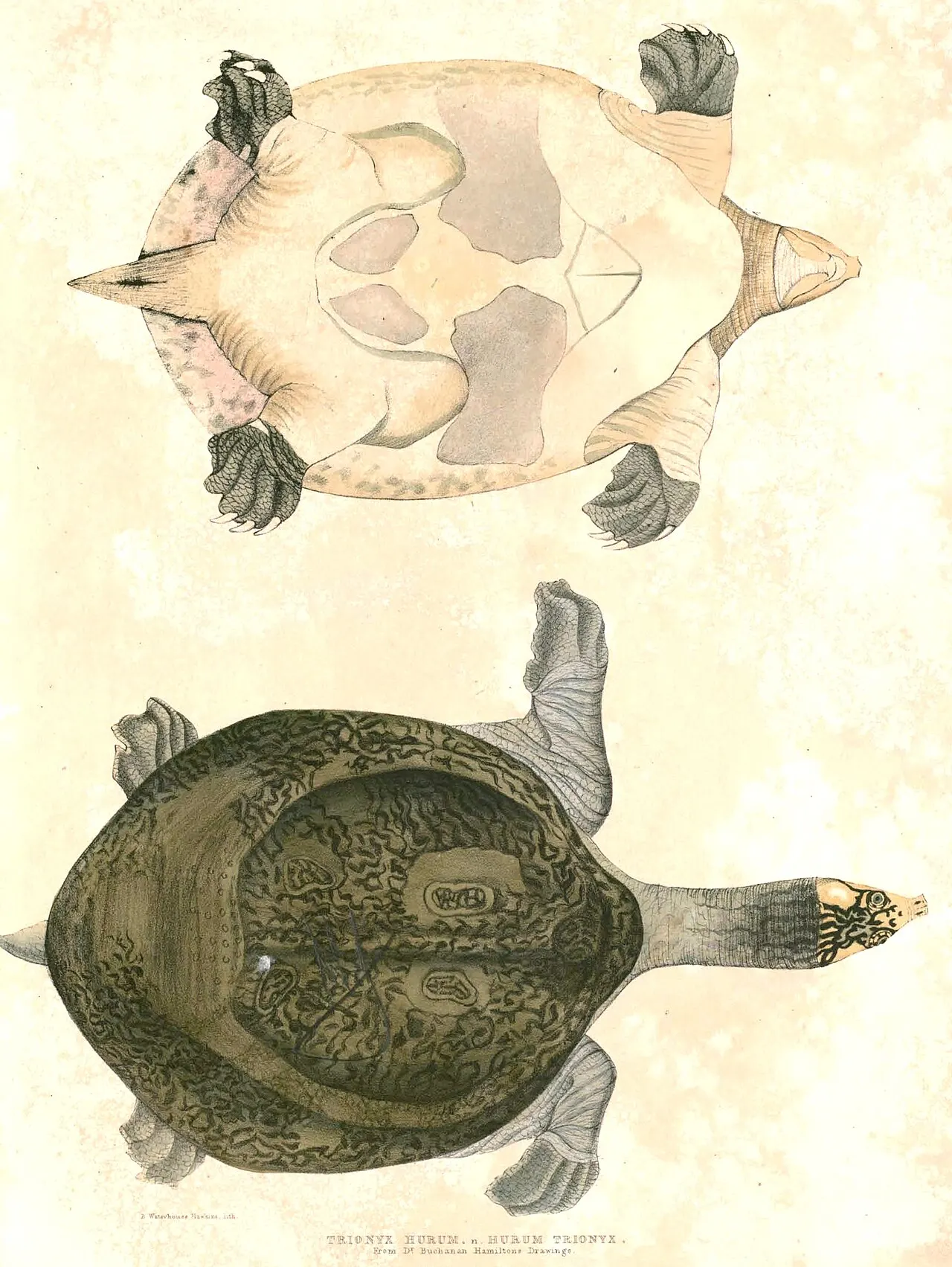
The Indian peacock softshell turtle (Nilssonia hurum) is a large freshwater turtle of the Ganges, Brahmaputra and Indus river systems in South Asia. Young ones carry eye-like spots on the shell, which give the name. The IUCN Red List rated it Endangered in 2021, mainly because of hunting for meat and shell cartilage.
How to recognise it
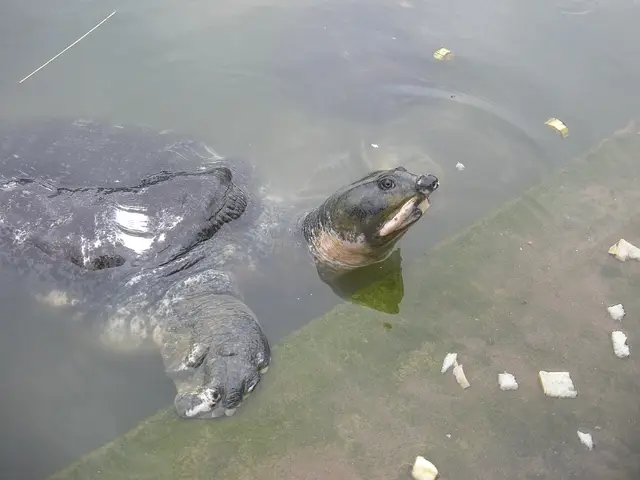
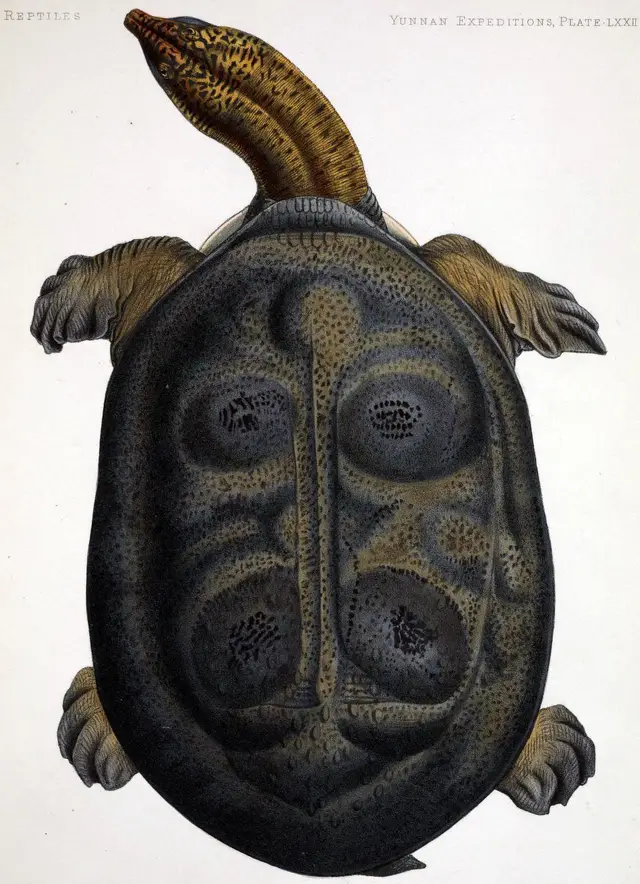
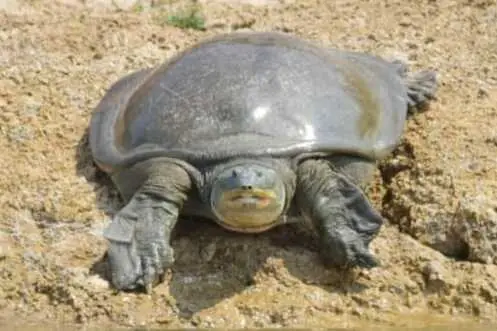
Like other softshells, it has a low, oval shell covered in leathery skin rather than hard plates, with a large head. Adults reach about 60 cm in shell length. In 2020, two turtles measured in Mizoram, India, were 39 cm and 7.2 kg and 27 cm and 3.2 kg.
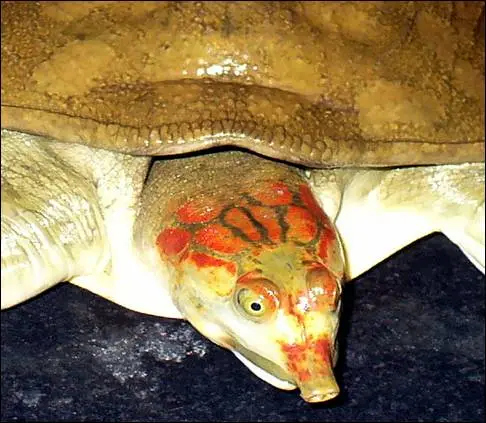
The shell is dark olive green to nearly black, sometimes with a yellow rim. Juveniles carry four orange-ringed, dark-centred spots (ocelli) that fade as the shell darkens with age. Large yellow or orange patches behind the eyes and across the snout stay visible even in big adults.
Where it lives
It's widespread across the northern and central Indian subcontinent. The IUCN lists Bangladesh, India, Nepal and Pakistan, with Myanmar as a possible record, at elevations up to about 200 m. Its southern and eastern limits are not well settled.
It uses rivers, lakes and ponds, from upper reaches down to lower stretches, but apparently avoids salty river mouths. Adults use deeper sections of rivers while yearlings stay in the shallows. It can burrow into mud, which may help it live in ponds that dry out. Mizoram's first records in 2020 included one turtle buried in mud in a fish pond and one basking on a log on a small island in a reservoir.
Pins are Wikidata “endemic to” fields. Orange dots, when present, are GBIF occurrence tiles — survey bias included.
How it lives
It is reportedly mostly nocturnal and omnivorous. Stomach samples from Bangladesh held earthworms, snails, prawns, fish, frogs, carrion and plant matter.
In Bangladesh, females dig nests 10 to 30 m from the water's edge in winter, laying 20 to 30 spherical eggs. On the Chambal River, nesting runs from August to November, hatching comes in June and July of the following year, and clutches average about 18 eggs.
Why it is in trouble
Hunting is the main threat. Across northern and eastern India it's taken for its meat and for calipee, the cartilage rim of the shell, which is cut from live animals. A 2010 species account reported dried calipee fetching fishermen about 1,700 rupees a kilogram, with the trade likely feeding markets in China and Southeast Asia. Eggs are also dug up from river islands.
The IUCN records a population reduction of about 50 percent, past and ongoing, with a generation length of 20 to 25 years. Its threat list also includes pollution, sewage and accidental catch, and large dams as a future threat. A 2020 report from Mizoram noted that a dam completed in 2009 created a reservoir catchment of about 53 square km that drastically altered natural habitat, and that local people commonly hunt turtles for meat and trade.
What is being done
The species is on CITES Appendix I, which bans international commercial trade, and on Schedule I of India's Wildlife (Protection) Act of 1972. Illegal export to China, especially from Bangladesh and Pakistan, was still reported as frequent in 2010. It lives in several protected areas, including the Sarnath Turtle Sanctuary in Uttar Pradesh.
The IUCN notes protected-area presence, education programmes and international trade controls as in place. Specialists have proposed protecting nesting sites, tighter enforcement against cross-border trade and alternative livelihoods for turtle hunters. Some turtles are kept in temple ponds in India, where crowding and fungal disease have caused die-offs, including about 13 deaths at an Assam temple in 2008.
Sources
Written for this catalog in our own words from the sources below, checked against them on 12 November 2026. Population figures are estimates and carry the year they were made. Status and assessment year: IUCN. 2026. The IUCN Red List of Threatened Species. Version 2026-1. iucnredlist.org.