Critically Endangered
Nelson's small-eared shrew
Cryptotis nelsoni
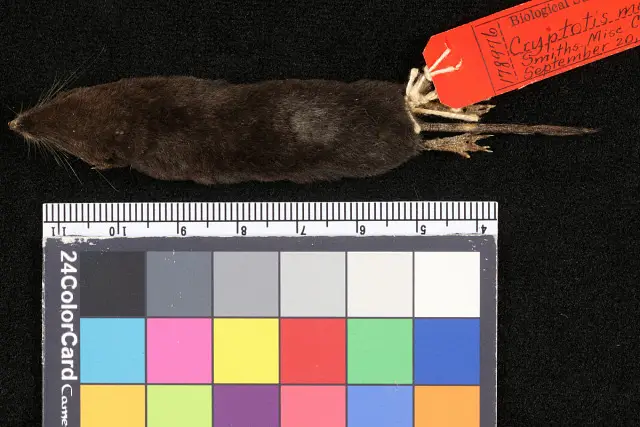
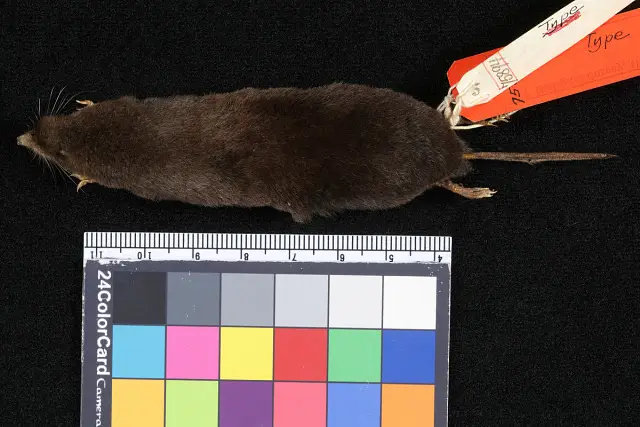
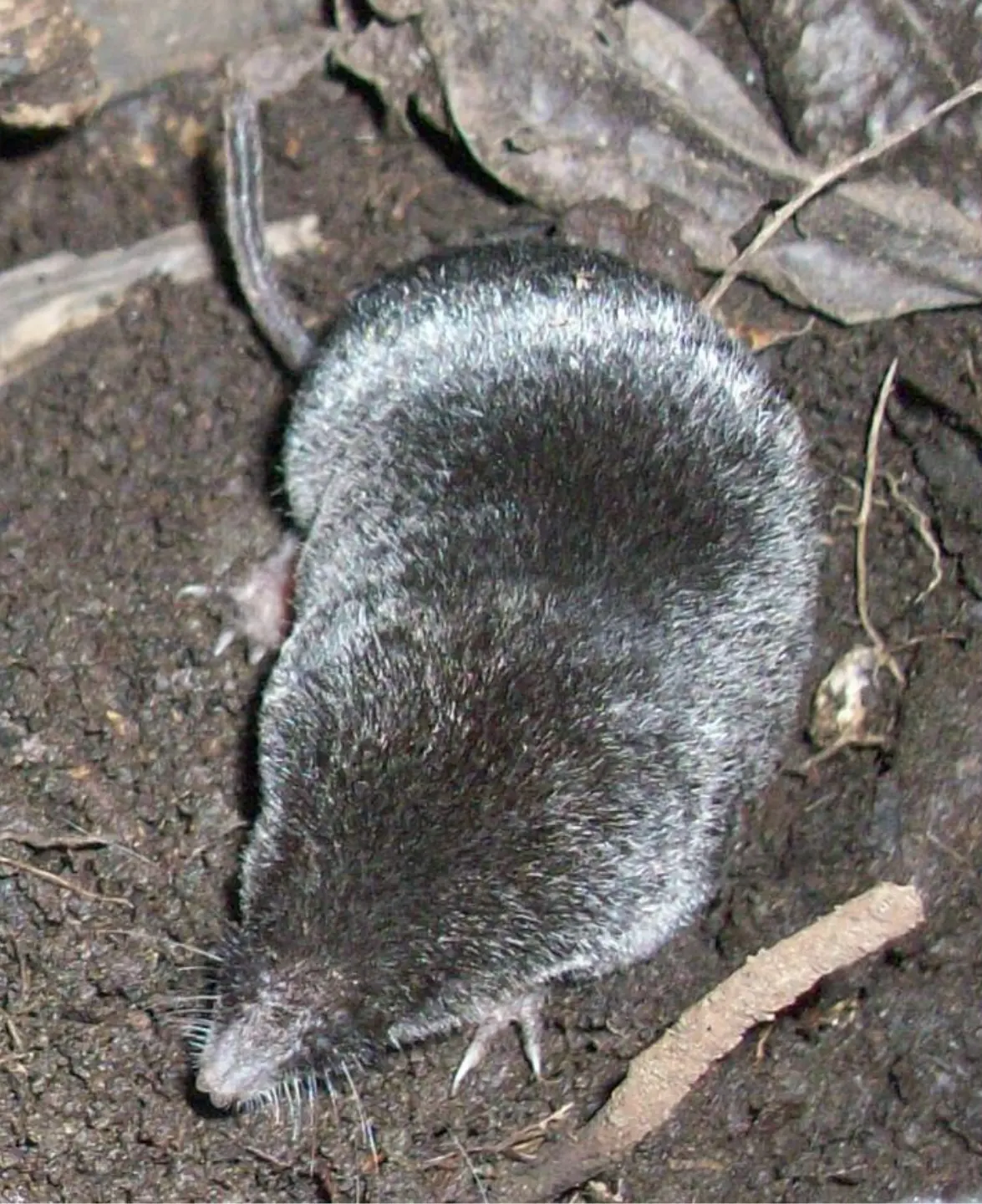
Nelson's small-eared shrew (Cryptotis nelsoni) is a tiny, brown, insect-eating shrew known only from the cloud forests of Los Tuxtlas in Veracruz, Mexico. It went unrecorded for more than a century before being found again around 2003 to 2004. The IUCN rated it Critically Endangered in 2026.
How to recognise it
It is a tiny animal, reportedly about 10 cm long, with brown fur. A 2018 study in Biodiversity Data Journal compared fresh specimens with two related Mexican shrews (Cryptotis mexicanus and a Puebla form of Cryptotis parva) and found Nelson's shrew has darker fur, a larger body, and broader, longer forefeet with longer claws.
Where it lives
All records come from the Los Tuxtlas mountains on Mexico's Gulf coast. Edward Nelson and Edward Goldman collected the first specimens in 1894, and Clinton Hart Merriam named the species in 1895.
The 2026 Red List assessment lists a single location, in moist montane forest at 932 to 1,600 m, with an extent of occurrence of only 23 to 32 square kilometres. In September 2015, researchers set 100 pitfall traps and caught 15 shrews: nine on the northeast face of the San Martin Tuxtla volcano's crater (at 1,460 m and 1,290 m) and six on Mastagaga hill at 1,180 m. That hill lies about 7 km southeast, in small patches of secondary forest.
A habitat model suggests the nearby Santa Marta volcano could also be suitable, though no shrews have been recorded there.
Pins are Wikidata “endemic to” fields. Orange dots, when present, are GBIF occurrence tiles — survey bias included.
How it lives
Very little has been recorded. The shrew is believed to eat only insects, and like other shrews it burns energy fast and has to feed often. The Red List assessment gives a generation length of under a year (0.91 years).
Why it is in trouble
The species lives in a small area ringed by dense human settlement. Deforestation near the original collecting site is reported at up to 90 percent, with an annual rate of 6.2 percent. The Small Mammal Specialist Group names logging, cattle grazing, human-set fires and agriculture as pressures, and the 2026 assessment lists small-holder farming and grazing and habitat alteration as ongoing, with housing and earlier farming as past impacts.
The assessment records a continuing decline in habitat area, yet rates the population trend as stable. The 2018 study named deforestation and climate change as the main threats and noted that high-elevation areas of Los Tuxtlas are poorly sampled, so the species may occur in places nobody has trapped.
What is being done
All known localities fall inside the Los Tuxtlas Biosphere Reserve, and the Mexican government lists the shrew under special protection. The assessment puts 91 to 100 percent of the population inside protected areas and lists site management and habitat protection as conservation actions.
The 2018 study called for long-term surveys in poorly sampled mountain forest. The Small Mammal Specialist Group asks for more research on the shrew's distribution and numbers, and for a species conservation strategy tied to the reserve's management plan.
Sources
Written for this catalog in our own words from the sources below, checked against them on 12 November 2026. Population figures are estimates and carry the year they were made. Status and assessment year: IUCN. 2026. The IUCN Red List of Threatened Species. Version 2026-1. iucnredlist.org.
- IUCN Red List assessment, Cryptotis nelsoni (Guevara Lopez and Hurtado Materon, 2026)
- New records of a critically endangered shrew from Mexican cloud forests (Guevara and Sanchez-Cordero, Biodiversity Data Journal, 2018)
- Nelson's Small Eared Shrew, Small Mammal Specialist Group
- Nelson's small-eared shrew, Wikipedia