Endangered
Guatemalan broad-clawed shrew
Cryptotis griseoventris
The Guatemalan broad-clawed shrew (Cryptotis griseoventris) is a small, dark shrew of the cool highland forests of Chiapas, Mexico. Despite the name, the 2026 Red List assessment records it only from Chiapas. It is rated Endangered because its known range is tiny and shrinking.
How to recognise it
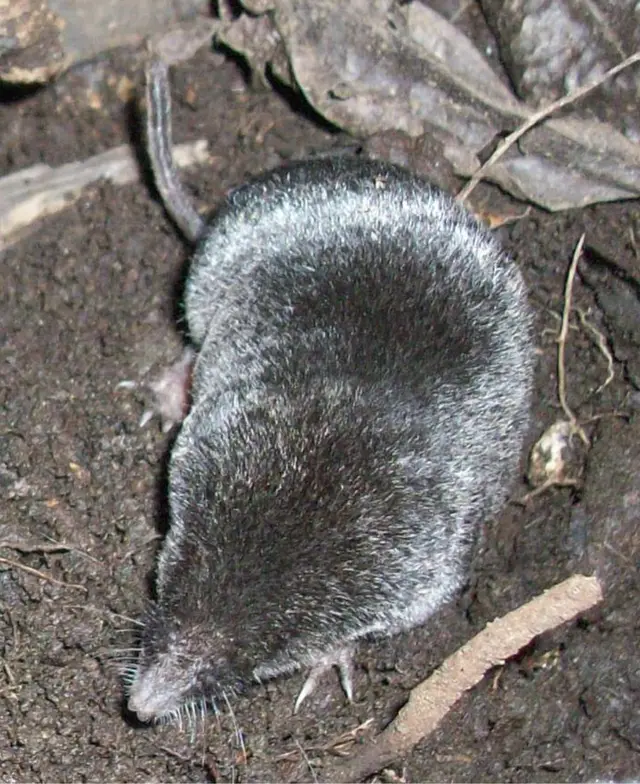
It is a small-eared shrew with dark gray upperparts and a belly of rich, lead-like gray. Broad-clawed shrews (Cryptotis) have strong forelimbs and well-developed claws for digging, a sign of a life spent in leaf litter and soil.
Telling it from relatives is a specialist job. Its sister species, Cryptotis goodwini, is larger, but their skull measurements overlap broadly.
Where it lives
Older references list Guatemala as well as Mexico, which is where the common name comes from. The 2026 Red List assessment lists only Chiapas and calls the species endemic to that state, and a 2019 survey of Chiapas shrews also treats it as one of five shrews found only in the state.
Within Chiapas the range is small. The assessment estimates an extent of occurrence of 261 km2 and counts a single location, in the Los Altos de Chiapas highlands. The shrew lives in moist montane forest between about 2,100 and 2,376 m. It has been found in pine and fir forest, in oak cloud forest and in secondary forest.
Pins are Wikidata “endemic to” fields. Orange dots, when present, are GBIF occurrence tiles — survey bias included.
How it lives
It eats insects. Beyond that, very little is written about its daily life. The assessment gives a generation length of under a year (0.91 years), and the population trend is recorded as unknown.
What recent surveys found
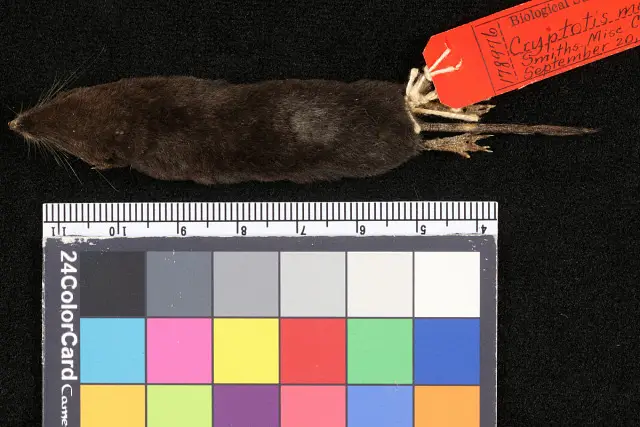
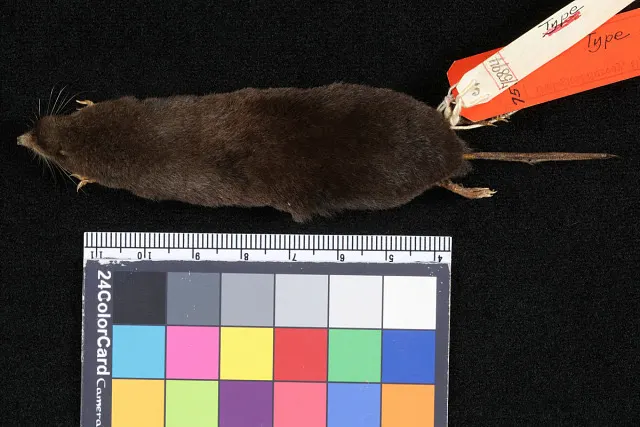
Museum records are sparse. The Red List counts 10 specimens collected between 1895 and 1956 and 12 more from the early 1990s. A 2019 paper in Therya said that before its own work, only sporadic records had been known since the last confirmed one more than 50 years earlier.
That survey ran 19 field trips to 13 sites in Chiapas between 2002 and 2018 and caught 22 shrews of six species. Seven were this species, the largest share (about 32 percent of captures). Captures included cloud forest at the Huitepec Ecological Reserve and pine-oak forest at the San Jose Biological Station.
Why it is in trouble
The Red List names habitat loss as the main threat, driven by farmland and cattle grazing, and lists habitat alteration and drought as ongoing threats. It cites an estimate that Chiapas lost about 55 percent of its pine-oak forest over 50 years, mostly to coffee, maize and grazing. The Therya paper also points to deforestation and climate change.
The shrew is known from two small private protected areas of about 150 hectares, Huitepec-Tzontehuitz and the San Jose educational park. No species-specific conservation measures are in place, and the only action recorded is site and area management.
Sources
Written for this catalog in our own words from the sources below, checked against them on 12 November 2026. Population figures are estimates and carry the year they were made. Status and assessment year: IUCN. 2026. The IUCN Red List of Threatened Species. Version 2026-1. iucnredlist.org.