Endangered
Darién small-eared shrew
Cryptotis mera
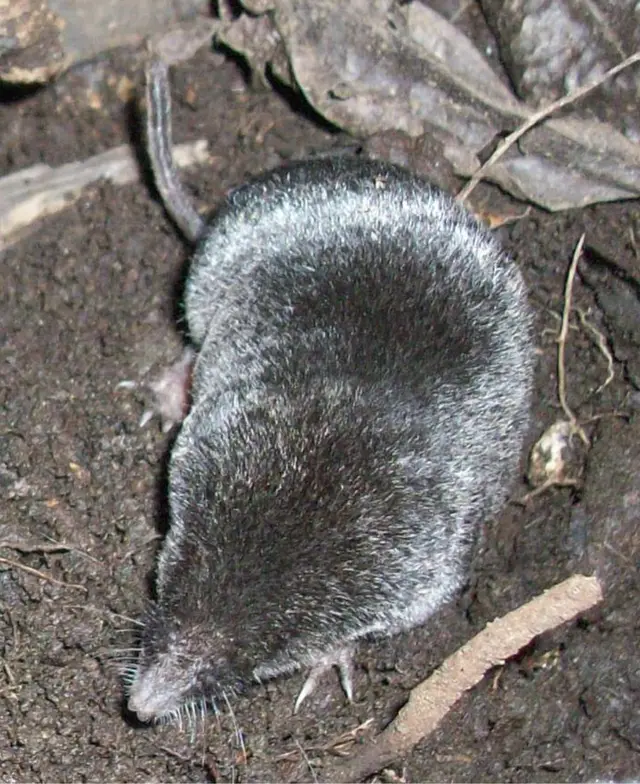
The Darien small-eared shrew (Cryptotis merus) is a little-known shrew of mountain rainforest on the Panama and Colombia border. The IUCN Red List classed it as Endangered in 2018, with a decreasing population. It has been recorded only between 1,400 and 1,500 m.
How to recognise it
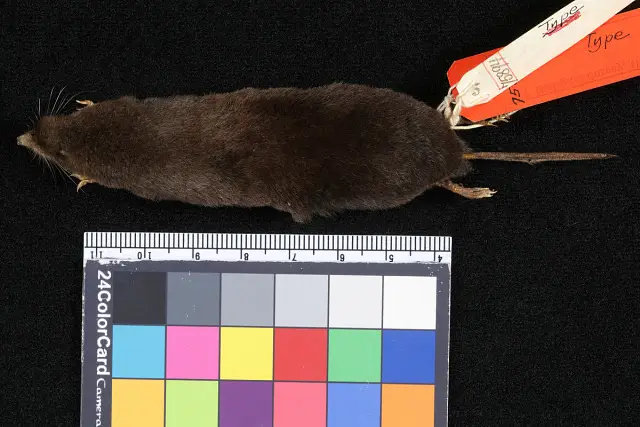
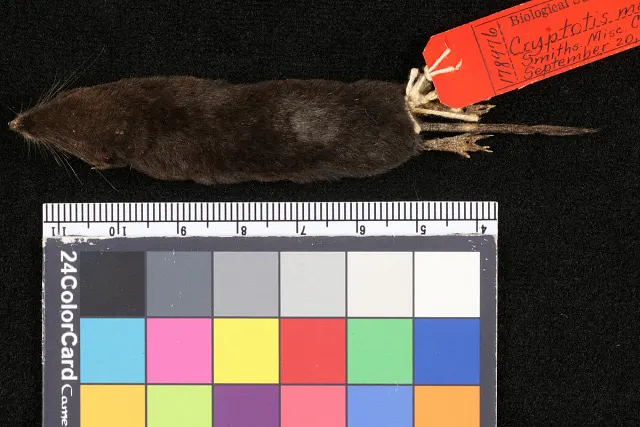
A true shrew in the family Soricidae, it is a mid-sized member of the genus Cryptotis, the small-eared shrews. Its head and body measure about 66 to 73 mm, with a short tail of 24 to 31 mm and hindfeet of 11 to 13 mm. No weight figures have been published. On form, it is placed in the group built around Cryptotis nigrescens, though genetic data are still needed to confirm that.
Discovery and name
E. A. Goldman described it in 1912 from a specimen collected near the head of the Rio Limon on Mount Pirri in eastern Panama, at about 1,372 m. That specimen is the holotype, held as USNM 178976. For decades it was lumped in with Cryptotis nigrescens, until Woodman and Timm treated it as a distinct species in 1993.
You may also see it spelled Cryptotis mera. The genus name was later fixed as masculine, so merus is the current spelling. Both names mean the same animal.
Where it lives
The species is known from highlands along the border between Darien Province, Panama, and Colombia. It is terrestrial and lives in lower montane and pre-montane rainforest, including dense cloud forest thick with epiphytes, at 1,400 to 1,500 m. Shrews have been trapped under logs on steep stream banks.
The IUCN records it from Panama and Colombia. A review of Colombia's shrews, however, counts seven species and leaves this one out, noting only that its presence there has been suggested from nearby Panamanian records. It occurs in Darien National Park, Panama, where one source says it can be common.
Pins are Wikidata “endemic to” fields. Orange dots, when present, are GBIF occurrence tiles — survey bias included.
Why it is in trouble
Its range is small and the forest it lives in is fragmented. The IUCN rated it Endangered under criterion B1ab(iii), which covers a restricted range with continuing decline in habitat quality, and recorded ecosystem degradation as the stress on the species. The population trend is listed as decreasing. The Handbook of the Mammals of the World names deforestation and pesticides as the main threats.
The species occurs in at least one protected area, and no species-specific conservation action is listed. Its food, breeding and movements have not been documented.
Sources
Written for this catalog in our own words from the sources below, checked against them on 12 November 2026. Population figures are estimates and carry the year they were made. Status and assessment year: IUCN. 2026. The IUCN Red List of Threatened Species. Version 2026-1. iucnredlist.org.