Endangered
Shorthorned pygmy devil ray
Shorthorned pygmy devil ray
The shortfin devil ray (Shorthorned pygmy devil ray) is a small relative of the manta rays that swims in warm coastal waters of the Indian Ocean and western Pacific, from East Africa to northern Australia. The IUCN Red List rated it Endangered in 2022, because fishing has cut numbers sharply and it breeds very slowly.
How to recognise it
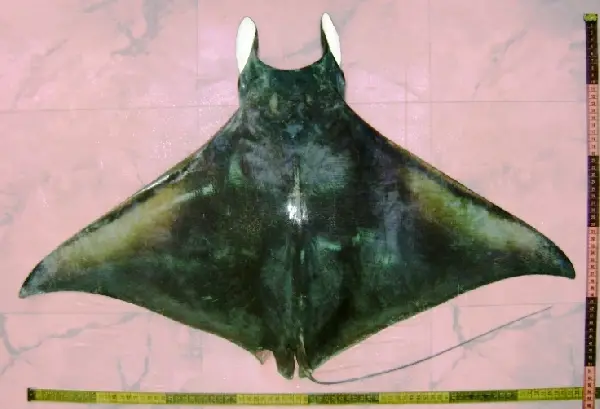
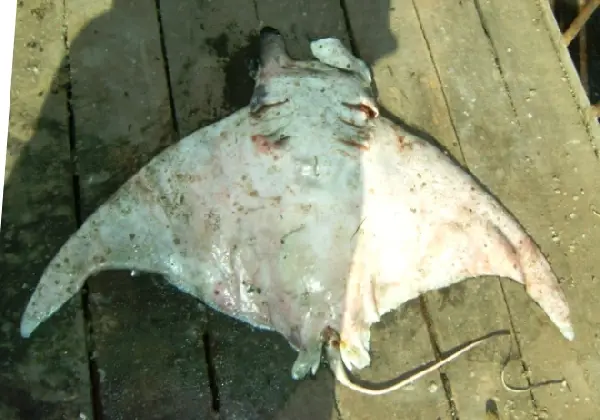
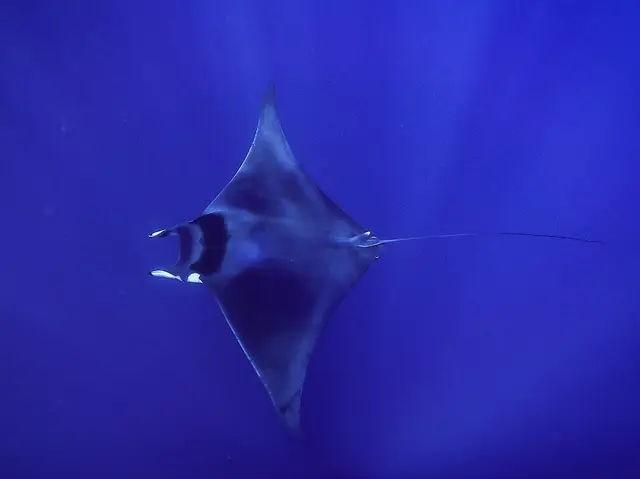
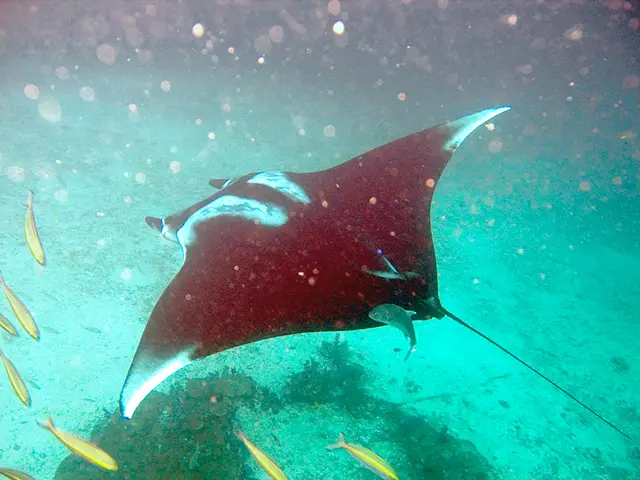
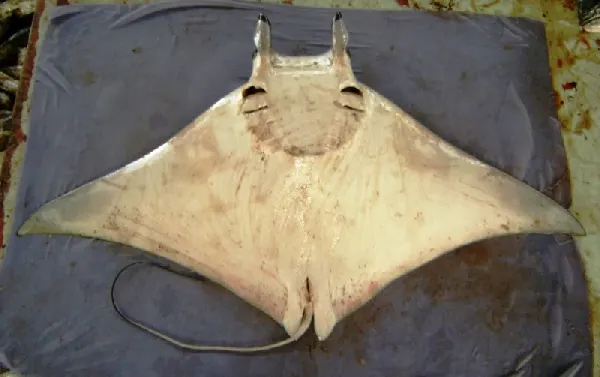
It is one of the smaller devil rays, reaching about 120 cm across the wings in most accounts (the IUCN gives a maximum of 135 cm) and up to roughly 30 kg. The body is a broad, flattened disc, dark brown above and white below, with a short head and small head fins. The dorsal fin has a white tip, and the tail is shorter than the disc and carries no spine.
Its pectoral fins have slightly curved tips and a pale edge along the front. Round spiracles set it apart from the Japanese and Chilean devil rays, whose spiracles are slit-like. It belongs to the family Mobulidae, which also holds the mantas.
Taxonomy has shifted. Some authors, including Last and colleagues in 2016 and White and colleagues in 2017, treated the longhorned pygmy devil ray (Mobula eregoodoo) as a junior synonym of M. kuhlii. Later work in 2019 and 2020 argued they are separate species, and the IUCN follows that view while noting that some catch records may include both.
Where it lives
The species ranges across the tropical Indo-West Pacific, from South Africa, Mozambique, Tanzania and the Seychelles in the west to the Philippines and Indonesia in the east, and south to northern Australia. The IUCN lists it from dozens of countries and territories.
It is a surface-water animal. The IUCN gives its depth range as 0 to 50 m, over coastal water including coral reefs. It is often seen in schools and is known to leap clear of the water.
Pins are Wikidata “endemic to” fields. Orange dots, when present, are GBIF occurrence tiles — survey bias included.
How it lives
Like other devil rays it feeds on plankton, filtering it from the water with its mouth open. Females probably give birth to a single large pup, about 31 to 34 cm across, perhaps every one to three years. Both sexes mature at roughly 115 cm.
That slow breeding is the species' weak point. FishBase estimates that a population needs 4.5 to 14 years to double at the minimum, and the IUCN notes the species cannot withstand even low levels of fishing.
Why it is in trouble
Devil rays are caught on purpose and by accident in industrial and small-scale fisheries across most of their range. Targeted fisheries exist in India, Sri Lanka and Thailand, and in Indonesia the ray is taken especially for its gill plates. The meat, skin, cartilage and liver oil are also used.
The IUCN assessment records a population reduction of 50 to 79% in the past, with a similar fall projected, and rates the trend as decreasing. Data are patchy. Surveys at major gathering sites suggest local and regional declines of 50 to 99% over three generations (38 years).
What is being done
The species is on Appendix II of CITES, so international trade is regulated, and it was listed on Appendices I and II of the Convention on Migratory Species in 2014. It occurs in at least one protected area, but the IUCN reports no recovery plan, monitoring scheme or harvest management plan, and many fisheries remain open despite the listings.
The IUCN's recommended actions include harvest and trade management, national-level protection and species recovery measures.
Sources
Written for this catalog in our own words from the sources below, checked against them on 12 November 2026. Population figures are estimates and carry the year they were made. Status and assessment year: IUCN. 2026. The IUCN Red List of Threatened Species. Version 2026-1. iucnredlist.org.