Critically Endangered
Devil fish
Mobula mobular
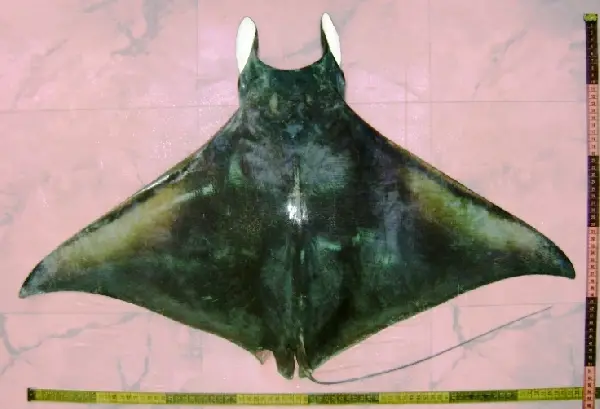
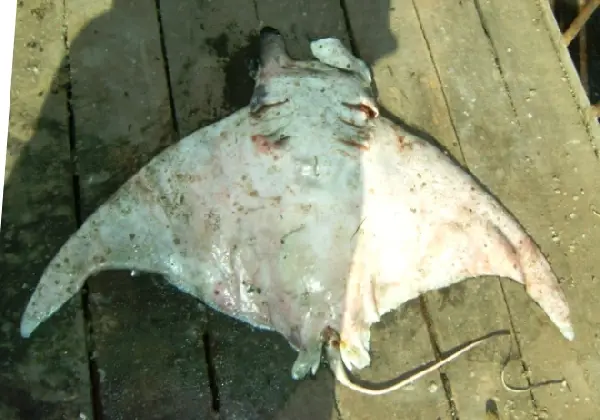
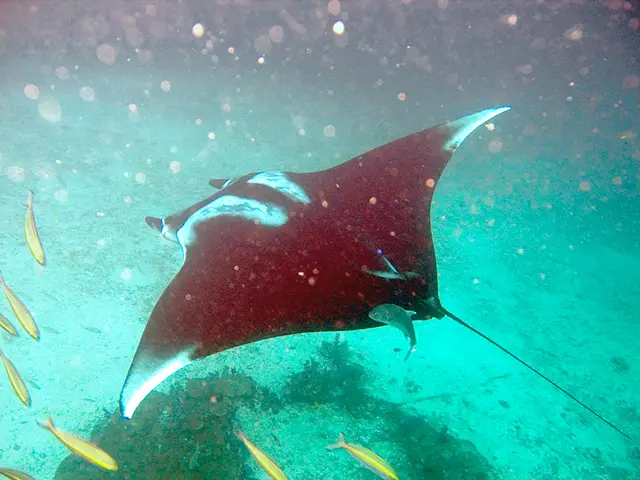
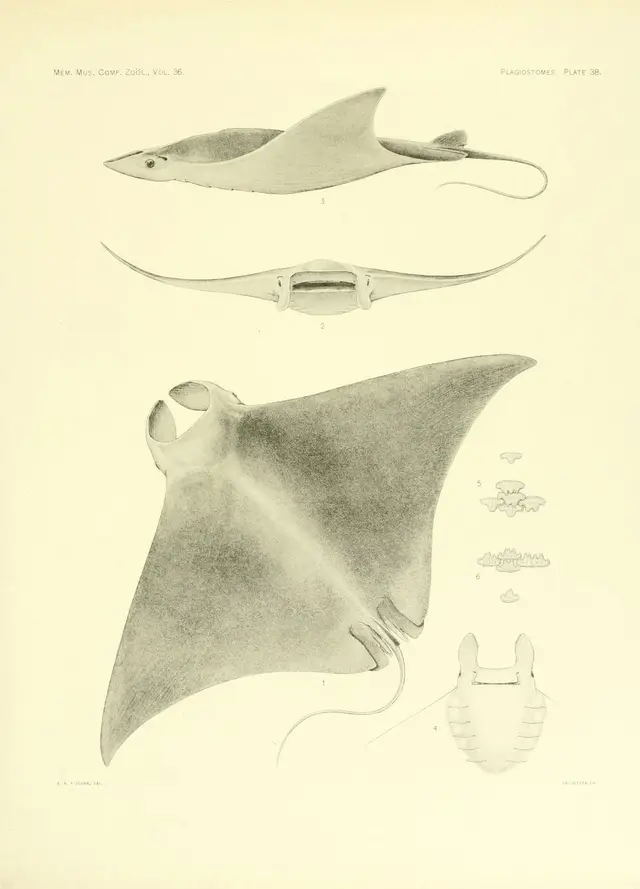
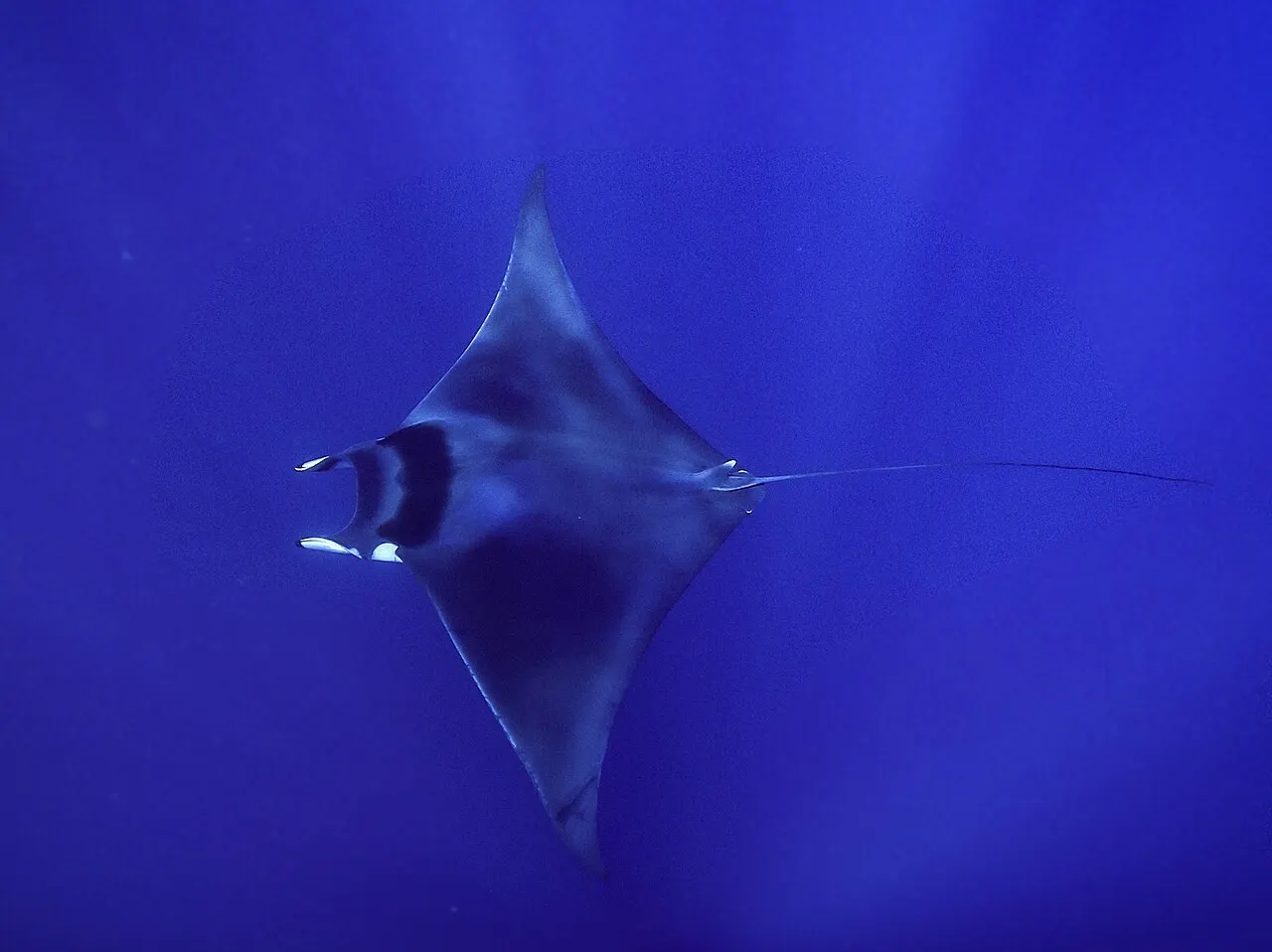
Devil fish is an eagle ray in the family Myliobatidae (order Myliobatiformes) — Mobula mobular, recorded as Critically Endangered.
The eagle ray
It grows to a disk length of 3.5 metres (11 ft), making it one of the largest rays.
Range and habitat
It is also found in the Eastern Atlantic Ocean, off the southwest coast of Ireland and south of Portugal, as well as in the central and western Pacific Ocean. Devil fish inhabit offshore areas to the neritic zone, their range as deep as several thousand meters. In other observations studying ray abundance and habitat, giant devil rays were observed alone and occasionally in groups with a maximum of 18 rays.
Pins are Wikidata “endemic to” fields. Orange dots, when present, are GBIF occurrence tiles — survey bias included.
Diet and breeding
Devil rays feed on planktonic crustaceans and small schooling fish, that are funneled into the mouth with cephalic flaps. The species gives birth to live young: the young hatch from their eggs inside the mother's body and emerge later when they are more fully grown.
In crisis
As of 2025, it is listed as critically endangered, mostly due to bycatch mortality in unrelated fisheries and a naturally slow reproduction rate. Its population trend is decreasing. Most of the information on the giant devil ray has been gathered through bycatch data because the species has a high bycatch mortality.
Giant devil ray mortalities are mostly reported as bycatch from swordfish nets, and occasionally reported as bycatch from longlines, purse seines, trawls, trammel nets, and tuna traps. There are many threats against the giant devil ray such as fishing, resource harvesting (being taken as bycatch in different fisheries), industrial garbage, and solid waste.
CITES lists this taxon on Appendix I, effective March 5, 2026. Confirm the current appendix on the CITES checklist.
Devil fish is Critically Endangered on the IUCN Red List (assessed 2025, criteria A2bd+3d). Confirm the official criteria and any later count on the assessment page.
Sources
Adapted from the English Wikipedia article on Devil fish (CC BY-SA 4.0; authors are listed in the article history; changes were made), Wikidata item Q1502150. Family and order context is original field-guide writing about the group, not a copied assessment of this one species. Not an IUCN assessment. Counts, when quoted, can change — confirm them on the recovery programme and on iucnredlist.org. Status and assessment year: IUCN. 2026. The IUCN Red List of Threatened Species. Version 2026-1. iucnredlist.org.