Endangered
Lesser devil ray
Mobula hypostoma
The lesser devil ray (Mobula hypostoma) is a small, plankton-eating manta relative that swims in warm coastal waters on both sides of the Atlantic. The IUCN Red List rated it Endangered in 2022, because catches in small and large fisheries keep driving its numbers down.
How to recognise it
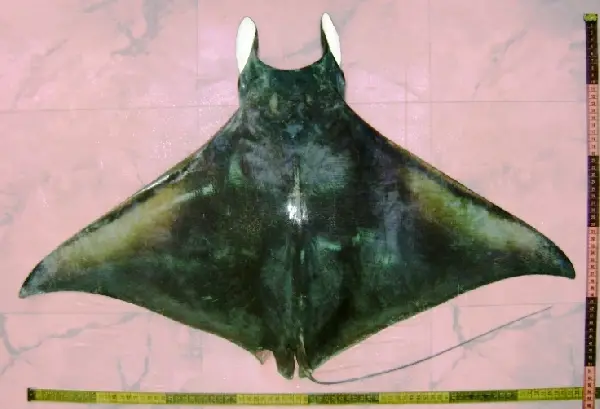
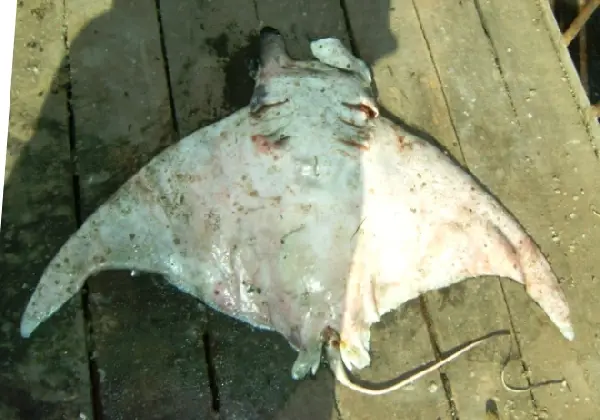
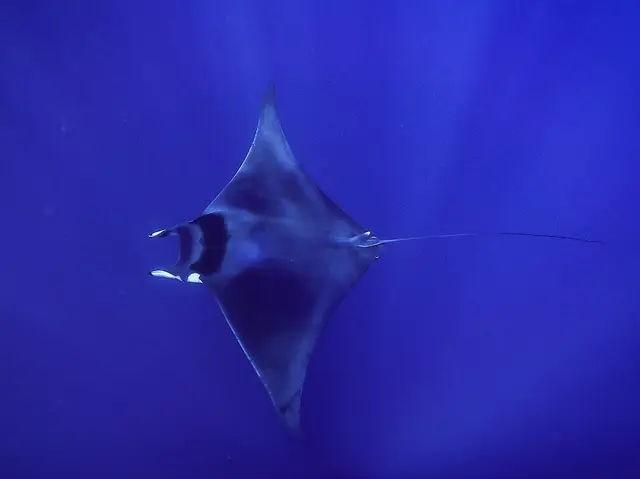
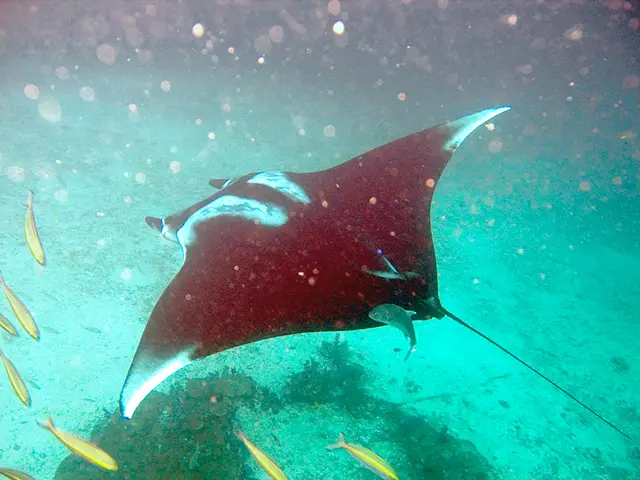
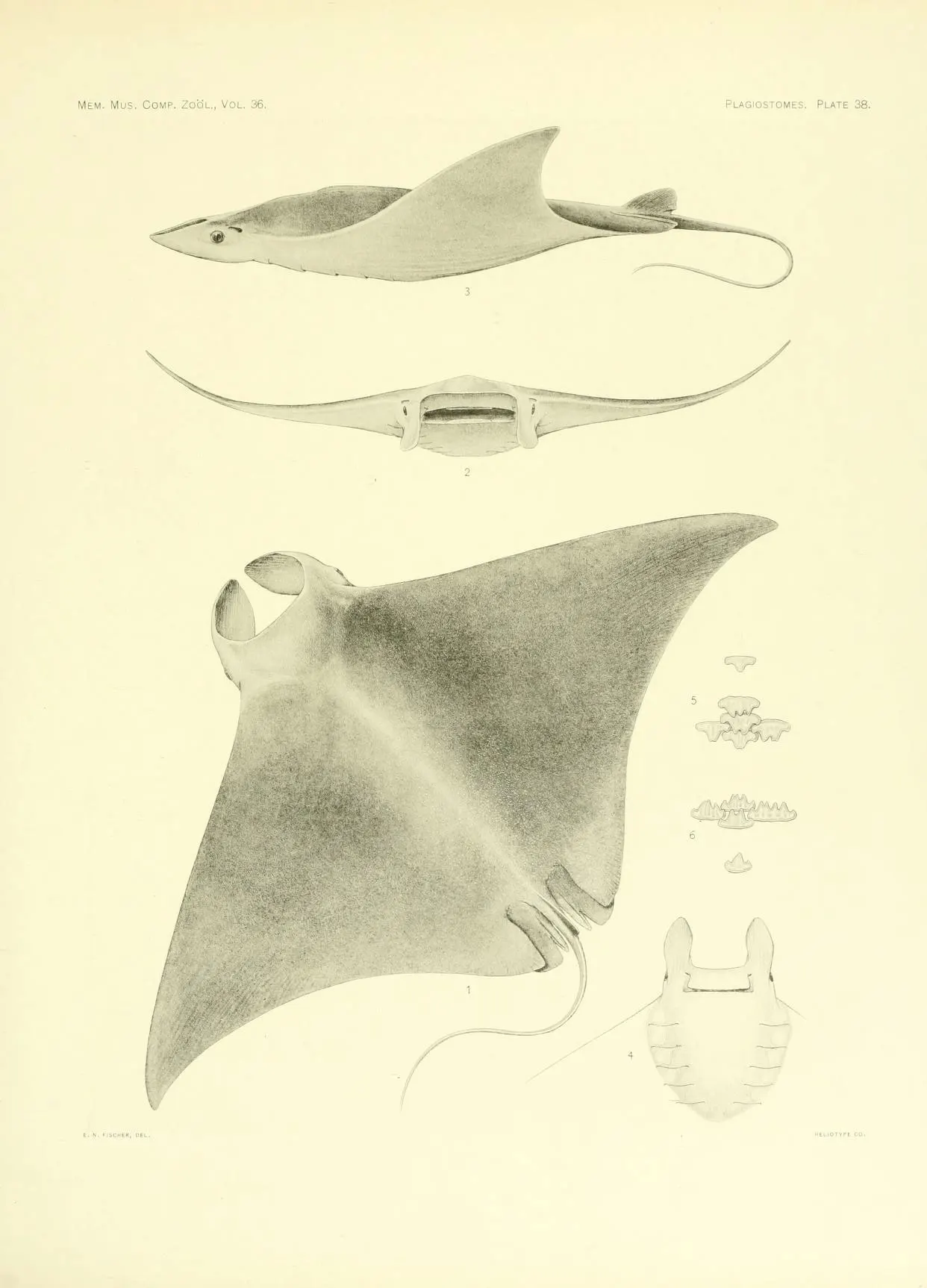
Among the devil rays this is one of the smaller ones. Adults usually reach a disc width of roughly 122 to 133 cm, depending on the source, and newborns can be as small as 55 cm across. The body is a broad, kite-shaped disc about twice as wide as it is long, with a wide mouth and two horn-like cephalic fins that point forward.
The back ranges from light brown to black, and the underside is pale. Some animals carry a dark grey collar between the spiracles. The tail is long and whip-like with no stinging spine, which separates it from the spined devil ray (Mobula mobular). The skin of the disc is covered in small denticles.
Where it lives
In the western Atlantic it ranges from North Carolina to northern Argentina, including the Caribbean and the Gulf of Mexico. The IUCN assessment also lists countries along the African coast from Western Sahara to Angola. A related ray from West Africa, Mobula rochebrunei, is sometimes treated as the same species in genetic studies, so the eastern animals may belong here too. In all, the IUCN assessment names dozens of countries and territories in its range.
It is an open-water species of warm seas, usually near the coast, from the surface down to about 100 m.
Pins are Wikidata “endemic to” fields. Orange dots, when present, are GBIF occurrence tiles — survey bias included.
How it lives
It feeds mostly on planktonic crustaceans and occasionally takes small schooling fish, using its cephalic fins to funnel food toward the mouth. Groups can reach about 40 rays, though 2 to 10 is the usual number.
Like other mobulas it breeds slowly. The young develop inside the mother without a placenta, and a litter is reportedly a single pup. A 2020 study reported nine juveniles, eight males and one female, 552 to 773 mm across, caught in the southwestern Gulf of Mexico. They were the first records for Mexican waters, and the researchers concluded the species is not uncommon there.
Why it is in trouble
The IUCN assessment lists harvest as the threat, both targeted and accidental, in small-scale and large-scale fisheries. Mobula rays are taken for their gill plates, which are used in traditional Chinese medicine, and a schooling coastal species is easy to catch in nets set for other fish. Much of the catch goes unreported or is logged only as generic Mobula, so the true toll is hard to measure.
The population trend is listed as decreasing. The species has reportedly disappeared from parts of its former range, and sightings are scarce in several countries, Brazil in particular.
What is being done
The species is on Appendix II of CITES, which regulates international trade. The IUCN assessment lists site protection, harvest management, trade management and species recovery as needed actions, but it records no recovery plan or monitoring scheme in place. Most of its biology is still poorly studied.
Sources
Written for this catalog in our own words from the sources below, checked against them on 12 November 2026. Population figures are estimates and carry the year they were made. Status and assessment year: IUCN. 2026. The IUCN Red List of Threatened Species. Version 2026-1. iucnredlist.org.