Critically Endangered
Tchangmargarya yangtsunghaiensis
Margarya yangtsunghaiensis
Tchangmargarya yangtsunghaiensis, long known as Margarya yangtsunghaiensis, is a large freshwater river snail recorded only from Yangzong Lake, near Kunming in Yunnan, China. The IUCN Red List rated it Critically Endangered in 2009 and flagged it as possibly extinct, after heavy pollution of the lake.
What it is
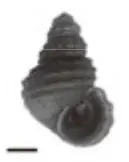
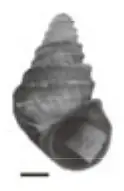
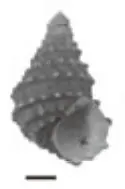
It is a big, lidded freshwater snail of the river snail family, Viviparidae. Tchang and Tsi described it in 1949 as Margarya yangtsunghaiensis. It is now the type species of the genus Tchangmargarya. A 2015 revision of the Margarya snails of Yunnan's ancient lakes by Zhang and colleagues gave details of its shell and radula, and a 1996 karyotype study counted 24 chromosomes (2n).
Where it lives
The species is known only from Yangzong Lake (Yangzonghai), a plateau lake about 45 km east of Kunming at 1,770 m above sea level. The lake covers 31 square km and averages 19 m deep. The IUCN lists a single location, an area of occupancy of 32 square km and permanent freshwater lakes as its habitat.
Pins are Wikidata “endemic to” fields. Orange dots, when present, are GBIF occurrence tiles — survey bias included.
Why it is in trouble
The Red List cites sewage, nutrient loads, run-off, and herbicides and pesticides, all of which degrade the lake. It records a continuing decline in population, habitat area and number of locations, and an observed past reduction of 80 to 100 percent.
In 2008 provincial authorities announced heavy arsenic contamination in the lake basin, traced mainly to one industrial company, one of eight firms found polluting illegally. The lake was declared unfit for drinking, swimming or fishing. How the snail fared is not documented in the sources found.
What is being done
The IUCN lists awareness work, habitat restoration and resource and habitat protection as the actions needed. At the time of assessment, conservation sites had been identified over part of the range, but the species did not occur in a protected area and had no recovery plan or monitoring scheme. A provincial clean-up after the 2008 arsenic release aimed to cut arsenic levels within three years.
Sources
Written for this catalog in our own words from the sources below, checked against them on 12 November 2026. Population figures are estimates and carry the year they were made. Status and assessment year: IUCN. 2026. The IUCN Red List of Threatened Species. Version 2026-1. iucnredlist.org.