Endangered
Madagascarchaea lotzi
Madagascarchaea lotzi
Madagascarchaea lotzi is a pelican spider, a tiny long-necked spider from the montane rainforest of Ranomafana in central eastern Madagascar. Pelican spiders hunt other spiders. The IUCN Red List rates this species Endangered (assessed 2021), with an unknown population trend. It was formally described in 2018.
How to recognise it
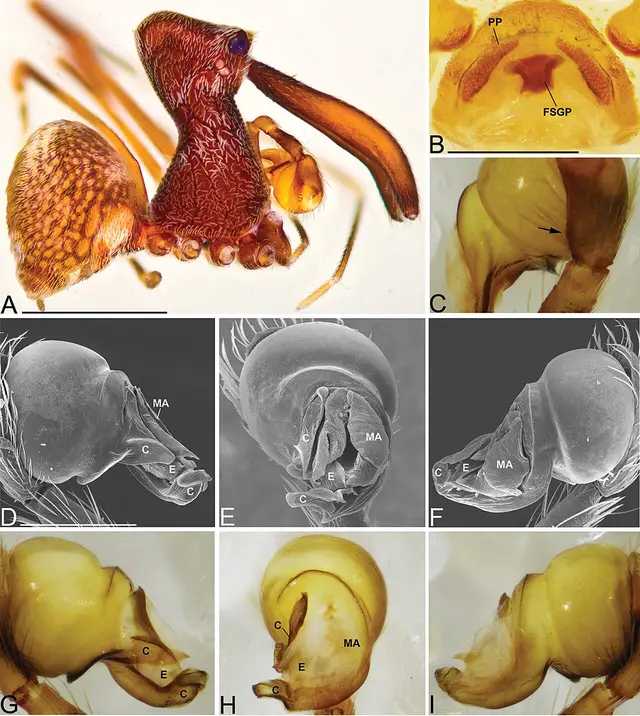
Adults are about 1.5 to 2 mm long. Males measure about 1.5 to 1.6 mm and females about 1.7 to 2.0 mm. Like other pelican spiders (family Archaeidae), it has a raised, neck-like head region and long jaws.
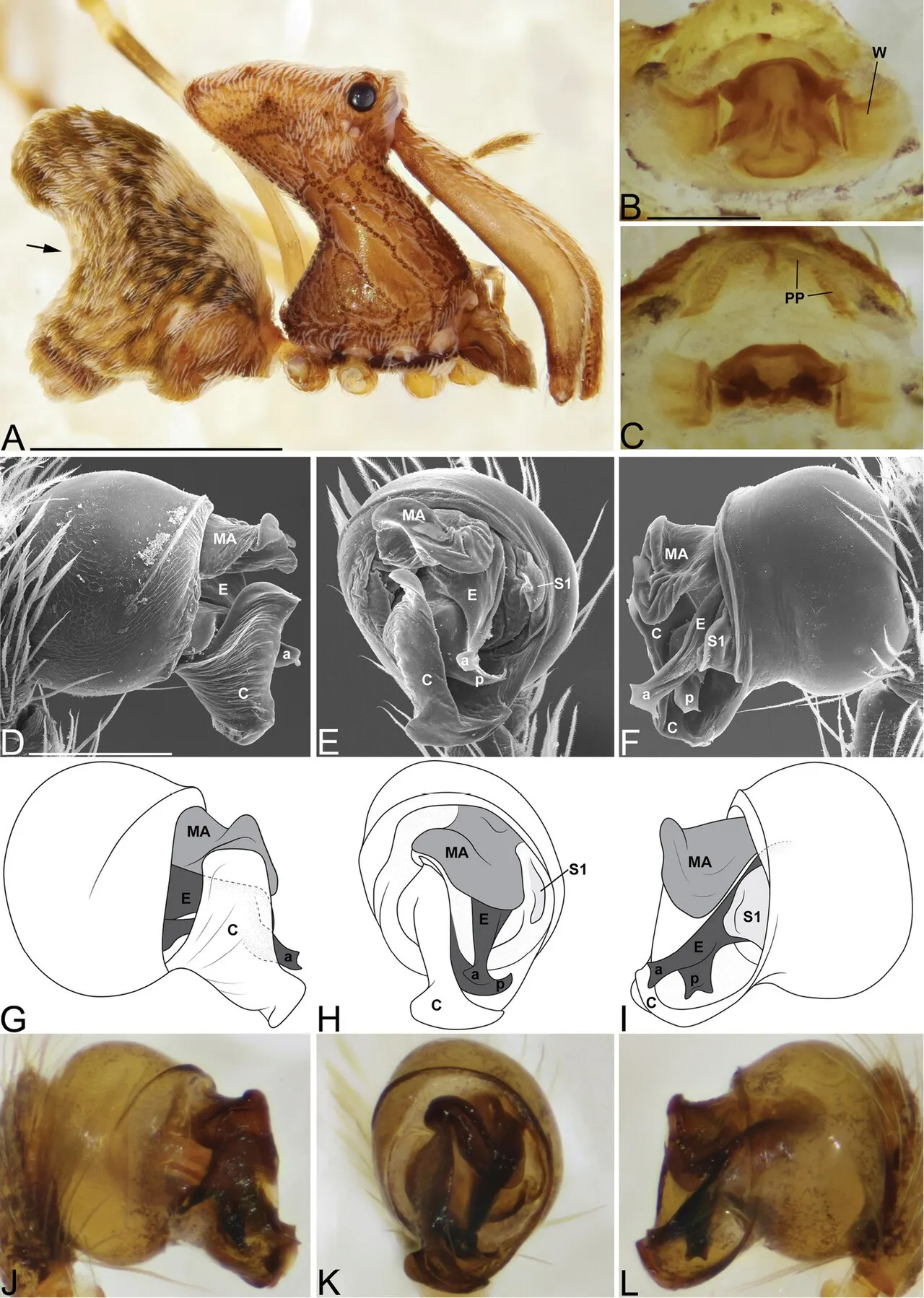
Telling it apart from close relatives takes a microscope. Specialists separate the species mainly by the shape of the male's palp, including a shallow fork in a structure called the embolus, and by a dent at the rear of the abdomen, which is usually present. Females of this species and three close relatives cannot be told apart.
Where it lives
The species is known only from Ranomafana National Park (Parc National Ranomafana) in central eastern Madagascar. Specimens have been collected in montane rainforest between about 900 and 1,200 m above sea level, on collecting trips between 1988 and 2009. The IUCN counts 5 to 6 locations, an extent of occurrence of about 36 square km and an area of occupancy of about 28 square km, and notes that it occurs in at least one protected area. Its habitat is listed as moist montane and lowland forest.
Pins are Wikidata “endemic to” fields. Orange dots, when present, are GBIF occurrence tiles — survey bias included.
How it lives
Little is recorded about this species' own habits, but pelican spiders as a family are specialists. They do not build webs to catch prey. They are active hunters that feed only on other spiders, extending their elongated jaws as far as 90 degrees from the body to strike from a distance. Collectors found this species by beating vegetation, including clumps of dead dry foliage, and by searching at night.
Why it is in trouble
The IUCN assessment records a continuing decline in forest area. It lists shifting agriculture, more frequent or intense fires, small-holder farming and grazing, and small-scale harvesting as threats. The population trend is recorded as unknown, and no population size has been estimated. The Endangered rating rests on its small range and the decline of its habitat, not on counts of spiders.
What is being done
Part of its range lies inside a protected area, and the IUCN lists site protection and site management as relevant conservation actions.
Sources
Written for this catalog in our own words from the sources below, checked against them on 12 November 2026. Population figures are estimates and carry the year they were made. Status and assessment year: IUCN. 2026. The IUCN Red List of Threatened Species. Version 2026-1. iucnredlist.org.