Endangered
Randrianasolo's sportive lemur
Lepilemur randrianasoloi
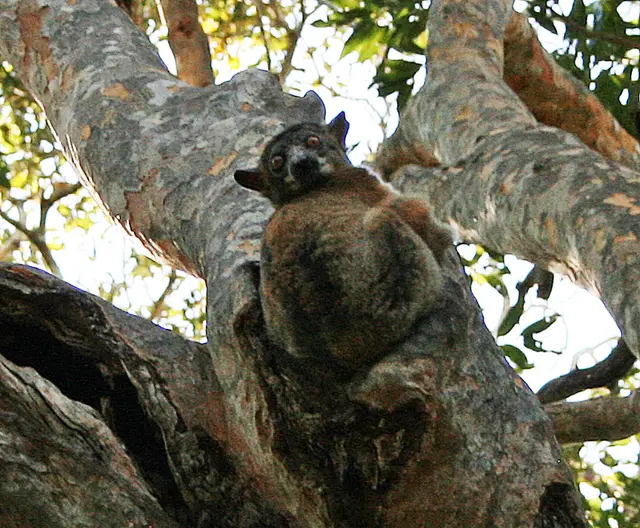
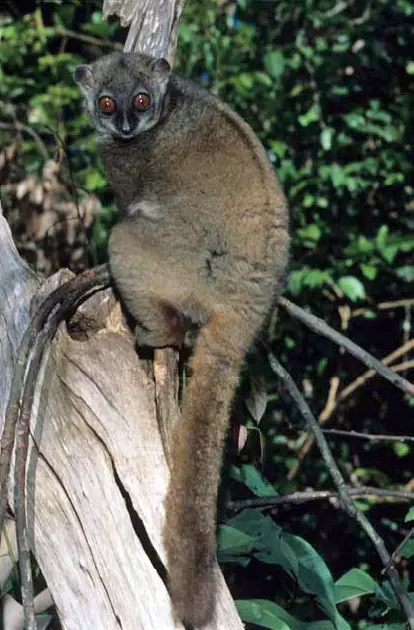
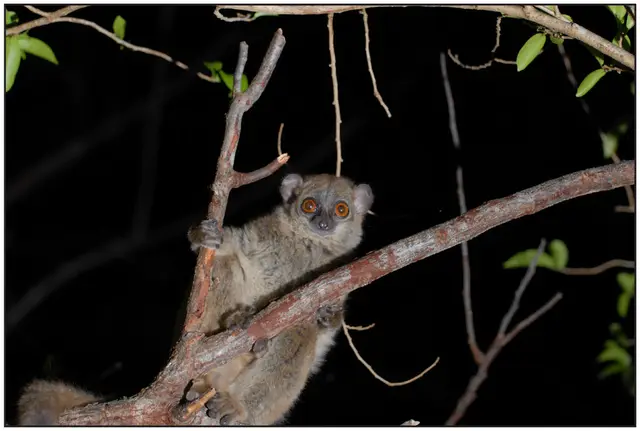
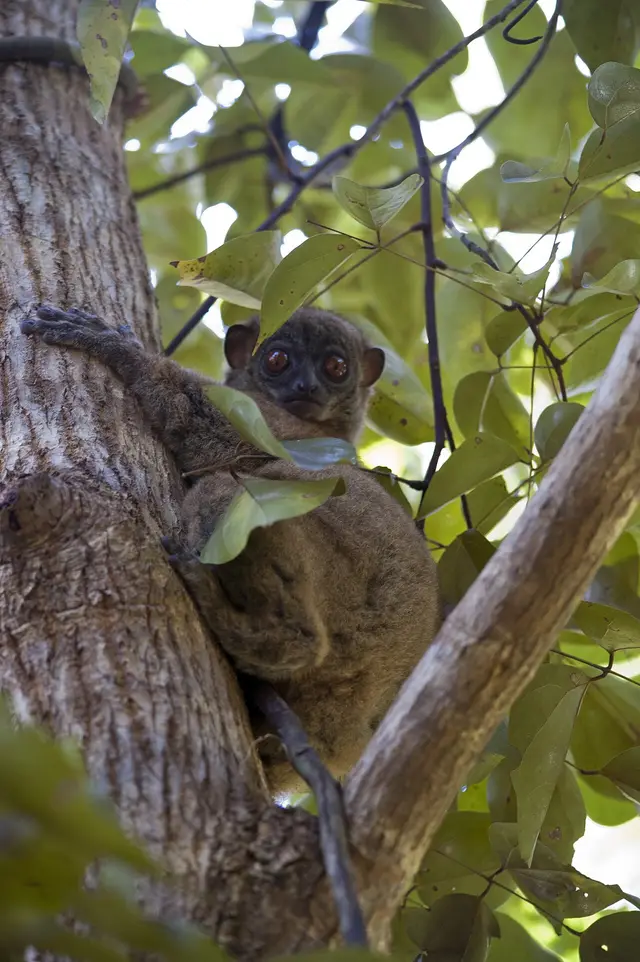
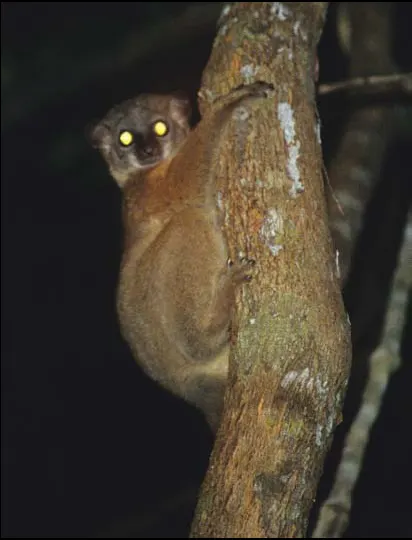
Randrianasolo's sportive lemur (Lepilemur randrianasoloi), also called the Bemaraha sportive lemur, is a sportive lemur confined to a small patch of dry forest in western Madagascar. The IUCN assessed it as Endangered in 2020, with a decreasing population, a fragmented range and forest still being lost.
How to recognise it
This is one of Madagascar's sportive lemurs. It measures about 49 to 56 cm in total, with the tail accounting for roughly 21 to 26 cm. It is slightly smaller than its closest relatives, with a narrower but longer head, and has longer hind feet than the red-tailed sportive lemur.
Its naming history is slightly tangled. It was first described in 2006 under the misspelled name Lepilemur randriansoli, honouring the Malagasy researcher Georges Randrianasolo. The spelling was corrected in 2009 and a fuller description followed in 2017. Genetic work places it next to the Antafia sportive lemur.
Where it lives
It lives only in a small area of western Madagascar, including Tsingy de Bemaraha National Park, the Andramasay forest and nearby forest fragments. The IUCN gives its extent of occurrence as about 2,200 square kilometres, at low elevations of roughly 47 to 139 m.
Its habitat is dry forest, the only habitat type the IUCN lists for it. The Manambolo River to the north and the Tsiribihina River to the south have been proposed as its natural limits, though that has not been tested on the ground.
Pins are Wikidata “endemic to” fields. Orange dots, when present, are GBIF occurrence tiles — survey bias included.
How it lives
Little has been published on this species alone, so the following describes sportive lemurs as a group. They are strictly nocturnal and spend the day hidden in leafy cover or tree hollows. They leap between trunks on strong hind legs, eat mostly leaves, and are largely solitary, defending territories against same-sex intruders.
For this species the IUCN gives a generation length of about 7 years.
Why it is in trouble
The IUCN lists shifting agriculture as an ongoing threat, records a continuing decline in the area of habitat, and describes the population as severely fragmented. Its assessment bases a population reduction of about 50 percent, past and ongoing, and a projected 70 percent in future, on habitat decline. Reportedly, forest clearing for crops and timber extraction are the main causes.
Climate is a further worry. A projection reported for the species suggests climate change alone could cut its range by 87 percent by 2080. That is a model result, not a measured loss.
What is being done
Part of its range lies inside Tsingy de Bemaraha National Park. The IUCN records that conservation sites have been identified over its entire range and lists resource and habitat protection as an action in place. Like all lemurs, it is listed on CITES Appendix I. No population estimate is given in the assessment.
Sources
Written for this catalog in our own words from the sources below, checked against them on 12 November 2026. Population figures are estimates and carry the year they were made. Status and assessment year: IUCN. 2026. The IUCN Red List of Threatened Species. Version 2026-1. iucnredlist.org.