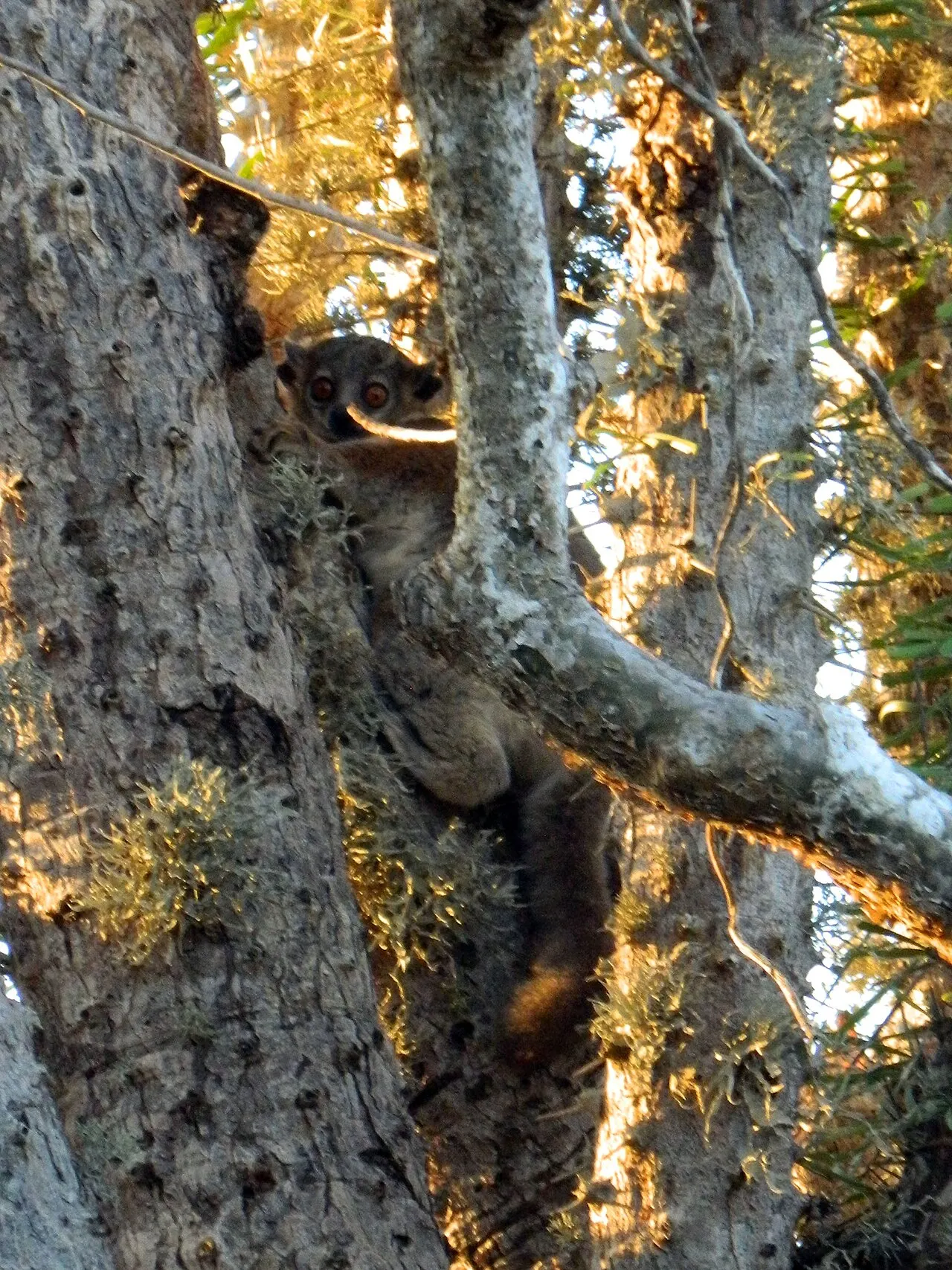
Endangered
Petter's sportive lemur
Lepilemur petteri
Petter's sportive lemur (Lepilemur petteri) is a small, nocturnal, tree-living lemur from the dry spiny forests of southwestern Madagascar. It was only named in 2006. The IUCN Red List rated it Endangered in 2020, with numbers falling as forest is cleared for farming.
How to recognise it
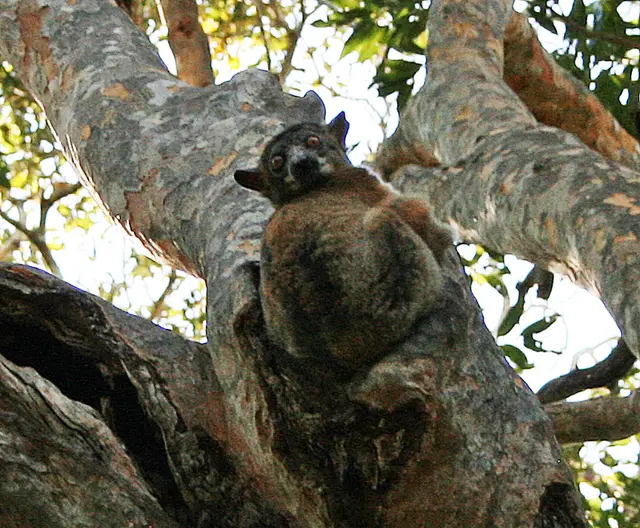
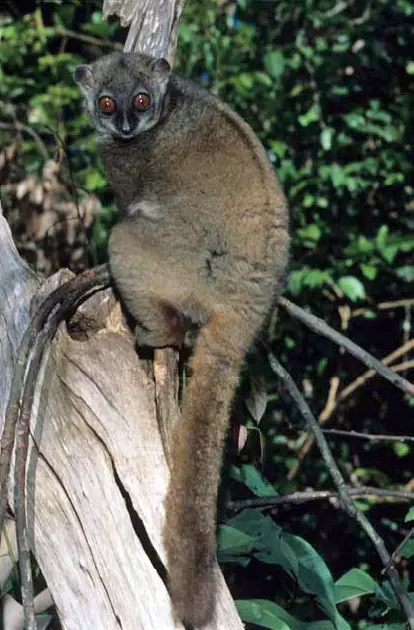
It's one of the smaller sportive lemurs. Total length is about 49 to 54 cm, and nearly half of that is tail, at 22 to 25 cm. A species account gives a weight of about 630 g.
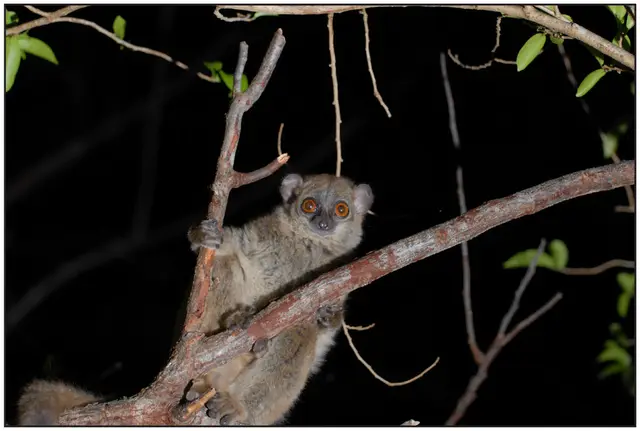
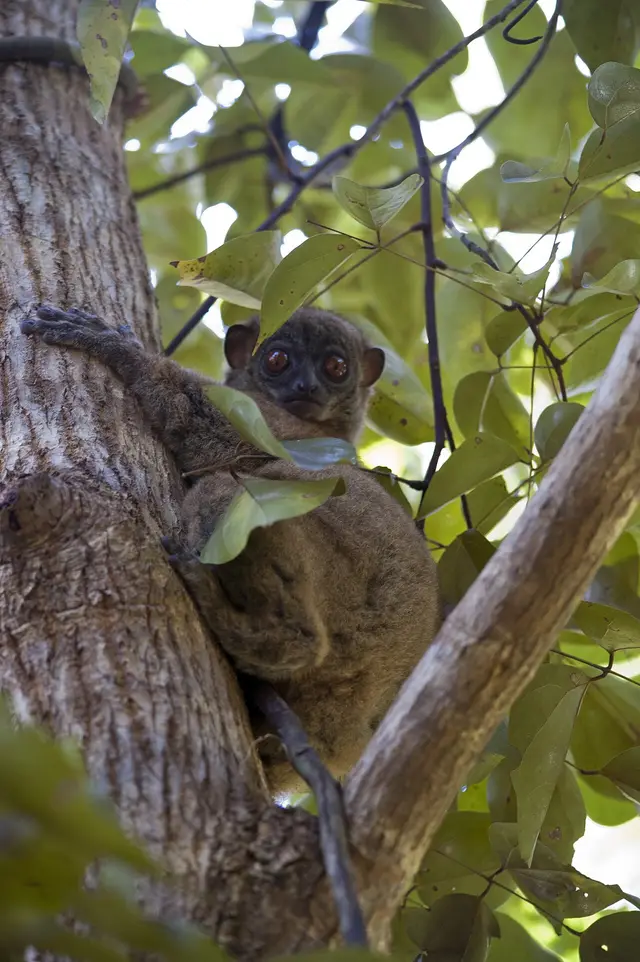
The fur is gray to grayish-brown above and whitish-gray below, with brownish-gray on the front of the thighs and along the midline of the back. The face is gray with paler rings around the eyes and a pale patch under the chin. Until 2006 it was identified as the white-footed sportive lemur (Lepilemur leucopus).
Where it lives
It lives only in southwestern Madagascar. The type locality is Beza Mahafaly, and the species is known from the region south of the Onilahy River and west of the Linta River. Its northern limit is unknown.
The IUCN assessment records it in dry forest at low elevations, around 146 to 169 m. Other accounts mention dry spiny forest and some gallery forest.
Pins are Wikidata “endemic to” fields. Orange dots, when present, are GBIF occurrence tiles — survey bias included.
How it lives
It is nocturnal and arboreal. At Beza Mahafaly, animals have been recorded spending about half the night resting or grooming, around 30 percent feeding, and 10 to 15 percent moving about. They rest more and travel less in the cool, dry season. Social contact and calling take up only about 5 percent of the night.
Activity doesn't seem tied to moonlight, though they use the highest layer of the forest less often when the moon is full. The diet is presumed to be mostly leaves, but no specific feeding study exists.
Why it is in trouble
The IUCN records the population as decreasing and severely fragmented, with continuing decline in the area it occupies. The threat it names is shifting agriculture, where forest is cleared for crops. The assessment uses a generation length of 7 years and projects a reduction of around 50 percent.
The species was judged Vulnerable at a 2012 lemur workshop and listed Vulnerable in 2014. The 2020 assessment raised it to Endangered under criterion A3cd, which relates to projected decline and habitat quality.
What is being done
The only known protected area where it occurs is the Beza Mahafaly Special Reserve, together with adjacent classified forest, where an early survey found 9 to 12 animals per km. The IUCN lists site and area management and harvest management among the actions in place. The species is on CITES Appendix I.
Sources
Written for this catalog in our own words from the sources below, checked against them on 12 November 2026. Population figures are estimates and carry the year they were made. Status and assessment year: IUCN. 2026. The IUCN Red List of Threatened Species. Version 2026-1. iucnredlist.org.