Endangered
Daraina sportive lemur
Lepilemur milanoii
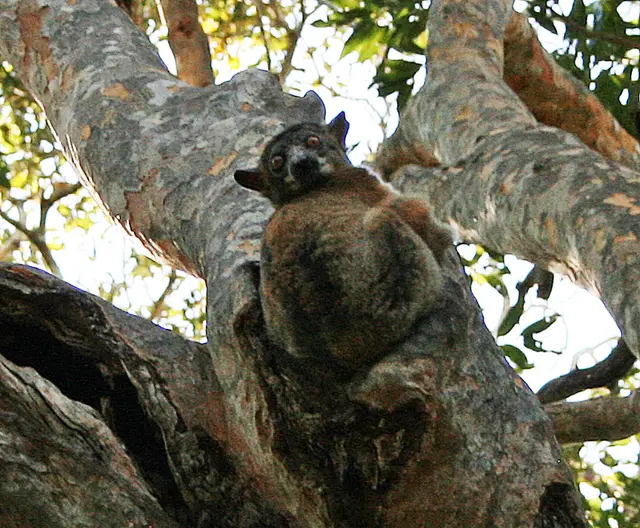
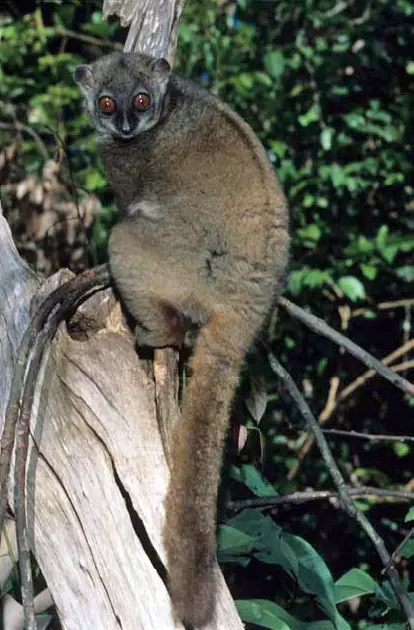
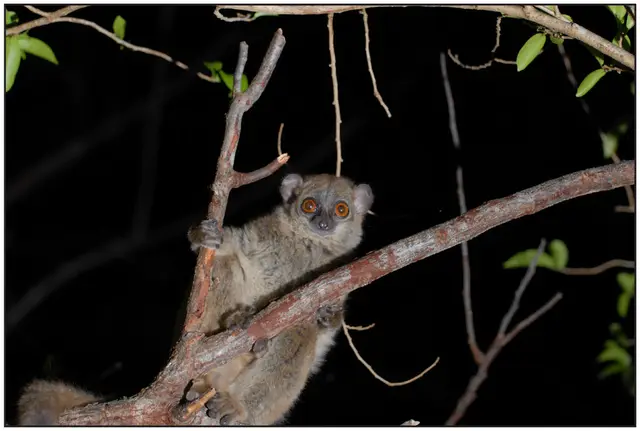
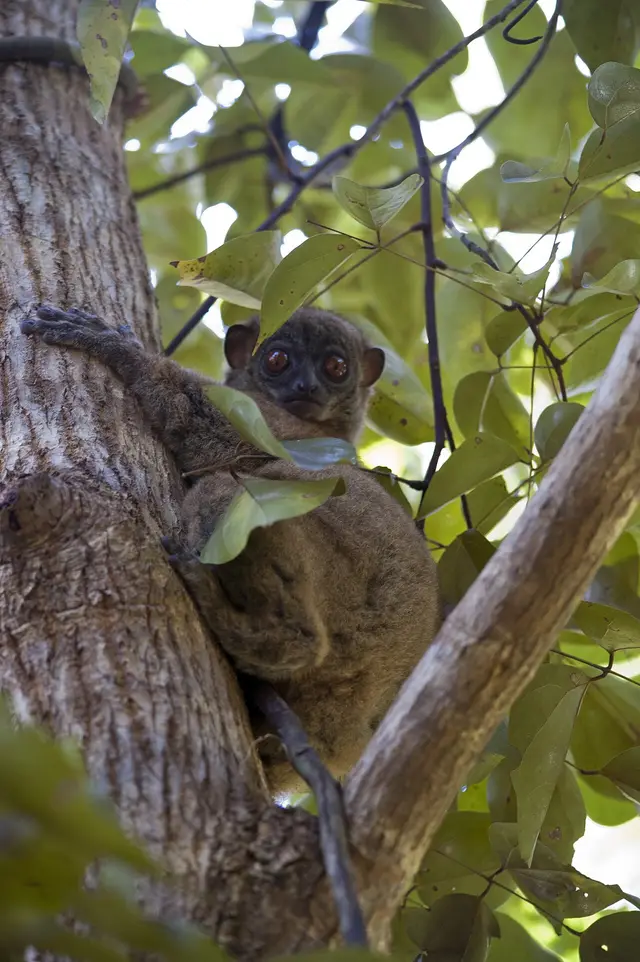
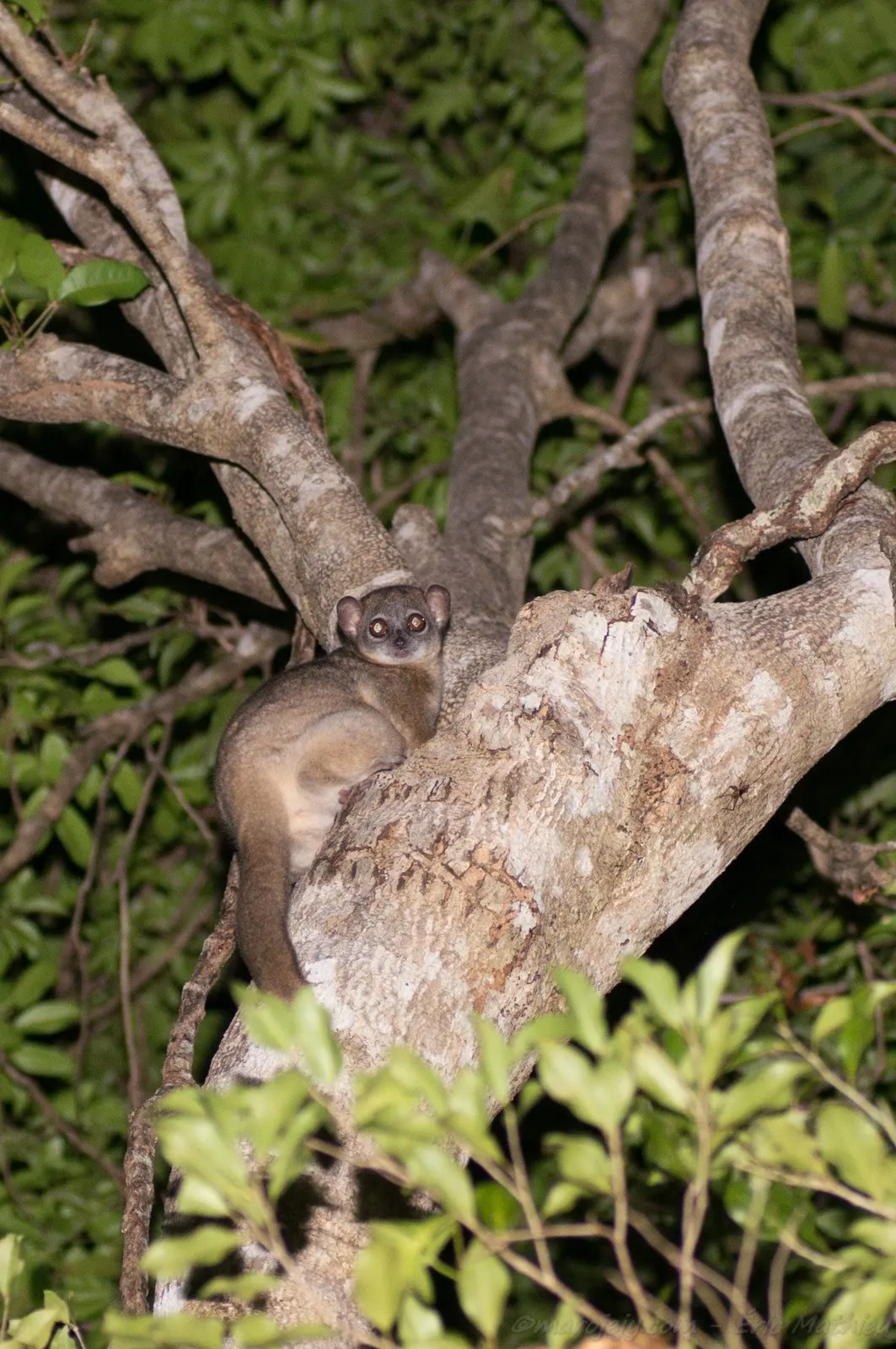
The Daraina sportive lemur (Lepilemur milanoii) is a small nocturnal lemur from the dry forests of northern Madagascar, described as a species in 2006. The IUCN Red List rates it Endangered (2020 assessment; also Endangered in 2014 and Data Deficient in 2008). Its range is small and fragmented, and forest loss and hunting keep pushing numbers down.
How to recognise it
It's a fairly small sportive lemur, reportedly 49 to 56 cm long including a tail of 24 to 27 cm. It's very hard to tell from its neighbour the Ankarana sportive lemur (Lepilemur ankaranensis) by looks alone. Field researchers working in the north found the two could not be separated by measurements, so records are assigned to one or the other according to where they were made.
Where it lives
The species is endemic to northern Madagascar. Its known range centres on the Loky-Manambato region, also called Daraina, where the forests are mostly fragmented dry forest on separate granite and metamorphic blocks, linked by streamside corridors or surrounded by farmland. It has also been reported in the Andrafiamena protected area, where it overlaps with the Ankarana sportive lemur. Both protected areas are managed by the NGO Fanamby.
The IUCN gives 12 locations and a low-lying range, from 18 to 378 m above sea level. It lists dry forest and moist lowland forest as habitat, and other accounts add gallery forest and semi-evergreen forest.
Pins are Wikidata “endemic to” fields. Orange dots, when present, are GBIF occurrence tiles — survey bias included.
How it lives
Sportive lemurs sleep through the day and are active at night. Surveys in the dry seasons of 2011 to 2013 recorded 458 sleeping sites of the two northern species, and all but four were in tree hollows. For Daraina sportive lemurs, 104 of 278 records (37%) were in hollows of a single tree, the spineless monkey orange (Strychnos madagascariensis). Mampay trees, a group of legumes, came second with 13 records.
Densities can be high where forest remains, though estimates carry wide margins of error. A 2014 master's research report on lemur surveys made in 2010 to 2013 found the highest sportive lemur density in northern Madagascar at Ampodrabe, about 590 animals per square kilometre, while an earlier study of two other fragments in the region reported 105 to 195. The same report estimated roughly 50,000 Daraina sportive lemurs across the Loky-Manambato forests (a 95% interval of about 40,000 to 64,000) and called it good news compared with other primates there.
Why it is in trouble
The 2020 assessment lists Endangered under two sets of criteria: a projected or suspected population decline linked to habitat quality and exploitation (criterion A), and a small, fragmented range with continuing decline (criterion B). Generation length is about 5 years. The trend is decreasing, with continuing loss of habitat.
The threats named are shifting agriculture, hunting for food, and mining and quarrying. A lemur that sleeps in tree hollows is likely to depend on older trees, so clearing can cost it shelter as well as food.
What is being done
The IUCN records conservation sites identified over the species' range and presence in at least one protected area, and lists harvest management and site management among the actions needed. The Loky-Manambato forests and Andrafiamena are protected areas under Fanamby management. The species is on CITES Appendix I, which restricts international trade.
Sources
Written for this catalog in our own words from the sources below, checked against them on 12 November 2026. Population figures are estimates and carry the year they were made. Status and assessment year: IUCN. 2026. The IUCN Red List of Threatened Species. Version 2026-1. iucnredlist.org.