Endangered
Hubbard's sportive lemur
Lepilemur hubbardorum
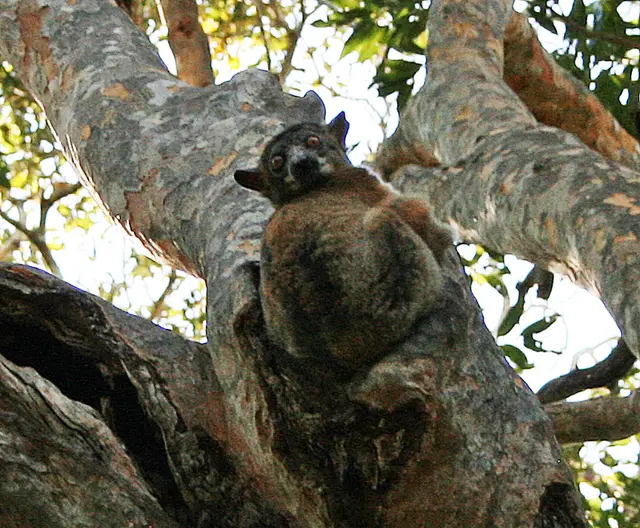
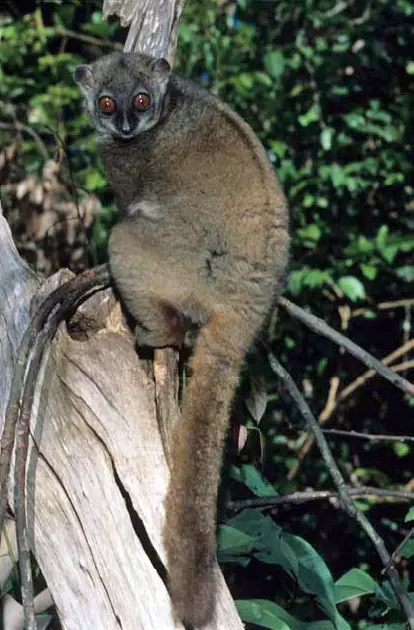
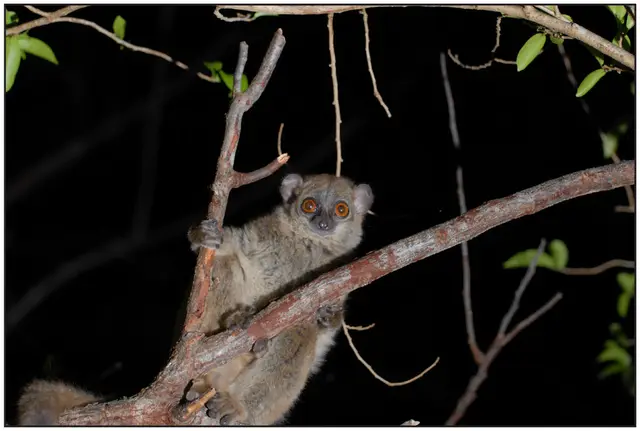
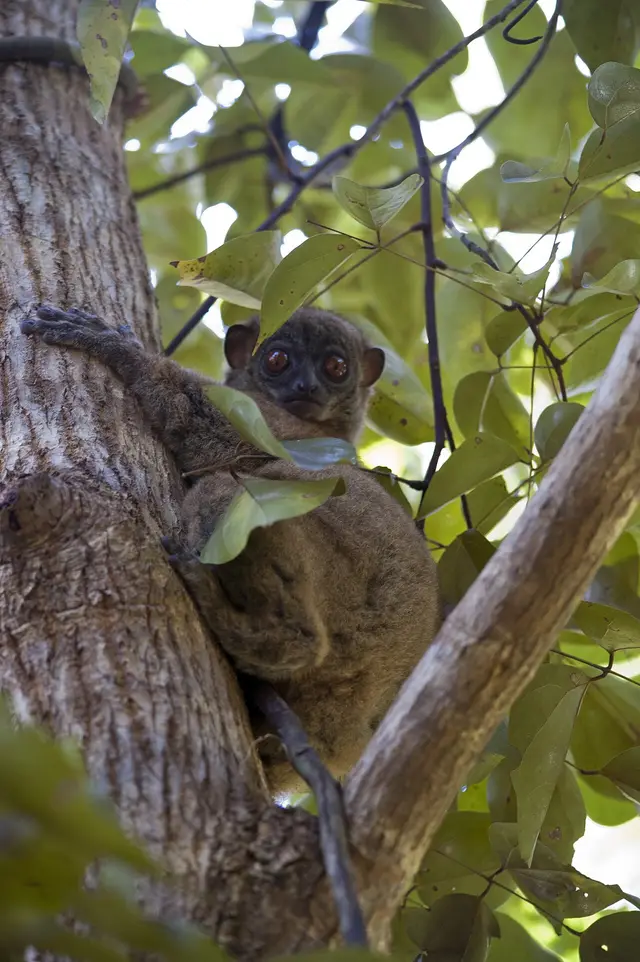
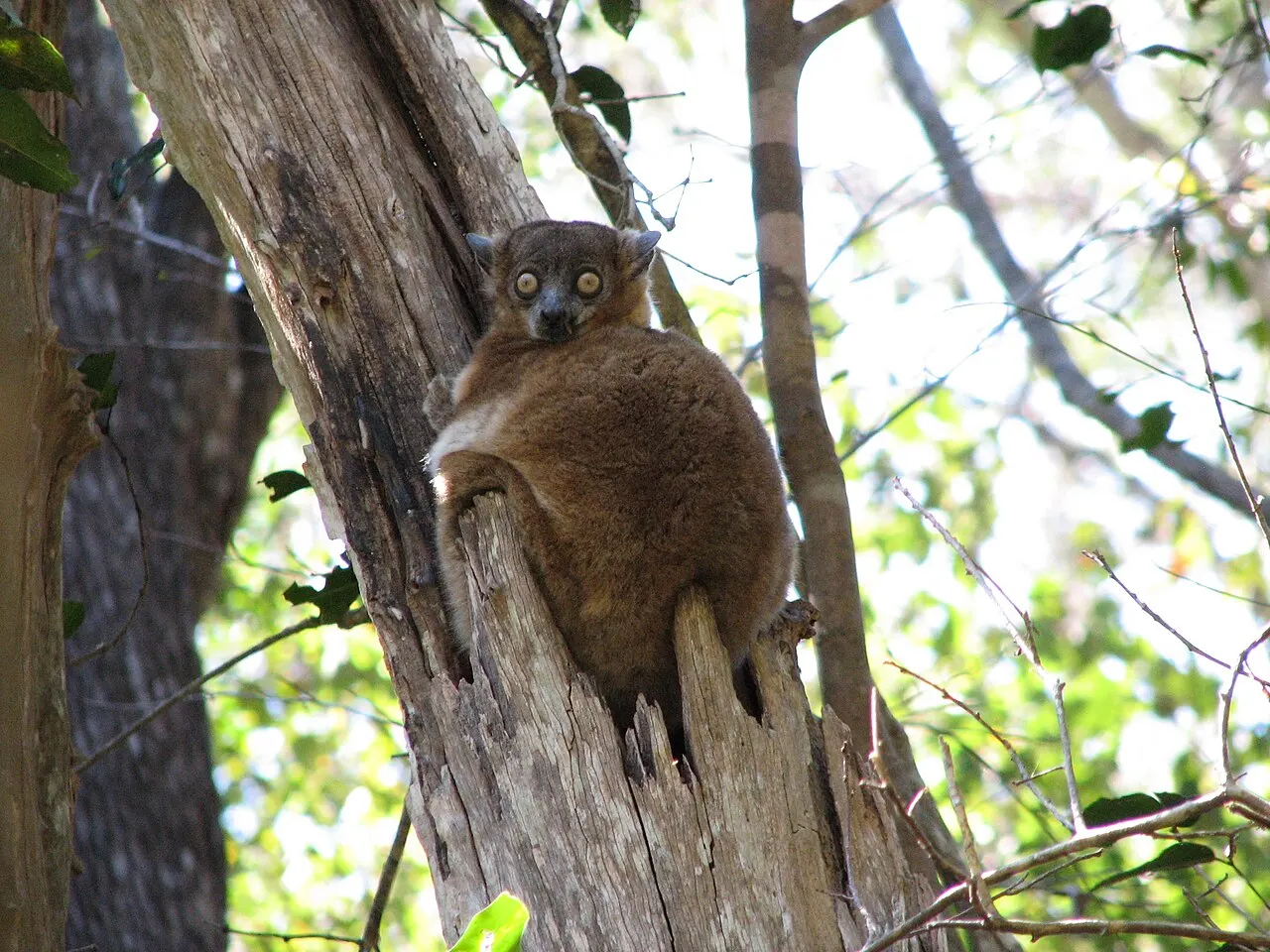
Hubbard's sportive lemur (Lepilemur hubbardorum), also called the Zombitse sportive lemur, is a night-active primate found only in a small area of dry forest in southwestern Madagascar. The IUCN Red List assessed it as Endangered in 2020, with its population decreasing. It was described as a species only in 2006.
How to recognise it
This is a medium-sized sportive lemur, about 51 to 59 cm long including a tail of roughly 23 to 25 cm. Sportive lemurs (family Lepilemuridae) are nocturnal, tree-living lemurs.
It was described in 2006 by Louis and colleagues, who used mitochondrial DNA to show it differs clearly from the red-tailed sportive lemur. The original spelling, hubbardi, is reported to have been incorrectly formed and was changed to hubbardorum in 2009, though some taxonomic lists still use the original form.
Where it lives
The species is known only from southwestern Madagascar, between the Onilahy River to the south and the Mangoky River to the north. It occurs in Zombitse-Vohibasia National Park, in dry transitional forest, and the IUCN lists dry tropical forest as its habitat. The IUCN gives its extent of occurrence as 276 square kilometres and rates its population as severely fragmented.
Pins are Wikidata “endemic to” fields. Orange dots, when present, are GBIF occurrence tiles — survey bias included.
How it lives
It is nocturnal and lives in trees. Little is documented about its diet or social life in the wild. A species account presumes it feeds mainly on leaves, as other sportive lemurs do, but no feeding data for this species has been published.
The IUCN estimates a generation at about 4.5 years.
How many are left
A 2021 study in Folia Primatologica by Luke Martin and colleagues gave the first systematic estimate. Researchers walked line transects in the Zombitse part of the park and recorded 234 sightings over 18 nights and 47.2 km of survey. They calculated a density of about 146 animals per square kilometre (95 percent range 97 to 218) and extrapolated to roughly 16,500 to 18,000 animals across the protected forest there.
The study called its figure provisional. It did not sample the park's remote areas, where hunting and habitat disturbance are thought to have caused local declines.
Why it is in trouble
The IUCN lists hunting (animals taken deliberately, and others caught unintentionally in small-scale harvest), shifting agriculture, mining and quarrying, habitat shifting and alteration, droughts and temperature extremes as ongoing threats. It records continuing decline in both the area the species occupies and its habitat.
The small range adds to the risk. With a population rated severely fragmented, local losses are hard to make up.
What is being done
The IUCN records that the species occurs in at least one protected area, Zombitse-Vohibasia National Park, and that conservation sites are identified across its whole range. It is also covered by international trade controls. The IUCN lists no species-specific recovery programme.
Sources
Written for this catalog in our own words from the sources below, checked against them on 12 November 2026. Population figures are estimates and carry the year they were made. Status and assessment year: IUCN. 2026. The IUCN Red List of Threatened Species. Version 2026-1. iucnredlist.org.