Endangered
Gray-backed sportive lemur
Lepilemur dorsalis
The gray-backed sportive lemur, also called Gray's sportive lemur, is a small night-active leaf-eater found only in the Sambirano region of north-west Madagascar. The IUCN's 2022 assessment rates it Endangered, with a decreasing population, mainly because its lowland forest is being cleared and the animals are hunted.
How to recognise it
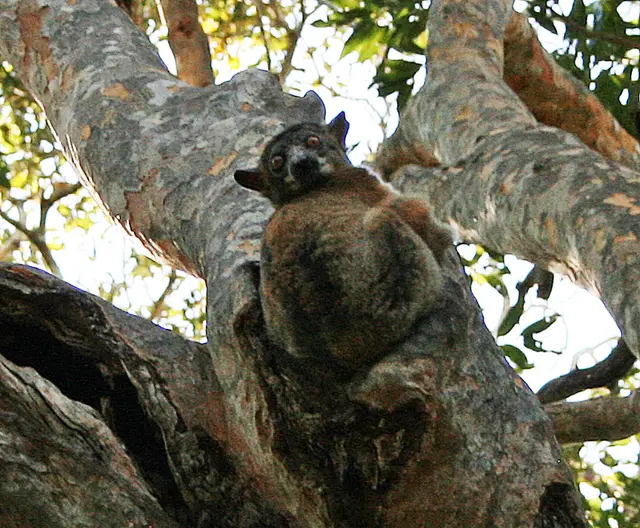
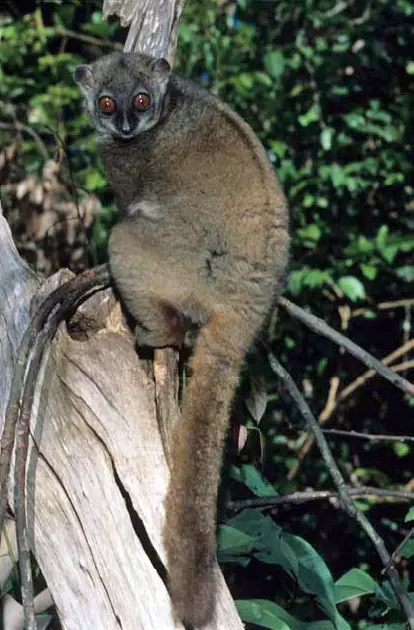
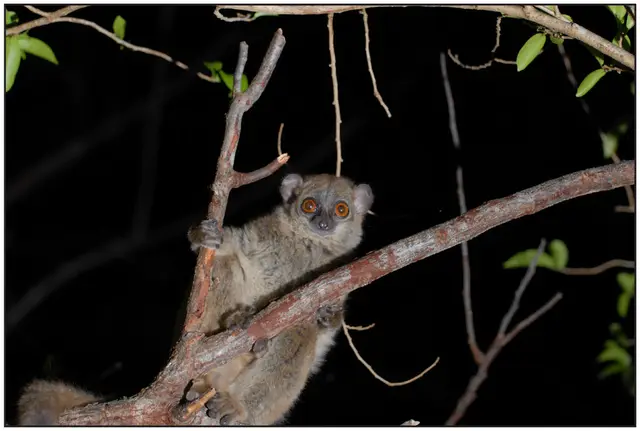
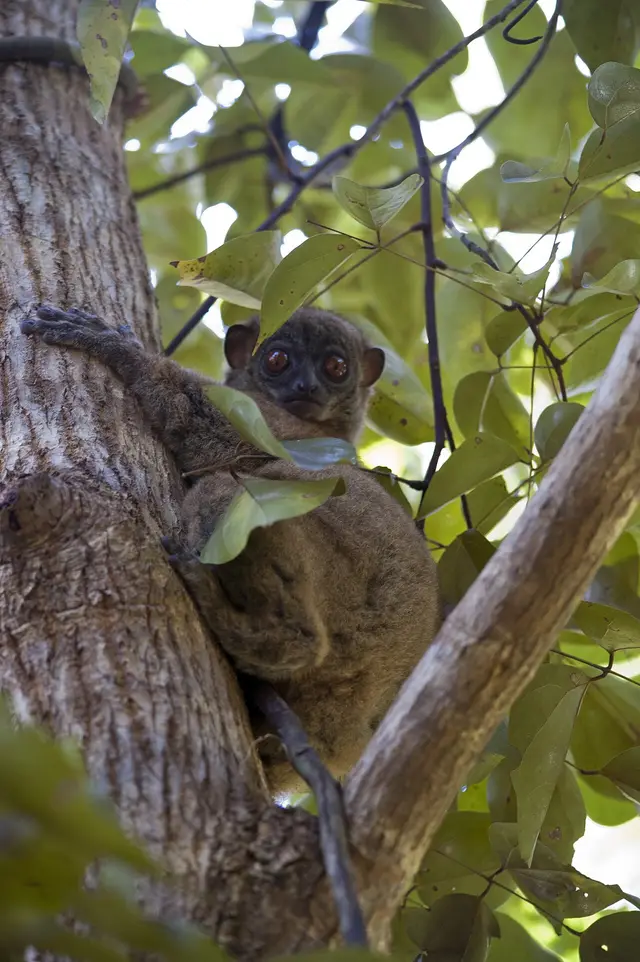
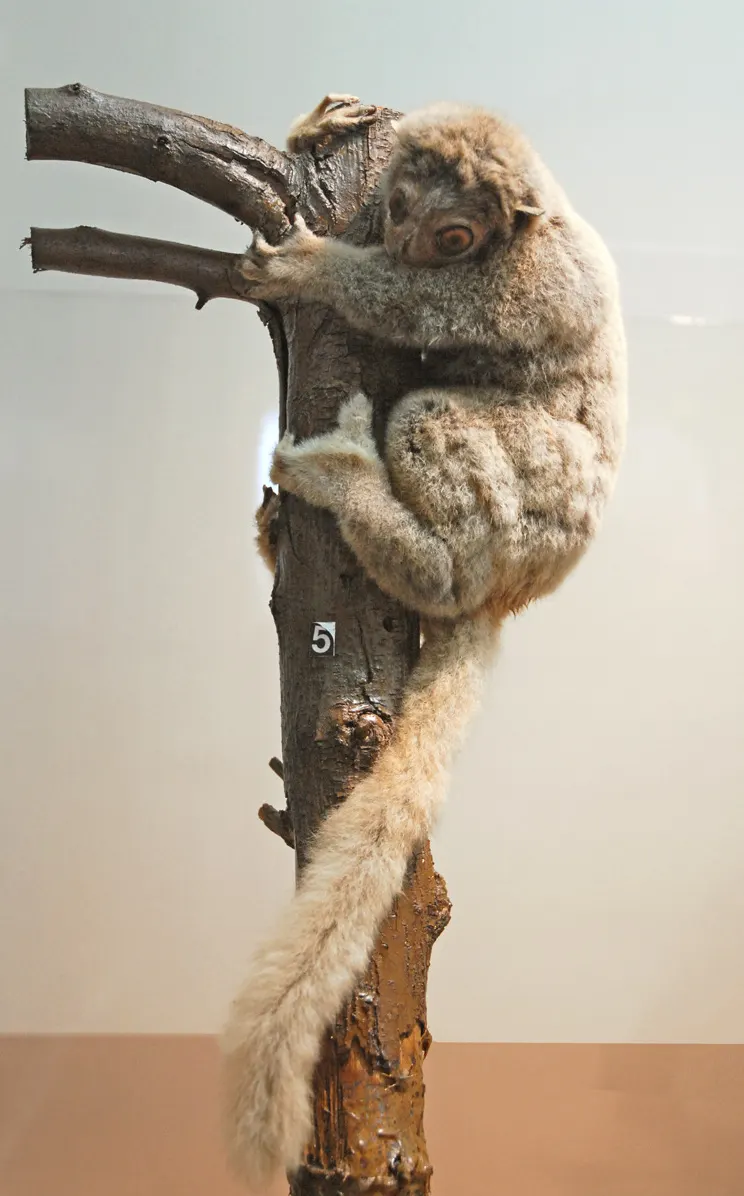
It's a compact lemur. The back, head and tail are gray-brown to reddish-brown with a dark stripe down the middle, and the belly is pale. It has a short, blunt muzzle, large round ears and big eyes that shine at night. Head and body measure about 30 to 35 cm, the tail adds roughly 26 to 28 cm, and adults usually weigh 500 to 730 g, with a few reaching 900 g. John Edward Gray described it in 1870.
Where it lives
The species is endemic to Madagascar and centred near the town of Ambanja in the Sambirano. The IUCN gives an extent of occurrence of about 7,082 square kilometres and an altitude of 100 to 370 m, in lowland moist forest. It's recorded in both primary and secondary forest.
Its limits are still debated. Some lemurs once split off as separate species, such as Mittermeier's sportive lemur, may be genetically part of this one. Manongarivo Special Reserve is the protected area named for it, and it may also occur in Lokobe on Nosy Be and in Tsaratanana.
Pins are Wikidata “endemic to” fields. Orange dots, when present, are GBIF occurrence tiles — survey bias included.
How it lives
It's nocturnal and tree-living, moving by clinging upright to trunks and leaping, with jumps of up to about 4 m. By day it rests in tree hollows in primary forest or in dense growth in drier forest. It eats mostly leaves from dozens of plant species, plus some flowers and occasional fruit. A leaf diet gives little energy, and sportive lemurs have among the lowest metabolic rates of any mammal.
It's mostly solitary. Home ranges are small, about 0.8 to 3 hectares. Same-sex animals defend their ground, while male and female ranges can overlap. Births are mostly from August to November, usually a single young.
Why it is in trouble
The IUCN estimates a past decline of about 30 percent, an ongoing decline of about 30 percent, and a projected 50 percent fall in the future, based on shrinking habitat and exploitation. It records the population as severely fragmented. Listed pressures include shifting agriculture, small-holder farming, hunting of the animal itself, and mining and quarrying (rated low impact). Other accounts add clearing of forest for rice, cocoa and coffee, illegal logging and hunting for food.
What is being done
The species is on Appendix I of CITES, which bans international commercial trade. The IUCN records conservation sites over the entire range and lists harvest management and site management as needed actions. No population estimate exists.
Sources
Written for this catalog in our own words from the sources below, checked against them on 12 November 2026. Population figures are estimates and carry the year they were made. Status and assessment year: IUCN. 2026. The IUCN Red List of Threatened Species. Version 2026-1. iucnredlist.org.