Endangered
Ankarana sportive lemur
Lepilemur ankaranensis
The Ankarana sportive lemur (Lepilemur ankaranensis) is a small, night-active primate found only in the far north of Madagascar. The IUCN Red List lists it as Endangered (assessed 2020), with a decreasing population. It sleeps in tree holes by day and is hunted and squeezed out by forest loss.
How to recognise it
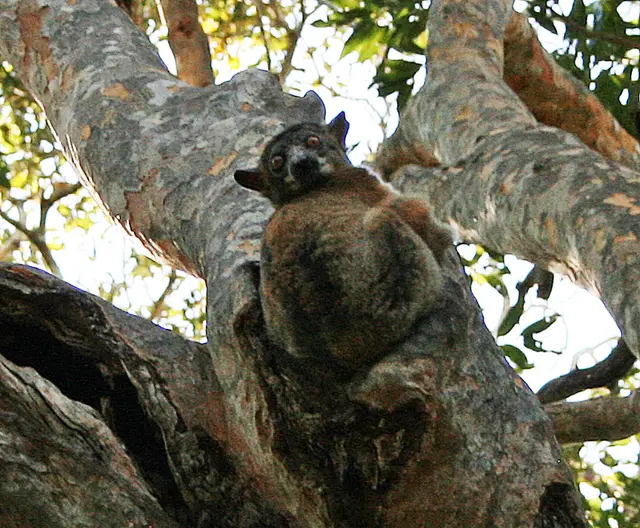
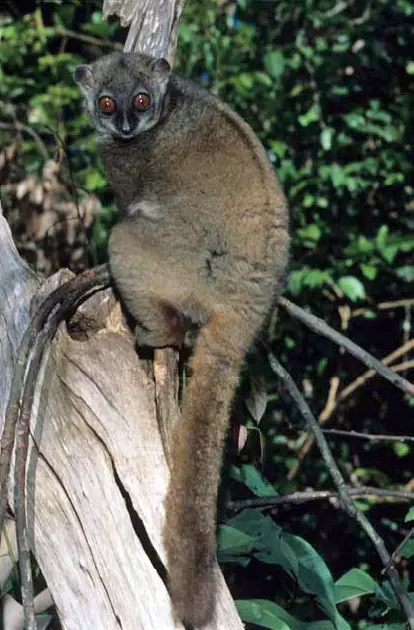
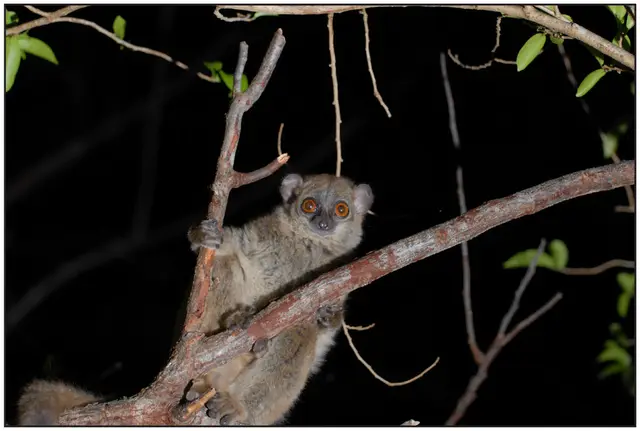
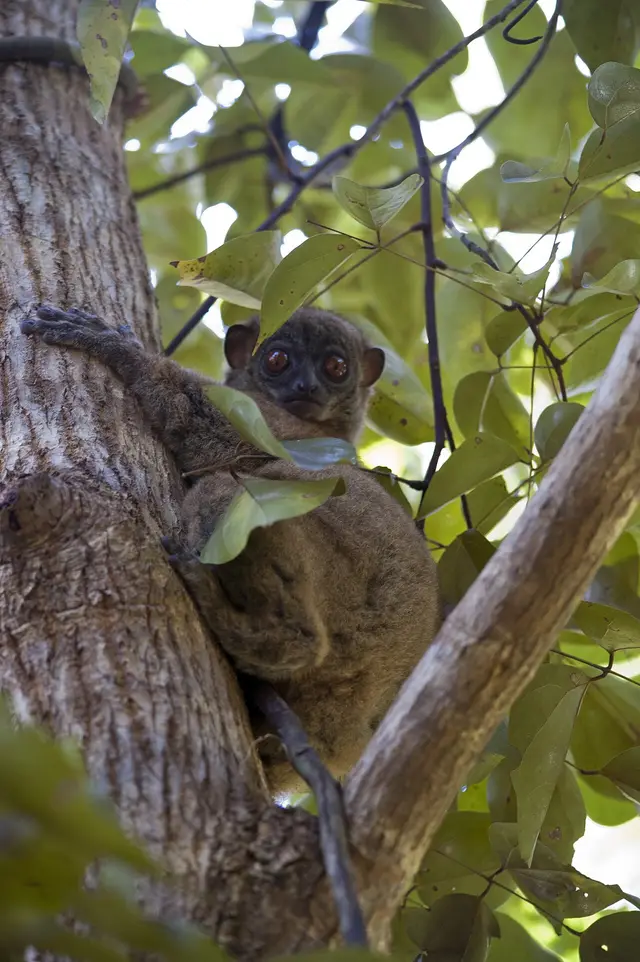
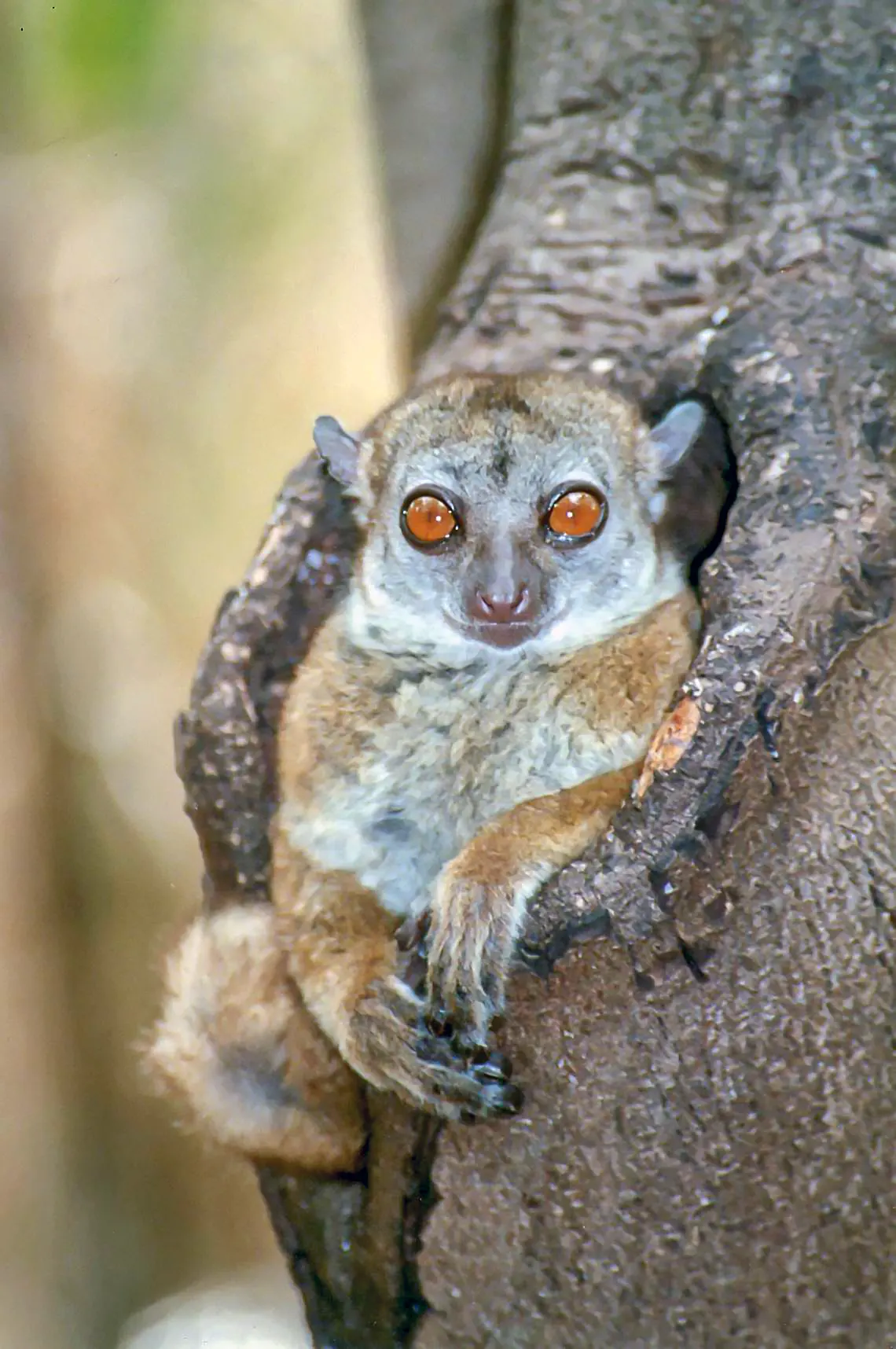
This is one of the smaller sportive lemurs. A typical adult weighs about 750 g and measures roughly 53 cm from nose to tail tip, with the tail making up about 25 cm of that. The coat is grayish brown above and gray below, the tail dark gray or light brown, and the eyes are large and bulging. Males and females look alike.
It is also called the Ankarana weasel lemur. The species was described in 1975.
Where it lives
It is found in the northern tip of Madagascar, in dry lowland forest at Ankarana, Andrafiamena and Analamerana, and in forest on the slopes of Montagne d'Ambre. The IUCN gives an extent of occurrence of about 2,350 square kilometres across three locations and five subpopulations, at elevations from 5 to 434 m.
The IUCN records that conservation sites have been identified over the whole range and that the species occurs in at least one protected area.
Pins are Wikidata “endemic to” fields. Orange dots, when present, are GBIF occurrence tiles — survey bias included.
How it lives
Sportive lemurs are nocturnal and live in trees. By day this species shelters in small tree holes or tangles of vines. A 2015 study in Madagascar Conservation and Development found that one tree, the spineless monkey orange (Strychnos madagascariensis), held about a third of 458 sleeping sites recorded for this lemur and a neighbouring northern sportive lemur.
It eats fruit in the rainy season and leaves in the dry season, and has been seen taking sap and latex. Adults are mostly solitary and territorial, with home ranges averaging around 1 ha. Females usually have one or two young at the start of the rainy season, between September and December. The young are weaned at about four months and stay with their mother until about 18 months old.
Why it is in trouble
The IUCN lists shifting agriculture, mining and quarrying, and deliberate hunting among the threats. It estimates a population reduction of 50 percent, covering the past, the present and the future, with a generation put at 5 years. The overall population size is unknown.
Forest is cleared for charcoal, sapphire mining and rosewood logging, and hunting for food has risen as more miners move into the area. Some animals are also trapped as pets. Native boas prey on them at their sleeping sites.
What is being done
The species is on CITES Appendix I, which bars international commercial trade. The IUCN lists site and area management and harvest management among the actions needed.
Sources
Written for this catalog in our own words from the sources below, checked against them on 12 November 2026. Population figures are estimates and carry the year they were made. Status and assessment year: IUCN. 2026. The IUCN Red List of Threatened Species. Version 2026-1. iucnredlist.org.