Critically Endangered
Forktail lates
Lates microlepis
The forktail lates (Lates microlepis) is a large predatory perch found only in Lake Tanganyika, in East and Central Africa. It grows to at least 93 cm and hunts in open water as an adult. The IUCN Red List moved it to Critically Endangered in 2025, with a decreasing population, because of heavy fishing.
How to recognise it
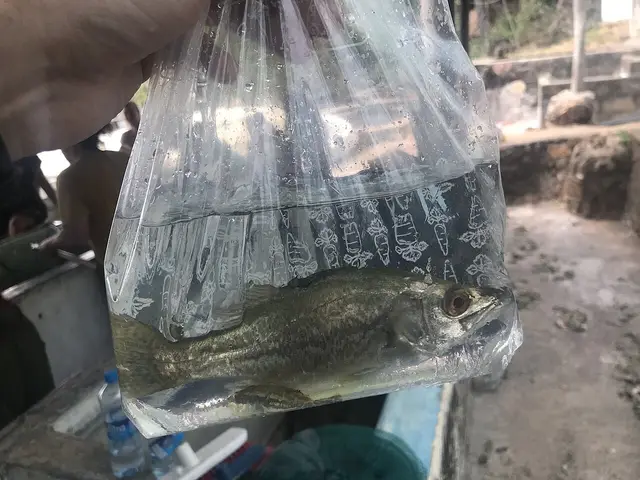
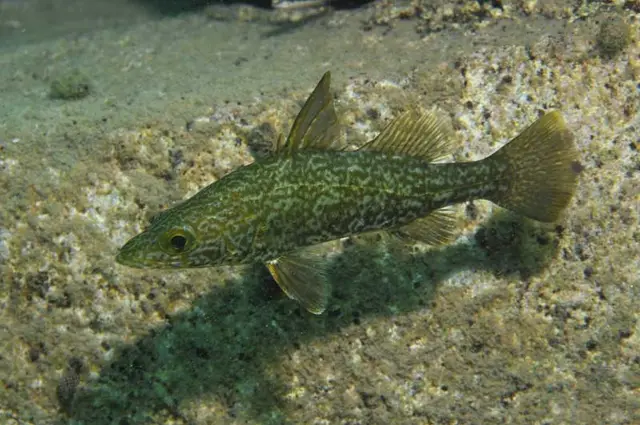
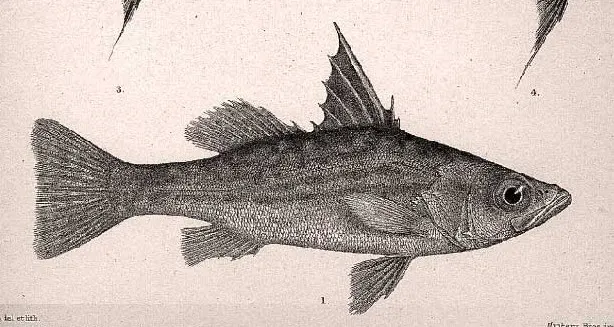
The forktail lates is a lates perch (family Latidae). Juveniles have a notched (emarginate) tail fin. The largest recorded length is 93 cm, and the heaviest reported weight is 8.3 kg. FishBase gives a length at maturity of about 51 cm.
Local names differ by age in the languages of the lake. The IUCN lists nonzi (Swahili) and inonzi (Kirundi) for adults, and names such as keke, makeke and sabalanda for juveniles.
Where it lives
The species is endemic to Lake Tanganyika. The IUCN lists it for Burundi, the Democratic Republic of the Congo, Tanzania and Zambia, and says it uses permanent freshwater lakes and rivers. FishBase also reports it from the Malagarasi River delta, and says juveniles are often found near river mouths but not in the rivers.
Young fish stay in a specific inshore habitat until they are about 18 cm long, then move out into the surface waters of the open lake. Adults are pelagic.
Pins are Wikidata “endemic to” fields. Orange dots, when present, are GBIF occurrence tiles — survey bias included.
How it lives
Adults are open-water predators, feeding mainly on clupeids (small sardine-like fishes) and to a lesser extent on another Tanganyika fish, Luciolates. FishBase says it lays eggs, with distinct pairing during breeding, and puts its generation time at about 3.2 years.
Why it is in trouble
Fishing is the main cause. The IUCN lists large-scale harvest, along with soil erosion and sediment and rubbish entering the lake, as threats, and the species is eaten as food. It is also prized as a game fish. The Critically Endangered listing rests on criterion A2d, a population reduction based on actual or potential levels of exploitation. The assessment gives an estimated past reduction of 80 percent and a projected further reduction of 40 to 79 percent.
An older record shows how long this has been going on. A fisheries report on Zambian waters gave the industrial catch of forktail lates as 0.18 tonnes per haul in 1963 to 1967 and 0.04 tonnes per haul in 1978 to 1983, a fall of about 78 percent, while the total catch per haul stayed near one tonne. The report said this species and two other large Lates had declined wherever industrial fishing took place, while a smaller one, Lates stappersii, became more common.
A 2019 PLoS One study of LED light fishing on the lake found falling catch per unit effort in some areas and a risk of local overfishing, amid very high fishing pressure and no limits on effort. It mentions large Lates among the bycatch of the lift-net fishery but gives no figures for this species.
What is being done
The 2025 assessment records a harvest management plan for the species, but no protected area that it is known to occur in and no conservation sites identified. The actions the IUCN lists are harvest management, site and area management, and international-level policy, and it records research needs on population and harvest trends.
Sources
Written for this catalog in our own words from the sources below, checked against them on 12 November 2026. Population figures are estimates and carry the year they were made. Status and assessment year: IUCN. 2026. The IUCN Red List of Threatened Species. Version 2026-1. iucnredlist.org.