Endangered
Tanganyika lates
Lates angustifrons
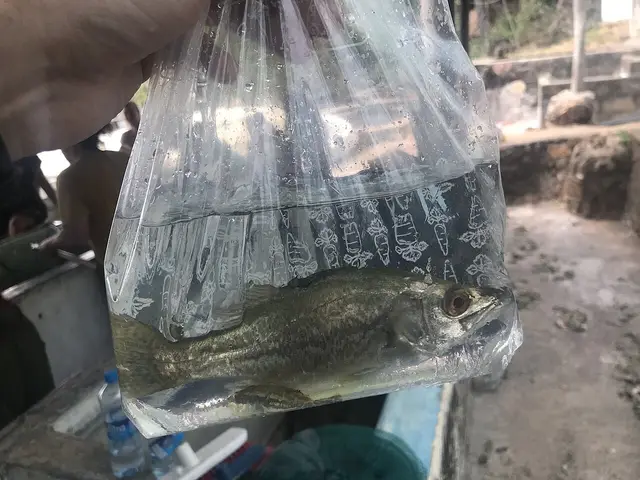
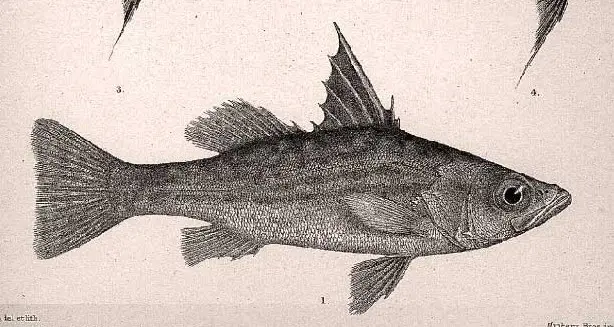
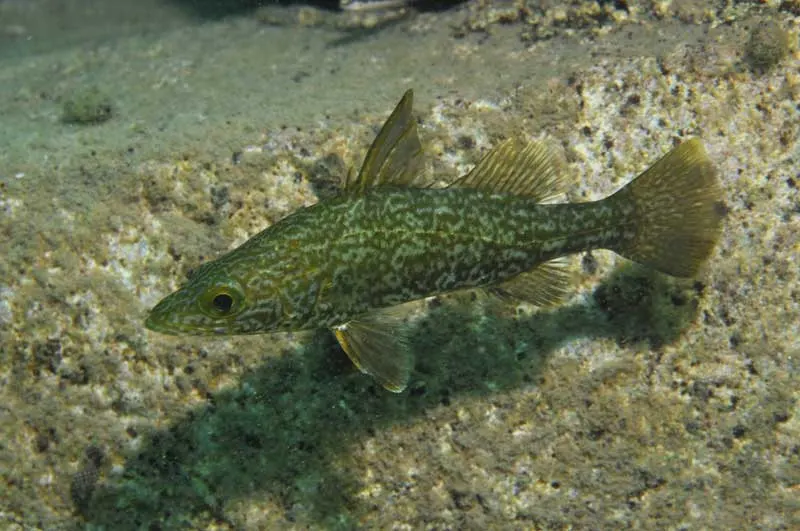
The Tanganyika lates (Lates angustifrons) is a huge predatory perch found only in Lake Tanganyika, in central and eastern Africa. It can grow to 2 metres and 100 kilograms. The IUCN Red List assessed it as Endangered in 2025 because heavy fishing is driving its numbers down.
How to recognise it
This is the largest fish in Lake Tanganyika. Maximum recorded size is about 200 cm in standard length and 100 kg in weight, and fish mature at around 56 cm. The tail fin is rounded in adults, while juveniles have rounded, spotted fins. Local names differ by life stage and language, for example kasoso for juveniles and ngomba for adults.
Three other lates species live in the same lake (the bigeye, forktail and sleek lates), so the name does not mean this is the only one.
Where it lives
It is endemic to Lake Tanganyika and is recorded in the waters of Burundi, Tanzania, Zambia and the Democratic Republic of the Congo. It is also present in the delta of the Malagarazi River. Adults range from the shoreline down to near the limit of oxygenated water, and the Red List gives a maximum depth of 250 metres.
Young fish stay in a particular inshore habitat until about 18 cm, and are also found in slow-flowing inflows. Adults are the top predator of the bottom-dwelling fish community and move into open water for part of the year.
Pins are Wikidata “endemic to” fields. Orange dots, when present, are GBIF occurrence tiles — survey bias included.
How it lives
It is a solitary, lurking hunter that feeds largely on bottom-dwelling cichlids and also takes sardines. The assessment classes it as a full migrant. It is slow to replace itself, with a generation length of about 6.7 years, which makes it vulnerable to intensive fishing.
Why it is in trouble
People eat this fish, and it is also prized by anglers. The Red List rates large-scale harvest as the main ongoing threat, affecting most of the population, and projects a population reduction of about 50 percent in the future, based on expected levels of exploitation. Sedimentation washing into the lake is a smaller, secondary pressure.
The decline has a long history. An FAO paper on Zambia's industrial pelagic fishery in Lake Tanganyika reported that the three large lates species, including this one, declined wherever industrial fishing occurred.
What is being done
A harvest management plan is recorded for the species, and listed conservation actions focus on managing the harvest and the lake's waters and on international cooperation. No protected area or conservation site has been identified for it, however, and ongoing research is limited to tracking population and harvest trends.
Sources
Written for this catalog in our own words from the sources below, checked against them on 12 November 2026. Population figures are estimates and carry the year they were made. Status and assessment year: IUCN. 2026. The IUCN Red List of Threatened Species. Version 2026-1. iucnredlist.org.