Critically Endangered
Bigeye lates
Lates mariae
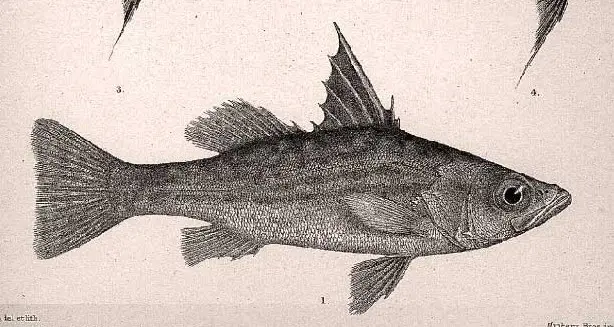
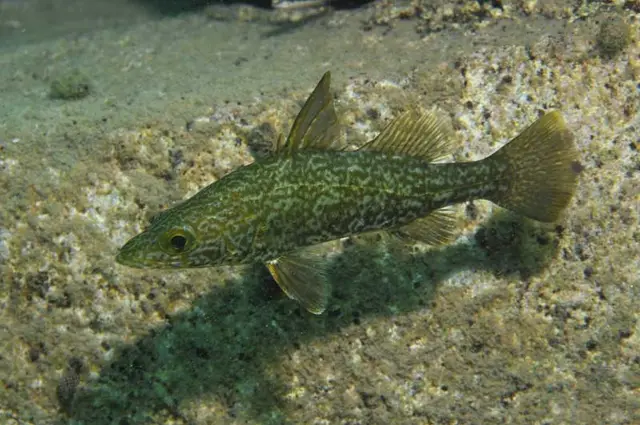
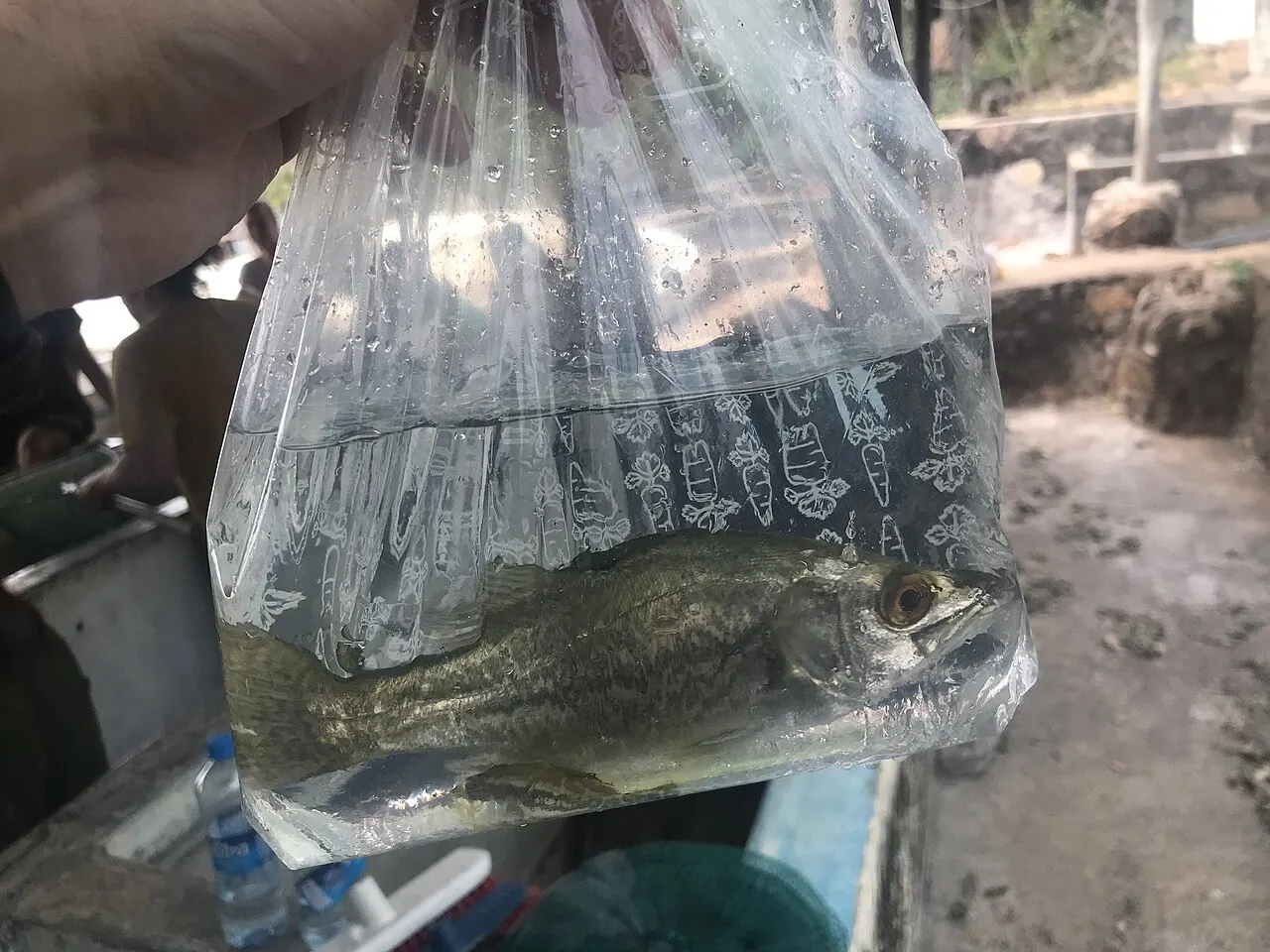
The bigeye lates (Lates mariae) is a big predatory perch from Lake Tanganyika in East and Central Africa, reaching about 80 cm. Heavy fishing has cut its numbers sharply. The IUCN Red List moved it to Critically Endangered in 2025, having listed it as Vulnerable in 2006.
How to recognise it
It is a lates perch (family Latidae) that grows to about 80 cm in total length. FishBase gives a length at first maturity of about 45 cm. It is a predator, with a trophic level of about 4.2, which puts it near the top of the food chain.
Several lates perches share Lake Tanganyika, including Lates angustifrons, the largest of the group, and Lates microlepis. They are often discussed together in fishery reports, so records of one can be confused with another.
Where it lives
It is native to Lake Tanganyika, which borders Burundi, the Democratic Republic of the Congo, Tanzania and Zambia, and the IUCN lists all four countries. The IUCN calls it widely distributed in the lake. It is also known from the lower Lukuga River, the lake's outflow, from the Malagarasi River delta and its lower reaches, and from the Rusizi River mouth. Some sources also give the Lualaba drainage in the Congo basin, but the IUCN does not list it.
Juveniles stay in shallow, inshore habitat until they reach about 18 cm, and have been seen near river mouths. Adults then move into deeper water and live near the bottom. The IUCN gives a depth range down to 200 m, while FishBase lists a habitat depth of up to 75 m.
Pins are Wikidata “endemic to” fields. Orange dots, when present, are GBIF occurrence tiles — survey bias included.
How it lives
Adults are the top predator in the deep water, at 100 m and below. They eat fish and invertebrates, and they travel up to the surface each day to feed on shoals of small herring-like fish. Fishery biologists studying the Zambian side of the lake found it to be the most abundant predator in the bottom-living fish community.
Spawning is strongly seasonal and short. Eggs are laid in sand near river mouths and are not guarded. The IUCN estimates a generation at about 6.5 years, and FishBase lists the time for a population to double as 4.5 to 14 years, which makes it slow to recover from heavy fishing.
Why it is in trouble
Fishing is the main cause. It is caught commercially and as a game fish. The IUCN assessment rates both large-scale and small-scale harvest as high-impact threats. It suspects a reduction of at least 80% over about 19.5 years (three generations), based on fishery catches and the views of experts and local communities, and projects a further 40% fall.
The decline has a long history. A 2021 genetic preprint on Lake Tanganyika's lates perches noted major declines in the 1960s, after an industrial purse seine fishery was added to the traditional one, and said numbers have stayed low since. An FAO report on Zambian waters found catches of the bigeye lates at heavily fished Mpulungu dropped from 2.0 fish per net in 1960 to 1963 to 0.4 fish per net in 1980 to 1983. The same report called Mpulungu overfished.
The IUCN names lesser threats: soil erosion and sedimentation, solid waste and pollution, and introduced fish such as Nile tilapia that eat juveniles. The FAO study also found that catches of small prey fish were higher where this predator was scarce.
What is being done
The IUCN records that a harvest management plan exists, and lists harvest management, site management and international cooperation as the actions needed. The species is not known to occur in a protected area.
Under the Lake Tanganyika Authority charter, in force since 2023, a fishing ban of three months each year is meant to apply in all four countries at once. Zambia imposed it in 2023, and Zambia and Tanzania took part in 2024. The IUCN says lake-wide enforcement has not yet happened.
Sources
Written for this catalog in our own words from the sources below, checked against them on 12 November 2026. Population figures are estimates and carry the year they were made. Status and assessment year: IUCN. 2026. The IUCN Red List of Threatened Species. Version 2026-1. iucnredlist.org.