Critically Endangered
June sucker
Chasmistes liorus
The June sucker (Chasmistes liorus) is a fish found only in Utah Lake, Utah, and the rivers that feed it, notably the Provo. It's named for the month it spawns. The IUCN Red List rated it Critically Endangered in 2013, though US federal protection was eased from endangered to threatened in 2021.
How to recognise it
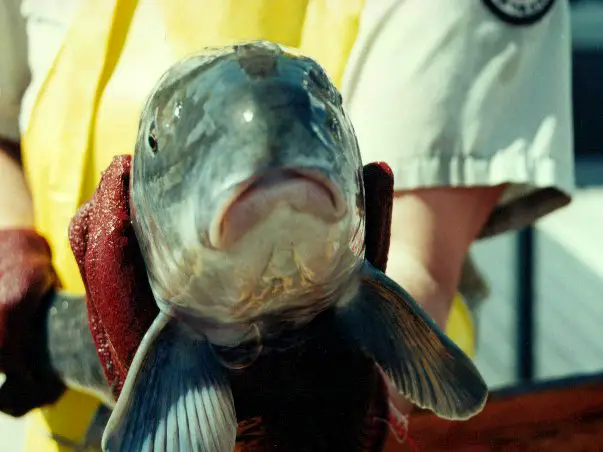
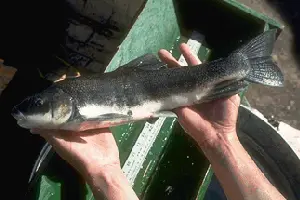
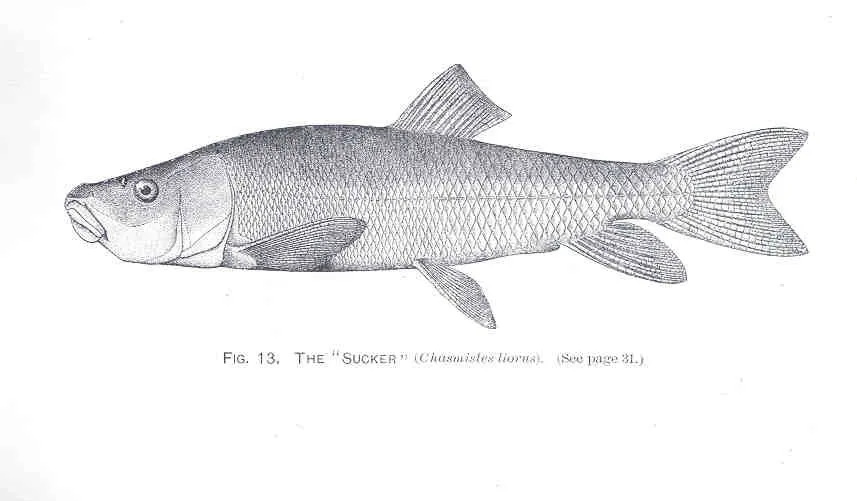
The June sucker is dark gray or brownish on the back with a white or faintly greenish belly. Adults are typically 17 to 24 inches (43 to 61 centimetres) long and weigh around 5 pounds (2.3 kilograms). It is a long-lived fish, reportedly living more than 40 years.
Unlike most suckers, which feed along the bottom, it has a more forward-pointing mouth and picks zooplankton out of the open water. It shares the lake with the Utah sucker (Catostomus ardens), a much more widespread relative.
Where it lives
The whole species belongs to one lake basin: Utah Lake, its feeder streams and the nearby Provo River. The IUCN lists it from a single location. It uses both lake and river, and the IUCN classes it as a full migrant, since adults leave the lake for the Provo River to spawn around June.
Pins are Wikidata “endemic to” fields. Orange dots, when present, are GBIF occurrence tiles — survey bias included.
Why it is in trouble
The June sucker was once plentiful in Utah Lake. Introduced fish have since changed the lake. White bass and walleye eat young suckers, and common carp are a major concern because their feeding is thought to hold back the water plants that give young fish cover.
Drought, altered water flow, murky and polluted water, and the loss of native plants have all played a part. The IUCN assessment, which rates the population as decreasing, lists drought, surface water withdrawal for agriculture, dams and several introduced species among the threats. For decades, unhealthy habitat also kept the fish from spawning successfully in some of the streams feeding the lake.
Hybridisation with the Utah sucker is another worry, and pure June suckers may not persist. One subspecies, Chasmistes liorus liorus, may have gone extinct as early as 1935. The surviving form, C. l. mictus, is thought to have arisen through hybridisation with the Utah sucker.
What is being done
The species was listed as endangered under the US Endangered Species Act in 1986, and the US Fish and Wildlife Service downlisted it to threatened in 2021. The June Sucker Recovery Implementation Program coordinates the work. Its effective population of roughly 300 fish in 1999 had grown to about 3,500 by 2016.
The Logan Fish Hatchery in Utah has raised the species since 1991, with a goal of releasing 25,000 fish about 12 inches long each year. By spring 2023, more than a million had been raised and released. A self-sustaining population has also been established in Red Butte Reservoir.
The biggest habitat project is the Provo River Delta restoration. Construction began on 11 June 2020 on 260 acres north of Utah Lake State Park, and the Provo River was diverted into the new delta on 2 March 2023. In the first spawning run after that, nearly 6,300 tagged June suckers were detected entering the delta between 1 April and 12 July. Since only a small share of adults carry tags, the true number is likely 5 to 10 times higher.
Sources
Written for this catalog in our own words from the sources below, checked against them on 12 November 2026. Population figures are estimates and carry the year they were made. Status and assessment year: IUCN. 2026. The IUCN Red List of Threatened Species. Version 2026-1. iucnredlist.org.