Endangered
Cui-ui
Chasmistes cujus
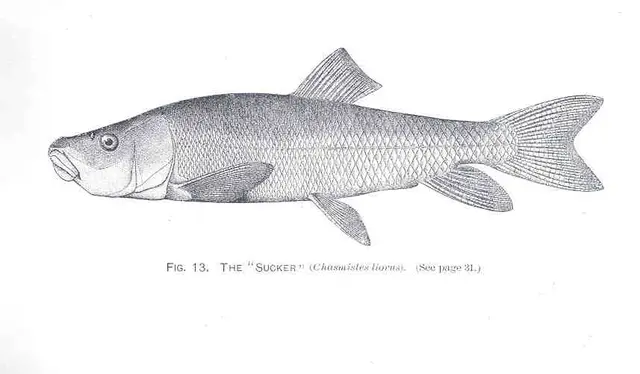
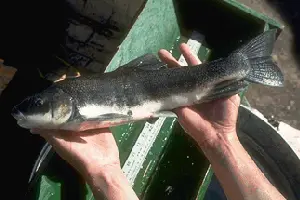
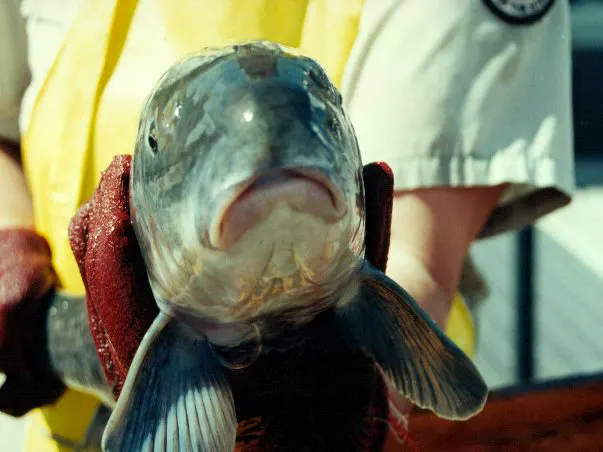
The cui-ui is a large sucker fish endemic to Pyramid Lake and, prior to its desiccation in the 20th century, Winnemucca Lake in northwestern Nevada.
The ray-finned fish
The maximum size of male cui-ui is approximately 53 cm (21 in) and 1.6 kg (3.5 lb), while females reach approximately 64 cm (25 in) and 2.7 kg (6.0 lb).
Range and habitat
The cui-ui is a large sucker fish endemic to Pyramid Lake and, prior to its desiccation in the 20th century, Winnemucca Lake in northwestern Nevada. Environmental Protection Agency in analysis of the Truckee River spawning grounds and of the Nevada Department of Environmental Protection and EPA in following up on protection measures. The reason the cui-ui remains endangered (though upgraded from critically endangered in 2014) is the recent history of recruitment variation, illustrating that in many years of the 1970s and 1980s there was virtually no recruitment whatsoever due to unsuccessful spawning in an unfavorable water quality and water flow environment of the Truckee River.
Pins are Wikidata “endemic to” fields. Orange dots, when present, are GBIF occurrence tiles — survey bias included.
Breeding
The cui-ui is potamodromous, and will attempt to ascend the Truckee River to spawn in mid-April. If inflow is insufficient to permit this, the cui-ui may attempt to spawn in Pyramid Lake, but generally with little success due to the salinity of that lake.
Water releases from the Boca reservoir and Stampede reservoirs were (as of 2004) timed to assist the spawning run, although in drought years this water is reserved for the Reno metropolitan area.
In crisis
The cui-ui is an endangered species, and one of the few surviving members of its genus. The cui-ui population is generally improving in numbers, having attained an estimated population exceeding one million in 1993, thanks to the efforts of the U.S. The species' outlook is uncertain since a recovery plan based on an enhanced understanding of Pyramid Lake and Truckee River water quality has been published and U.S.
CITES lists this taxon on Appendix I. Confirm the current appendix on the CITES checklist.
Cui-ui is Endangered on the IUCN Red List (assessed 2014, criteria B1ac(ii,iv)+2ac(ii,iv)). Confirm the official criteria and any later count on the assessment page.
Sources
Adapted from the English Wikipedia article on Cui-ui (CC BY-SA 4.0; authors are listed in the article history; changes were made), Wikidata item Q1149559. Family and order context is original field-guide writing about the group, not a copied assessment of this one species. Not an IUCN assessment. Counts, when quoted, can change — confirm them on the recovery programme and on iucnredlist.org. Status and assessment year: IUCN. 2026. The IUCN Red List of Threatened Species. Version 2026-1. iucnredlist.org.