Endangered
Hypsolebias notatus
Hypsolebias notatus
Hypsolebias notatus is a small annual killifish from temporary pools in Goiás, in central Brazil, in the upper Tocantins river basin. Adults live a single wet season and the species survives dry months as eggs. The IUCN Red List rated it Endangered in 2022.
How to recognise it
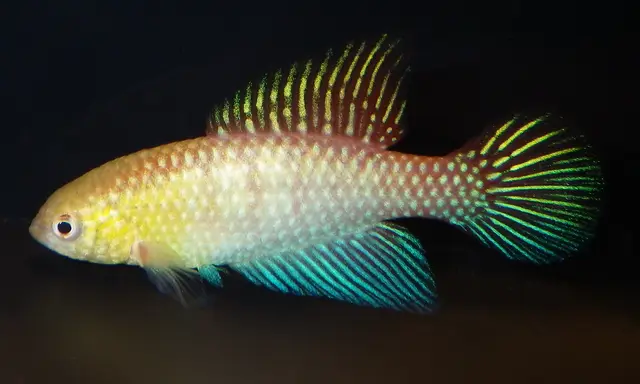
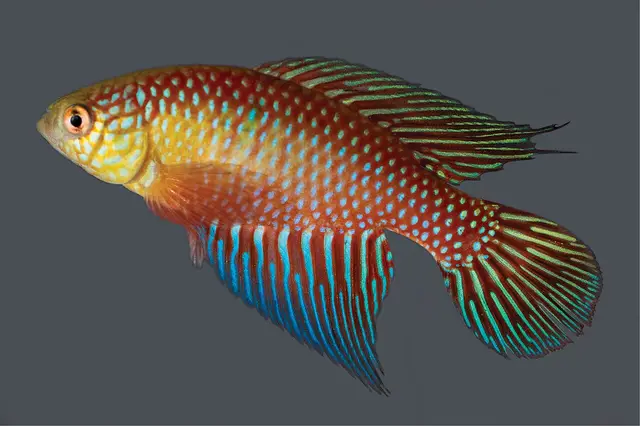
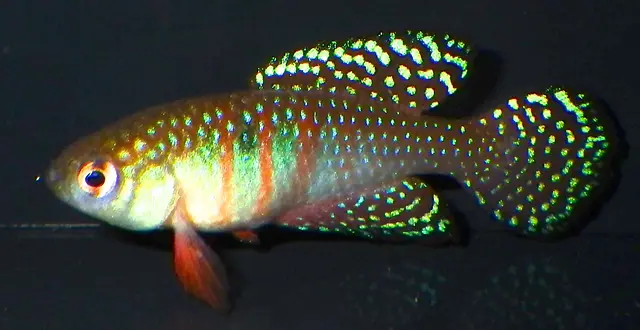
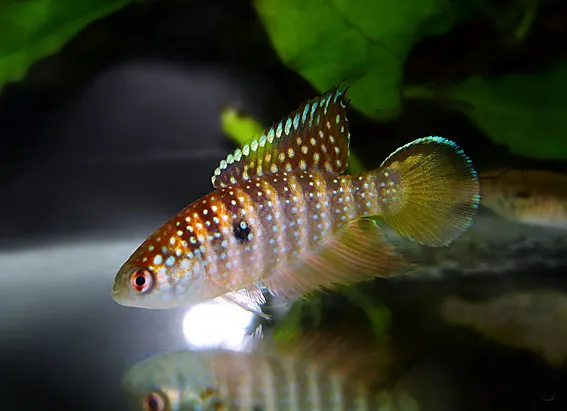
Hypsolebias are small, colourful Brazilian killifish, and the genus reaches about 7 cm in total length at most. This species belongs to the notatus group, whose males typically carry a row of small bright blue spots along the edge of the dorsal fin, a trait shared by relatives such as Simpsonichthys virgulatus.
It was first described in 1990 as Cynolebias notatus by Costa, Lacerda and Brasil. It was later listed under Simpsonichthys and, from the 2010s, under Hypsolebias, so older books and databases may use either earlier name. The Portuguese common name on the Red List is peixe-anual, simply 'annual fish'.
Where it lives
All known records come from northern Goiás, in the Paranã river drainage of the upper Tocantins basin. The type locality is a temporary lagoon in the municipality of Alvorada do Norte. Museum material was also collected near Flores de Goiás, Iaciara, Nova Roma and Vila Boa, in swamps and floodplains close to the Paranã, mostly between 1989 and 2005. Pools were recorded at roughly 450 to 490 m above sea level.
The Red List lists a single habitat type for it, small seasonal freshwater marshes and pools under 8 hectares. The genus Hypsolebias as a whole is found in the Cerrado and Caatinga of Brazil.
Pins are Wikidata “endemic to” fields. Orange dots, when present, are GBIF occurrence tiles — survey bias included.
How it lives
Annual killifish run an unusually fast life cycle. Adults live in rain-fed pools, lay eggs on the bottom, and die when the water dries up. The eggs sit in the mud through the dry season and hatch when the rains refill the pool. This pattern is described for the genus as a whole, and little is published on this species in particular.
Why it is in trouble
A species tied to small seasonal pools has little margin for error. The 2022 assessment lists dams, roads and railways, and other changes to the ecosystem as the threats. The assessment rates the population trend as unknown, so there is no count of how many fish remain.
What is being done
The assessment names resource and habitat protection, habitat restoration and national-level action as measures needed. It does not record any conservation measure as already in place for this species.
Sources
Written for this catalog in our own words from the sources below, checked against them on 12 November 2026. Population figures are estimates and carry the year they were made. Status and assessment year: IUCN. 2026. The IUCN Red List of Threatened Species. Version 2026-1. iucnredlist.org.