Critically Endangered
Hypsolebias splendissimus
Hypsolebias splendissimus
Hypsolebias splendissimus is a tiny, brilliantly coloured seasonal killifish from one temporary pool in the Caatinga of Bahia, Brazil. It was described in 2018, and the IUCN rated it Critically Endangered in 2021 and flagged it as possibly extinct, since its only known pool was bulldozed.
How to recognise it
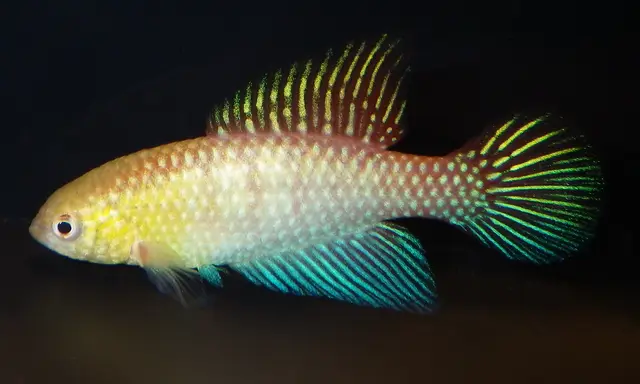
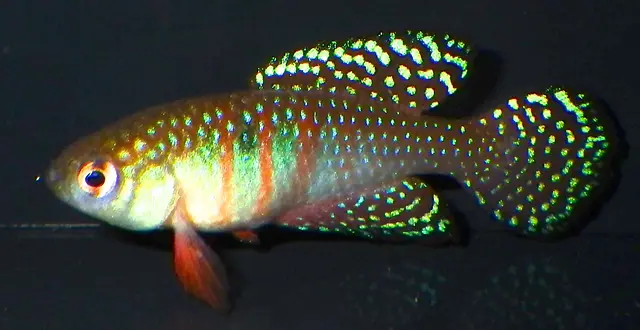
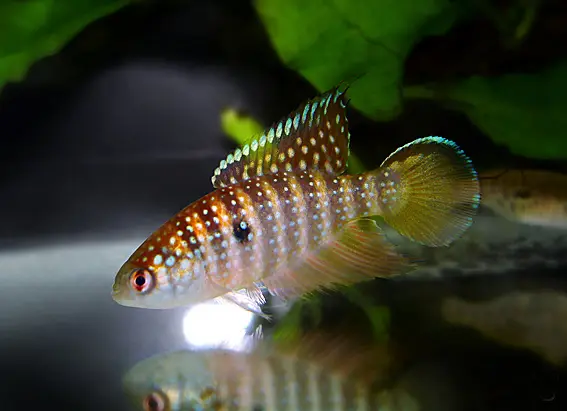
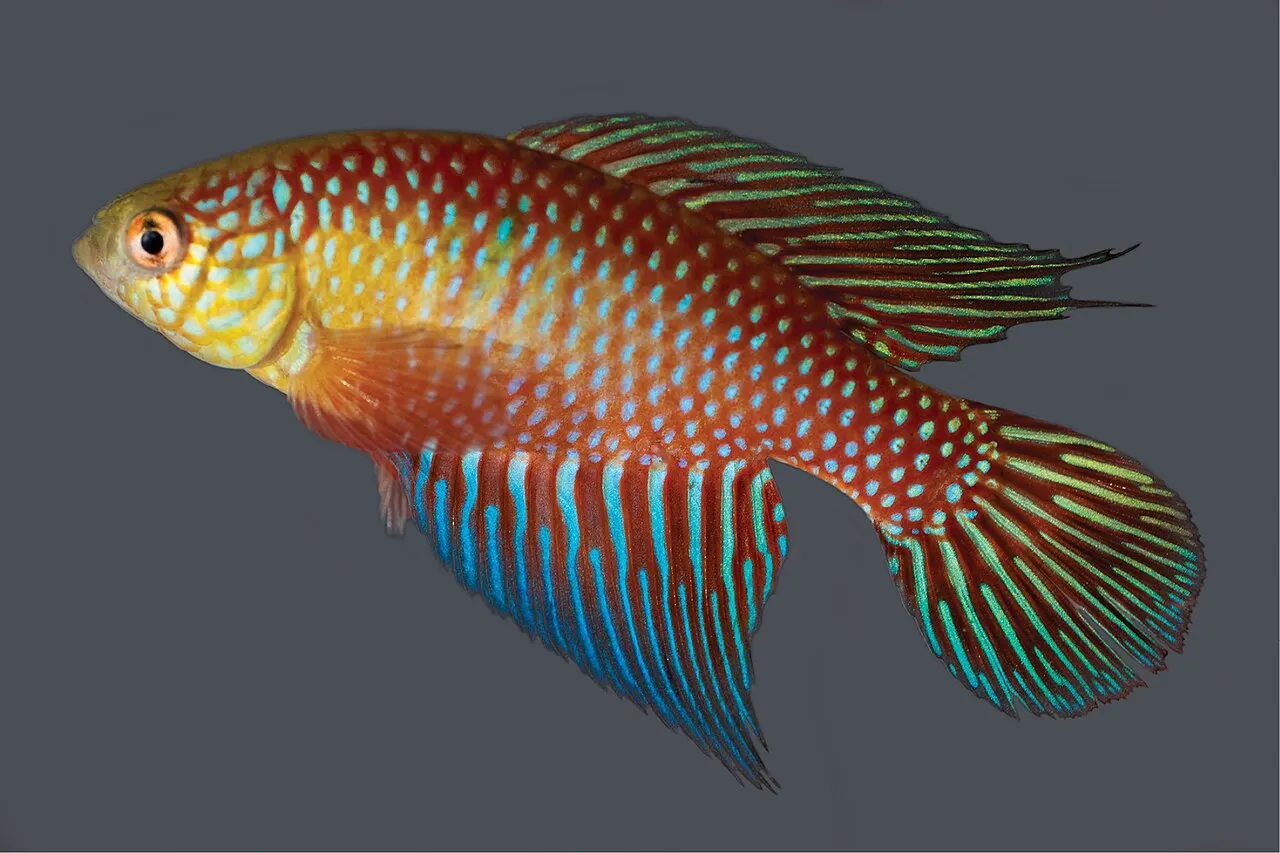
Males are among the most colourful killifishes of South America, and the species name means very splendid in Latin. The flank is red to pink with small bright blue spots, the fins are red, and the dorsal and anal fins end in two or three filaments. Red bars mark the front part of the flank. The red pectoral fin separates it from Hypsolebias fulminantis and Hypsolebias shibattai, whose males have clear pectoral fins.
It is small. The male type specimen measured 42.7 mm in standard length and a female paratype 28.5 mm. FishBase lists a maximum of 4.3 cm for males, based on that type specimen, and 3.1 cm for females.
Where it lives
Only one place is known: a temporary pool on a flat plain at about 505 m elevation, roughly 1.5 km west of where the Poco do Magro and Carnaiba de Dentro rivers meet, in the middle Sao Francisco River basin of Bahia. The IUCN counts a single location and estimates the area occupied at about 4 square kilometres.
A close relative, H. fulminantis, lives in a neighbouring sub-drainage about 8 km to the east. Despite the short distance, body features and DNA both support treating the two as separate species.
Pins are Wikidata “endemic to” fields. Orange dots, when present, are GBIF occurrence tiles — survey bias included.
How it lives
When the type series was collected on 30 January 2010, the pool was about 100 m long and 30 m wide, and no deeper than about half a metre. Every fish was crowded into one shaded corner near the margin, roughly 100 square metres of shrubs and water plants. The IUCN gives a generation length of one year.
Related fishes in this group live only in the shaded parts of such pools, so clearing trees and shrubs can wipe them out even when open water survives. The temporary pools fill in the rainy season and the fishes survive dry spells as eggs buried in the mud, according to the describing paper's general account of Caatinga seasonal killifishes.
Why it is in trouble
The scientist who described the fish returned to the pool in January 2017 and found it drained and landfilled by bulldozers. The species was not found again. Field studies between 1993 and 2017 recorded a sharp decline in seasonal killifish habitat around the town of Guanambi, and no fish of the close relative H. fulminantis turned up in the area after 2005.
The IUCN lists farming as an ongoing threat and infers a past population reduction of 100 percent at the known site. Satellite images show that unsurveyed parts of the surrounding drainage have been heavily altered for agriculture. Most of the drainage has never been searched for killifishes, so a population elsewhere cannot be ruled out.
What is being done
Very little so far. The IUCN records no species-specific conservation measures, no monitoring, no protected site and no captive population. It lists site protection, captive breeding and benign introduction as priorities if living fish are found. The describing paper called for more surveys in the Carnaiba de Dentro river basin to find out whether the fish survives.
Sources
Written for this catalog in our own words from the sources below, checked against them on 12 November 2026. Population figures are estimates and carry the year they were made. Status and assessment year: IUCN. 2026. The IUCN Red List of Threatened Species. Version 2026-1. iucnredlist.org.