Endangered
Hyphessobrycon paucilepis
Hyphessobrycon paucilepis
Hyphessobrycon paucilepis is a tiny freshwater tetra known only from a few small streams and reservoirs in Lara state, northern Venezuela. The IUCN Red List rated it Endangered in 2019. It was formally named only in 2008, and very little has been written about how it lives.
How to recognise it
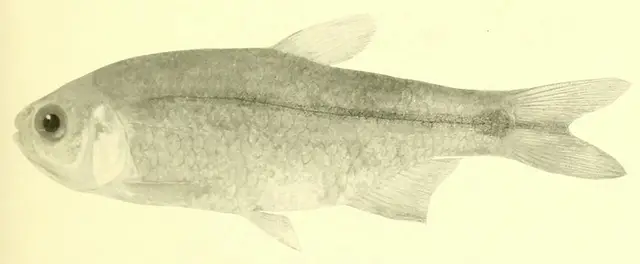
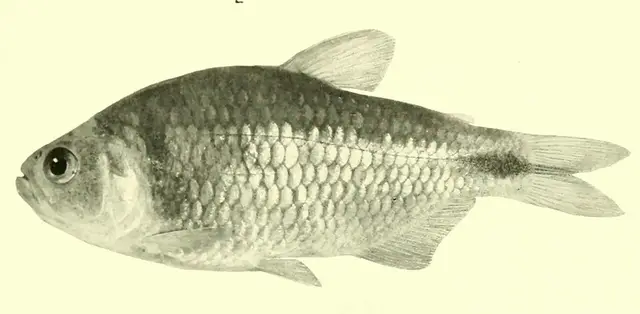
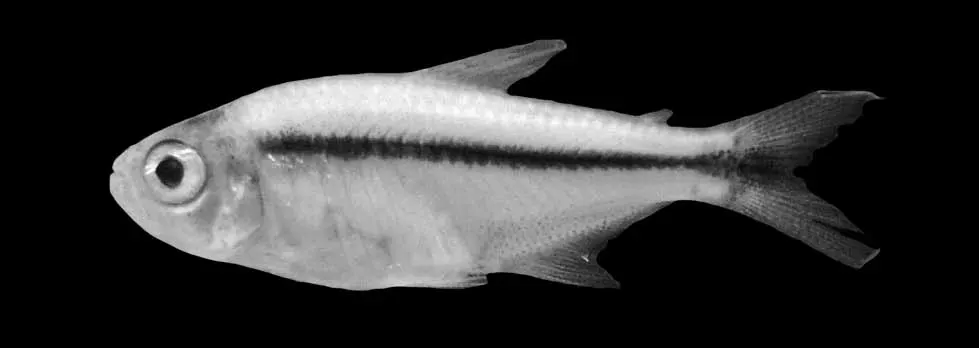
It's a very small fish, reaching about 2.9 cm in standard length. A dark band runs from behind the gill cover along the body to the base of the tail, then ends in a diamond-shaped blotch on the middle rays of the tail fin. Males and females look alike.
The species name comes from Greek words for "few scales". Its side line has only 28 to 29 scales, and there are 9 scales ahead of the dorsal fin. It belongs to the Hyphessobrycon heterorhabdus group of tetras. A 2008 revision of the group in the journal Vertebrate Zoology described it alongside a close relative, H. tuyensis, which lives in the Tuy River drainage.
Where it lives
The first specimens, including the holotype, came from the overflow channel of the Los Quediches Reservoir in Lara. FishBase describes the species as known only from that type locality and small neighbouring drainages.
The IUCN assessment lists Venezuela as the only country and gives an elevation range of 400 to 550 m. It counts the species as present at a single location, with an area of occupancy of about 12 square km inside an extent of roughly 1,407 square km. Habitats recorded are seasonal and permanent streams, plus large water-storage reservoirs, which count as only marginally suitable.
Pins are Wikidata “endemic to” fields. Orange dots, when present, are GBIF occurrence tiles — survey bias included.
Why it is in trouble
The Red List lists three pressures on its small range: small-holder farming, housing and urban growth, and water taken from streams for agriculture. The assessment records a continuing decline in the area the species occupies, and gives ecosystem conversion as the main stress.
No population figure has been published, and the Red List gives the population trend as unknown.
What is being done
The only conservation measure the assessment lists is resource and habitat protection, and it records that the species is not known from any protected area. No recovery plan, monitoring scheme or captive population turned up in the sources consulted.
Sources
Written for this catalog in our own words from the sources below, checked against them on 12 November 2026. Population figures are estimates and carry the year they were made. Status and assessment year: IUCN. 2026. The IUCN Red List of Threatened Species. Version 2026-1. iucnredlist.org.