Critically Endangered
Helicrenion reticulatum
Helicrenion reticulatum
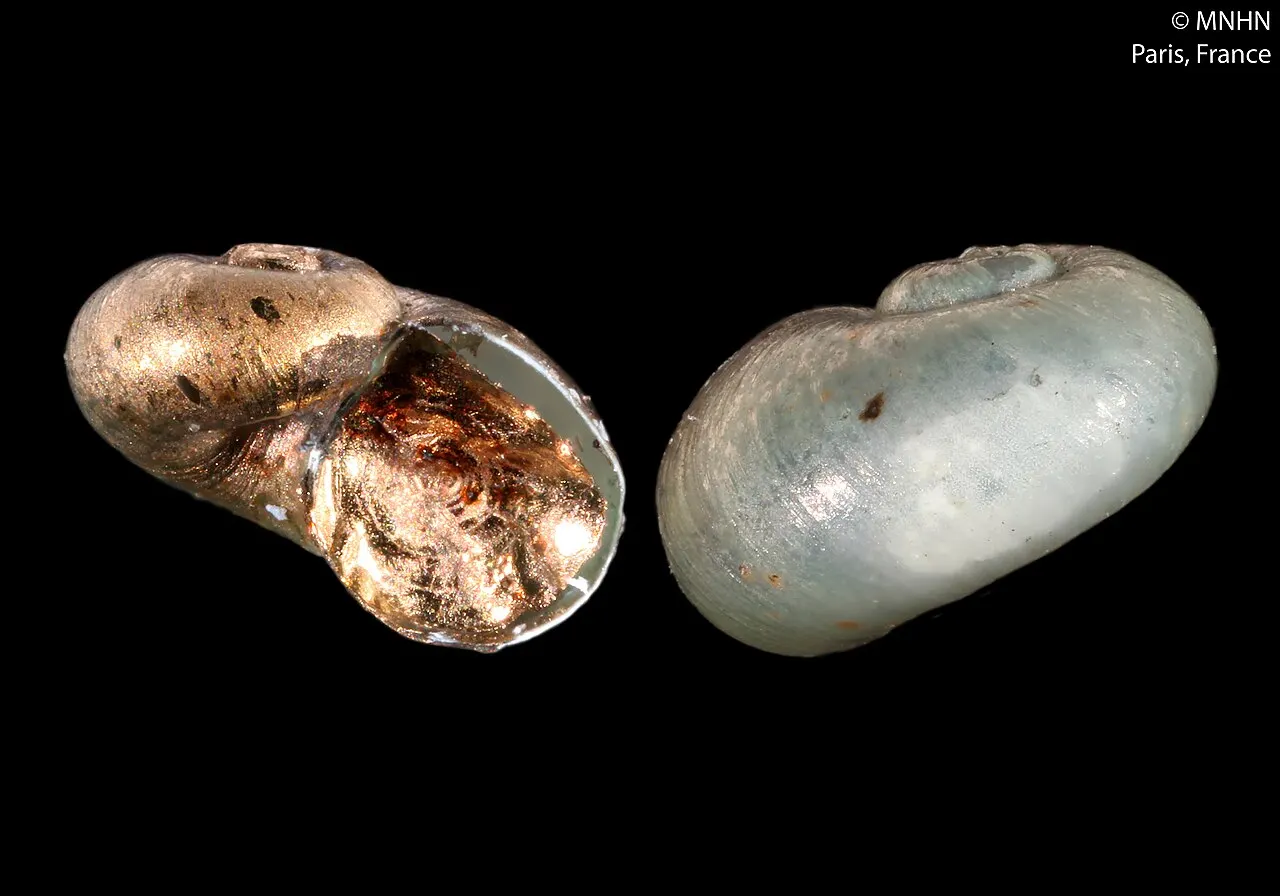
Helicrenion reticulatum is a tiny deep-sea snail that lives around hydrothermal vents in the southwest Pacific, at about 1,900 m. The IUCN Red List rated it Critically Endangered in 2021, because it is known from one small area where seabed mining is the named threat.
What it is
Helicrenion reticulatum is a marine snail, a gastropod, that lives on the seafloor near hot-water vents. Warén and Bouchet described it in 1993 in Zoologica Scripta, in a long paper on gastropods from hydrothermal vents and hydrocarbon seeps. Very little about its appearance, diet or life cycle appears in open sources.
Its classification is unsettled. The IUCN and GBIF place it in the family Neomphalidae, WoRMS lists it as Neomphaloidea incertae sedis (family undecided), and SeaLifeBase puts it in Trochidae. The Red List itself lists taxonomy as a research need.
Where it lives
It is a vent animal. The Red List describes its habitat as deep-sea vents and gives a depth of 1,900 m, while SeaLifeBase gives 1,832 to 1,887 m.
The Red List lists Tonga as the only country and treats the snail as occurring at a single location, with an estimated area of occupancy and extent of occurrence of only 4 square kilometres. GBIF's six occurrence records, however, are filed under Fiji (five) and Papua New Guinea (one). The sources disagree on locality, and the exact vent fields are not settled.
Pins are Wikidata “endemic to” fields. Orange dots, when present, are GBIF occurrence tiles — survey bias included.
Why it is in trouble
Mining and quarrying is the only threat the assessment names, and it is rated as a future threat that could affect a majority of the population. A species confined to a few square kilometres could lose most of its habitat to a single operation.
The snail qualifies as Critically Endangered under criteria B1ab(iii)+2ab(iii), which cover very small ranges that are declining or fragmented. Its population size and trend are unknown.
It is not alone. A 2021 global assessment of vent-endemic molluscs in Frontiers in Marine Science rated 114 of 184 species (62 percent) as threatened and called deep-sea mining the primary human threat.
What is being done
Very little is in place. The Red List records no recovery plan, no systematic monitoring, no protected area covering the snail and no captive population.
Its list of needed actions covers protection of the habitat and site, action at national and international level, and an area-based management plan. Research needs are basic: population size, distribution and trends, life history and ecology, habitat trends and taxonomy.
Sources
Written for this catalog in our own words from the sources below, checked against them on 12 November 2026. Population figures are estimates and carry the year they were made. Status and assessment year: IUCN. 2026. The IUCN Red List of Threatened Species. Version 2026-1. iucnredlist.org.




