Critically Endangered
Hasemania maxillaris
Hasemania maxillaris
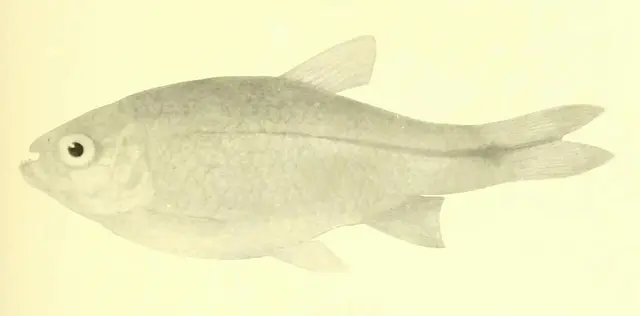
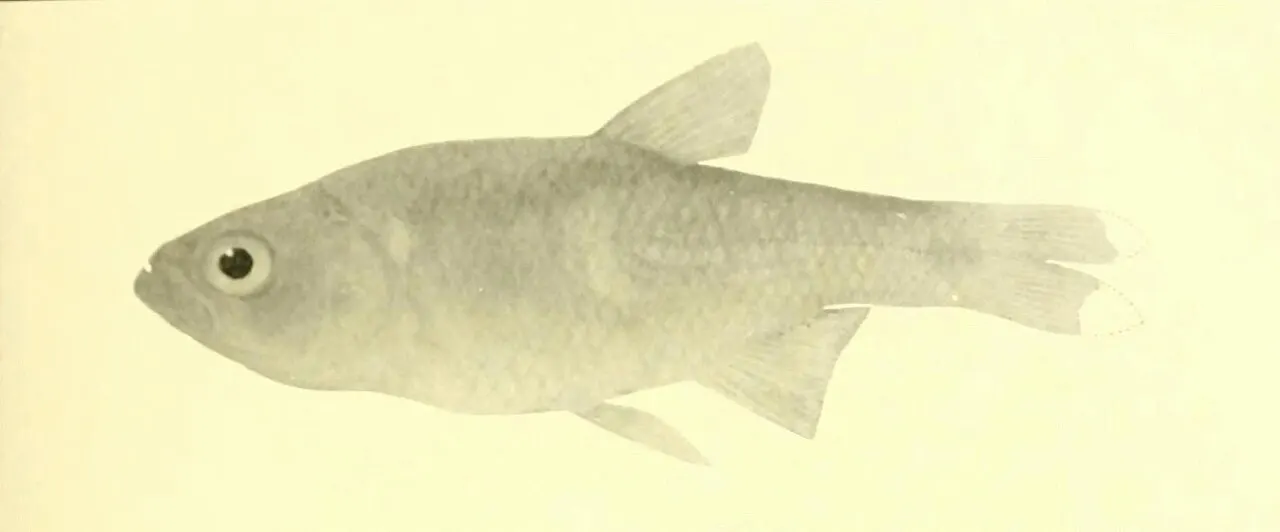
Hasemania maxillaris is a tiny characin, no more than about 3 cm long, known from the Iguaçu River basin in southern Brazil. The IUCN Red List rated it Critically Endangered in 2022 and flags it as possibly extinct, with the population given as somewhere between 0 and 50 fish.
How to recognise it
This is a small, open-water tetra of the family Acestrorhamphidae (older sources place it in Characidae). FishBase gives a maximum length of 2.9 cm. It has no common name, and published descriptions of its colour and body shape are hard to find.
Ellis described it in 1911 in the Annals of the Carnegie Museum, in a paper that also covered other small fishes collected by J. D. Haseman in southern Brazil. The type locality is the Rio Iguaçu at Porto União, and the genus is named for Haseman, an American collector of fishes.
Where it lives
It belongs to the Iguaçu basin. The Iguaçu is a river of about 1,320 km that rises in the Serra do Mar near Curitiba and meets the Paraná River at Foz do Iguaçu. The Red List records the fish from the states of Paraná and Santa Catarina and treats it as endemic to Brazil.
The basin is unusual. The Iguaçu Falls, which formed roughly 22 million years ago, cut its fishes off from the Paraná system, and a 2021 ZooKeys study puts endemism at about 70 percent of the roughly 127 species known (other estimates are closer to 100). A tetra confined to it has very little room to move.
Pins are Wikidata “endemic to” fields. Orange dots, when present, are GBIF occurrence tiles — survey bias included.
How it lives
Little has been written about its biology. FishBase lists it as a freshwater, open-water fish of a subtropical climate. The Red List names small permanent pools, marshes and swamps, and rivers and streams as suitable habitat, and treats the fish as resident, not migratory.
Why it is in trouble
The 2022 assessment is based on criterion D, meaning the surviving population is thought to be extremely small, and it gives a population size of 0 to 50. The trend is recorded as unknown, and every location listed is marked as possibly extinct.
The threats named are housing and urban development and dams, both with unknown timing. Dams have reshaped the Iguaçu. A 2021 ZooKeys study counted five large reservoirs in the basin, with a sixth major plant, Baixo Iguaçu, starting operation in 2019. Only about 190 km of main river, between the Salto Caxias dam and the falls, remains free of dams.
What is being done
The Red List assessment lists site and area protection as a conservation action, and no measures are recorded as already in place.
Sources
Written for this catalog in our own words from the sources below, checked against them on 12 November 2026. Population figures are estimates and carry the year they were made. Status and assessment year: IUCN. 2026. The IUCN Red List of Threatened Species. Version 2026-1. iucnredlist.org.