Critically Endangered
Haliotis walallensis
Haliotis walallensis
The flat abalone (Haliotis walallensis) is a sea snail of rocky Pacific shores. It once ranged from Oregon to Baja California but now survives mainly between northern California and southern Oregon. The IUCN listed it as Critically Endangered in 2021, after heavy fishing and a marine heat wave cut numbers sharply.
How to recognise it
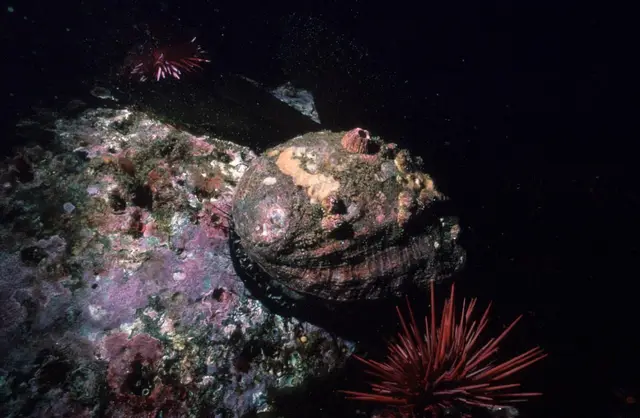
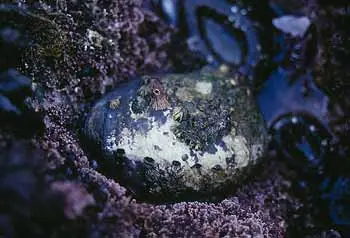
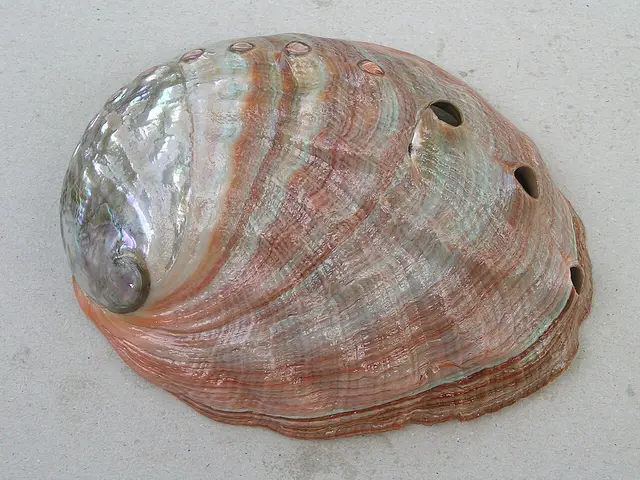
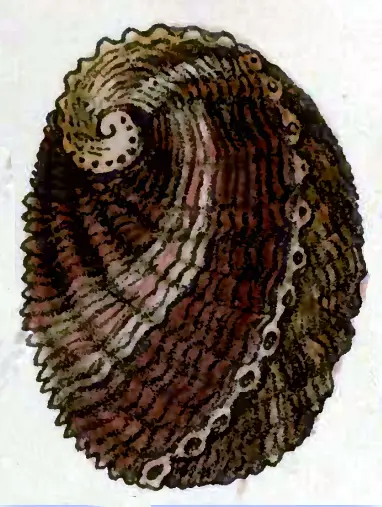
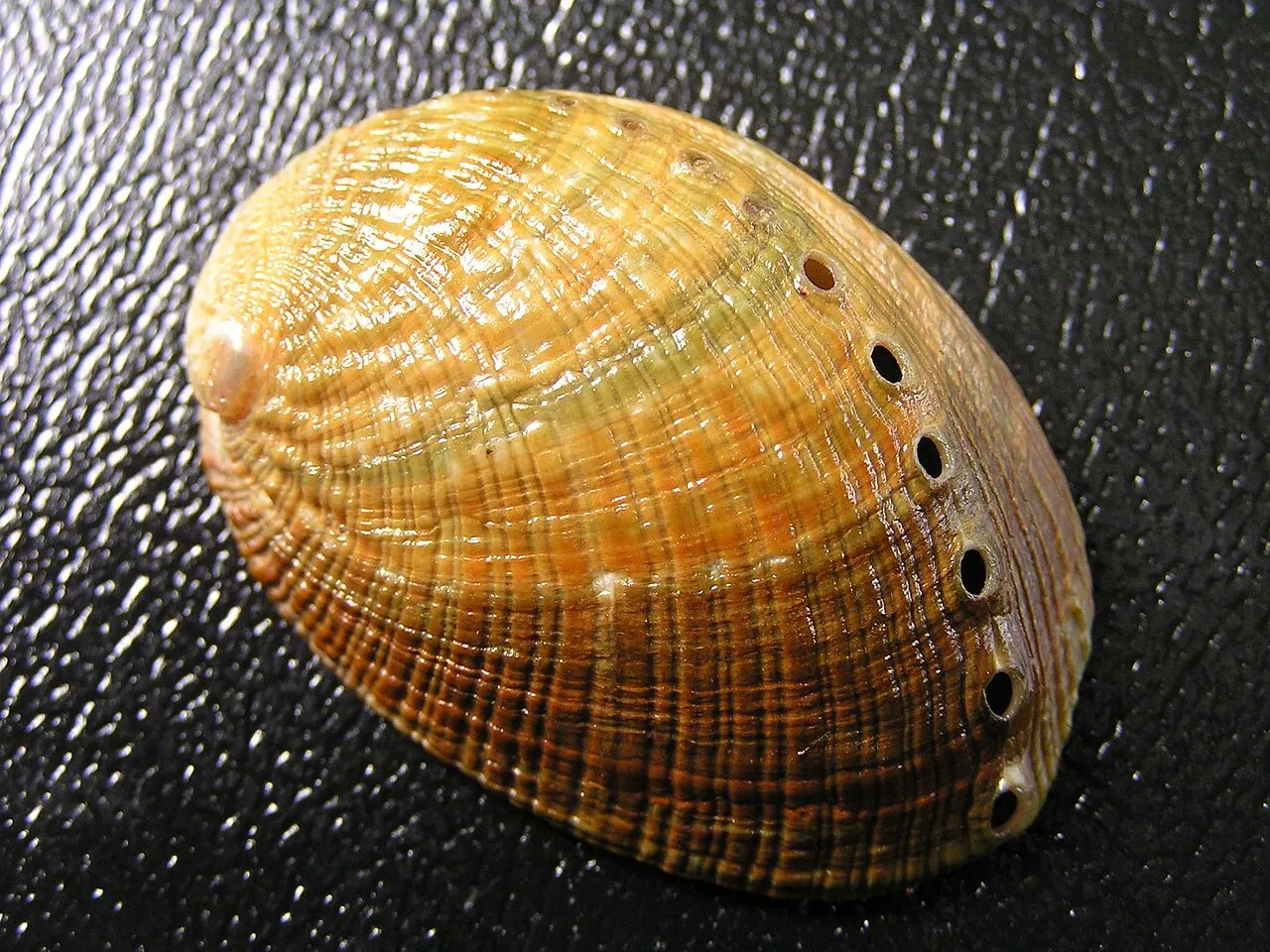
The flat abalone is a medium-sized abalone with a low, oval shell and a red lip. Most adults measure 25 to 125 mm across, and Oregon's conservation strategy gives a maximum of 175 mm. Other references give anything from 120 to about 179 mm, so the upper size is not settled.
Shells are usually dark brick red, sometimes streaked with greenish-blue and white. Along the edge runs a row of 4 to 8 openings, of which usually 5 or 6 are open. The soft fringe around the foot is mottled yellow and dark brown. Shells are often riddled by boring clams and sponges.
Where it lives
The historical range runs from Depoe Bay in Oregon down to San Benito Island off Baja California, Mexico, and some references extend it north to British Columbia. Today it is extremely rare in Mexico and has been lost from southern California. The stronghold is northern California and southern Oregon, where southern Oregon probably holds the most animals. The species is named after Gualala in Mendocino County, California, thought to be the centre of its range.
It sticks to rocky ground, from the low intertidal zone to about 20 m deep, tucked under rocks or deep in crevices. The IUCN lists kelp beds and subtidal rocky reefs as its habitat.
Pins are Wikidata “endemic to” fields. Orange dots, when present, are GBIF occurrence tiles — survey bias included.
How it lives
This is a grazer. It catches drifting algae and grazes small attached seaweeds and filamentous blue-green algae, and it shows a preference for bull kelp, so it depends on healthy kelp and seaweed. Cabezon, crabs, octopuses and other fish eat it.
Males and females are separate and release eggs and sperm into open water. A mature female can shed anywhere from 10,000 to 11 million eggs, with bigger animals producing more. The larvae feed on yolk and drift for only about one to two weeks before settling. Because spawning only works when animals are close together, a thinned-out population struggles to breed, and young animals join the population irregularly.
Why it is in trouble
Abalone were fished heavily along this coast. In southern Oregon this species became the target of a small but efficient commercial fishery, with one permitted harvester from 2001 to 2008. The IUCN estimates about 30,000 animals were taken, possibly most of the population there. Its assessment, made under criterion A2ac, records a decreasing, severely fragmented population.
The marine heat wave of 2014 to 2016 then hit the kelp that feeds the species. A 2024 study in Integrative & Comparative Biology, by Laura Rogers-Bennett, Scott Groth and James Carlton, reported that densities in the core of the range fell to near zero afterwards and had not recovered, with steep declines in former fishery hot spots in southern Oregon. Its title asks whether this could be the next neoextinction, meaning a species heading for extinction in the near term. Oregon's wildlife agency says the animal may have disappeared locally from the Oregon coast. Sea urchins, which compete for food and are now abundant, and poaching add to the pressure.
What is being done
Oregon's abalone plan calls for monitoring at index sites, filling gaps in knowledge, stronger enforcement with partner states and keeping harvest closed until densities allow it to resume. It also backs kelp forest restoration. The IUCN records that a harvest management plan exists but that no recovery plan, systematic monitoring scheme or captive breeding programme is in place.
Sources
Written for this catalog in our own words from the sources below, checked against them on 12 November 2026. Population figures are estimates and carry the year they were made. Status and assessment year: IUCN. 2026. The IUCN Red List of Threatened Species. Version 2026-1. iucnredlist.org.