Endangered
Haliotis mariae
Haliotis mariae
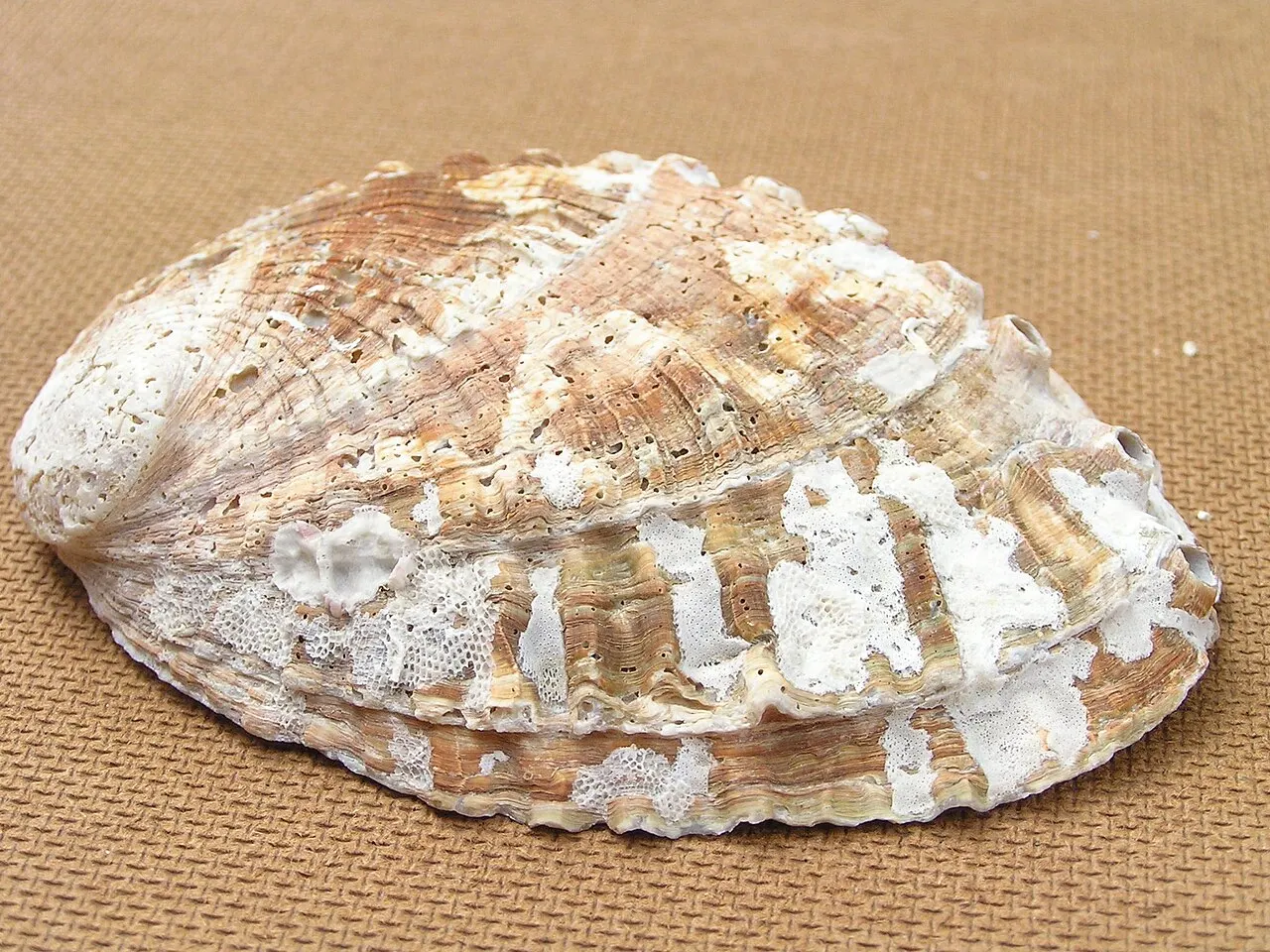
The Omani abalone (Haliotis mariae) is a large sea snail with a reddish-brown shell and a mother-of-pearl interior, living on shallow rocky reefs along Oman's southern coast. The IUCN Red List rated it Endangered in 2021. It supports one of Oman's most valuable fisheries, and heavy harvest has repeatedly thinned the stock.
How to recognise it
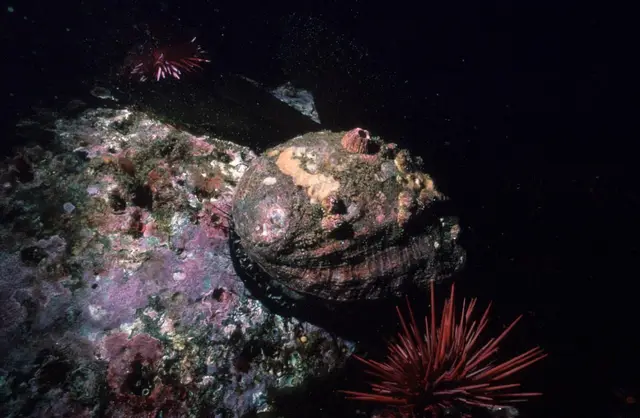
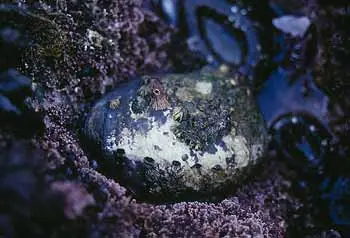
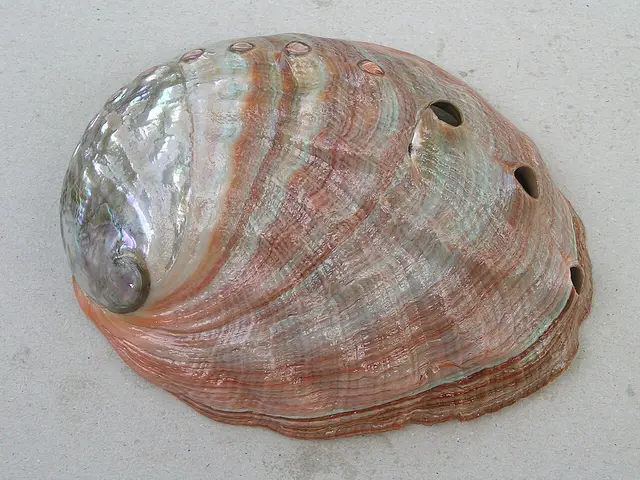
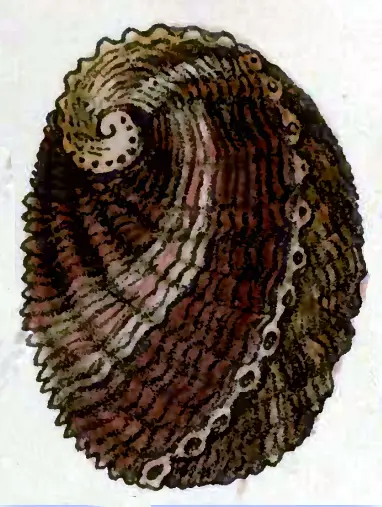
An abalone is a single-shelled mollusc that clings to rock with one broad foot. This one grows to about 100 mm (3.9 in). The shell is large, convex and oval, with strong spiral ribs and five or six round breathing holes along one edge. Outside it is reddish-brown with irregular white flame marks, and inside it is silvery with red, blue and green reflections.
William Wood described the species in 1828. In Dhofar it's locally called the sea ear.
Where it lives
The IUCN assessment treats it as endemic to Oman and gives its habitat as subtidal rocky reef and macroalgal (seaweed) beds, at depths of about 1 to 15 m. It records an area of occupancy of roughly 304 and an extent of occurrence of about 1,522, with three locations.
Omani press reports place it on the coast of Dhofar governorate, from Mirbat to Shaleem and the Al Hallaniyat Islands. Some descriptions also list Yemen within its range. The IUCN assessment lists only Oman.
Pins are Wikidata “endemic to” fields. Orange dots, when present, are GBIF occurrence tiles — survey bias included.
Why it is in trouble
Harvest is the main pressure, and the IUCN rates both large-scale and small-scale fishing as high impact and ongoing. Divers have gathered abalone in eastern Dhofar since before the 1970s, according to Oman Observer, and rising prices in the 1990s pushed fishing harder.
After the fishery was closed from 2008 to 2010, the 2011 season reopened with almost 4,400 licensed divers and produced about 150 tonnes, the highest output on record. Omani officials say overfishing then cut production by 65 percent the following season, and divers halted activity.
The IUCN also lists past habitat modification, which caused very rapid declines, and temperature extremes as ongoing pressures of unknown severity. It records the population as decreasing.
What is being done
Oman manages the fishery mainly through short seasons and closures. Fishing was shut from 2008 to 2010, and Omani press describes further closures from 2020 to 2023 that were said to bring promising recovery. Divers must free dive without breathing equipment, and legal catch sizes are set.
The 2024 season ran for 10 days and landed more than 76 tonnes, 93.5 percent of it from Sadah and the rest from Mirbat. Licences numbered roughly 2,400 (reports give 2,369 to 2,475), down from 4,418 in 2011. Licences were handled digitally and drones were used to watch the fishery for the first time. The Fisheries Research Centre reported better stock size and abundance, though the 10 day season isn't directly comparable to the 30 days of 2011.
Sources
Written for this catalog in our own words from the sources below, checked against them on 12 November 2026. Population figures are estimates and carry the year they were made. Status and assessment year: IUCN. 2026. The IUCN Red List of Threatened Species. Version 2026-1. iucnredlist.org.
- IUCN Red List assessment, Haliotis mariae (2021)
- Encyclopedia entry, Haliotis mariae
- Oman Observer, balancing tradition and sustainability in Dhofar's abalone season (9 Nov 2024)
- Oman Observer, 76 tonnes of abalone bagged in 10 days (12 Feb 2025)
- Times of Oman, sustainable abalone fishing yields positive results in Dhofar (Feb 2025)