Critically Endangered
Golden bamboo lemur
Hapalemur aureus
The golden bamboo lemur (Hapalemur aureus) is a cat-sized, bamboo-eating primate from the rainforests of south-eastern Madagascar. It was unknown to science until the 1980s. The IUCN Red List rates it Critically Endangered (assessment 2020), with the global count of adults put at only 50 to 249.
How to recognise it
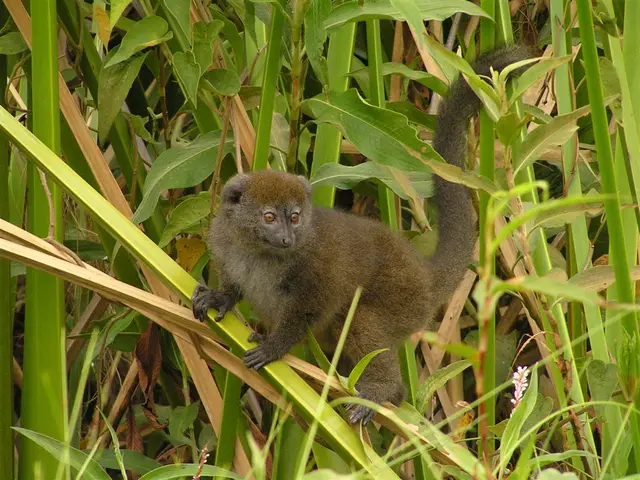
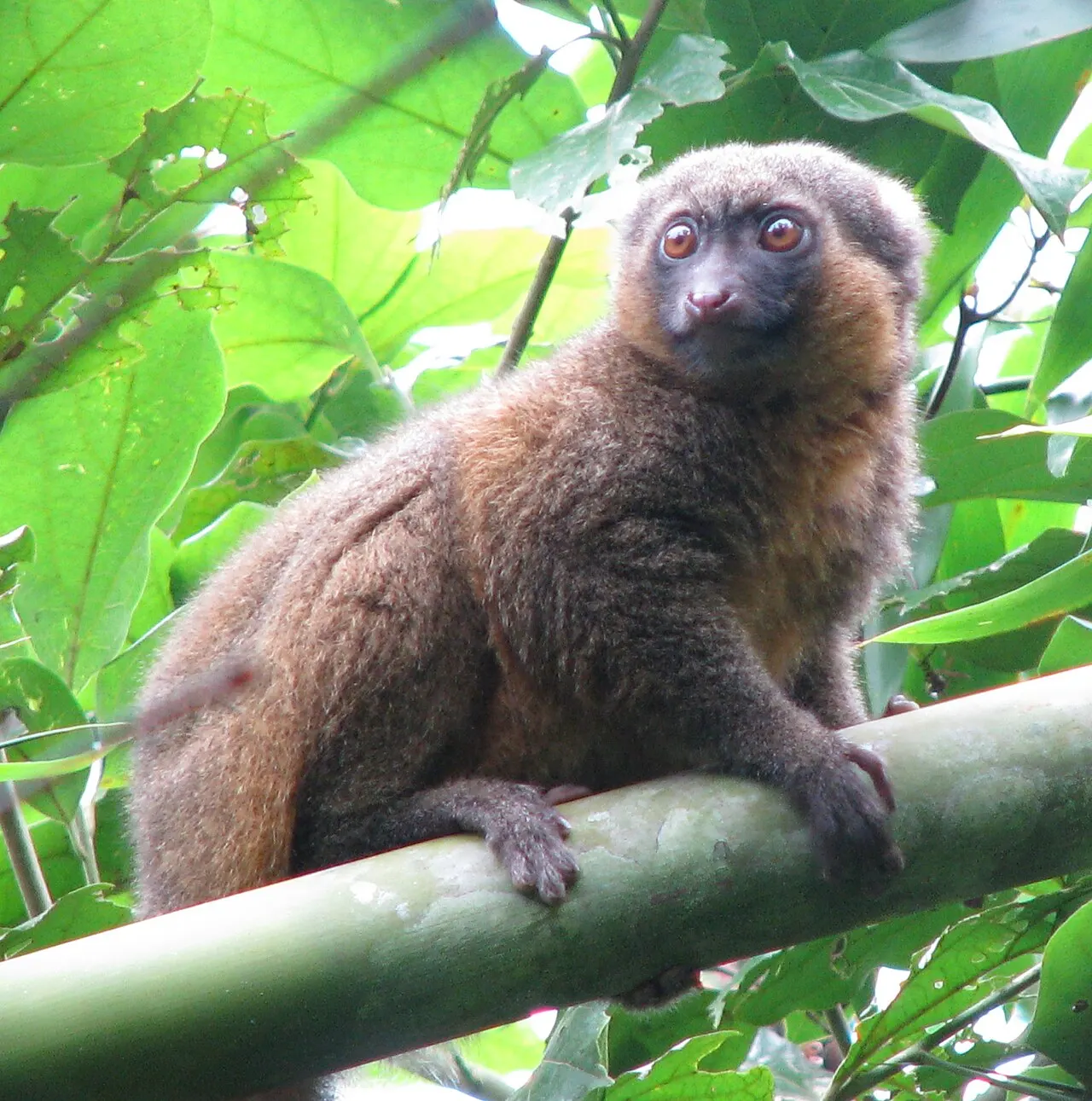
This is the largest of the Hapalemur bamboo lemurs, weighing about 1 to 2.5 kilograms, with a typical animal near 1.5 kilograms. Its fur is soft and dense: pale orange over the back with grey guard hairs, golden below, and golden fur framing a dark face with a pink nose. The tail is bushy and darker at the tip.
A gland on the forelimb produces a white, sticky, strong-smelling secretion. Malagasy names include bokombolomena and varibolomena.
Where it lives
The species is found only in south-eastern Madagascar, in moist lowland and mountain rainforest between about 600 and 1,400 metres. The Red List also lists wetland habitats such as marshes and bogs. Most animals live in and around Ranomafana National Park, with others near Andringitra National Park and in the Fandriana-Vondrozo corridor that links the two. The Red List gives its extent of occurrence as roughly 4,385 square kilometres.
It was discovered in 1985 by Corinne Dague and formally described in 1987 by Bernhard Meier and colleagues, from specimens taken near Ranomafana.
Pins are Wikidata “endemic to” fields. Orange dots, when present, are GBIF occurrence tiles — survey bias included.
How it lives
Golden bamboo lemurs live in small family groups, usually three or four animals, though counts of two to eight have been reported. They are mostly active around dawn and dusk, rest at midday and sometimes move at night, and spend their time in the trees. Home range estimates run from about 16 to 30 hectares, and one study of a Ranomafana group put its exclusive territory near 80. A group typically travels under 400 metres in a day. Population density at Ranomafana has been estimated at about 0.21 lemurs per square kilometre.
The diet is dominated by shoots, leaf bases and creepers of the giant bamboo Cathariostachys madagascariensis. Young shoots contain cyanide, and an adult eating around 500 grams a day reportedly takes in roughly twelve times a dose that would be lethal to most animals of its size. How it copes is not known. Other bamboo lemurs may overlook these protein-rich growing tips, which could let the species share forest with its relatives. It adds leaves, flowers, fruit and fungi.
Mating takes place in July, gestation lasts about 138 days, and a single infant is usually born around the start of the rainy season in November or December. Infants are left hidden in dense vegetation for their first two weeks and are weaned at about six months.
Why it is in trouble
The Red List records a declining, severely fragmented population, with the largest subpopulation numbering 1 to 49 individuals. Its area of habitat is shrinking. The threats recorded are shifting agriculture (slash-and-burn) and unintentional effects of other activities, and bamboo harvesting for building and baskets is also reported. Hunting is a problem too. In forests around Ambohimahamasina, central Madagascar, meat from the species is eaten locally and sold in larger settlements and along main roads, and the animal is described as easy to catch because it is less wary of people. Hunting is worst in the dry season, October to December.
Counts differ by source and date. The Red List puts mature individuals at 50 to 249 (2020), while another account gives a wild total of 600 to 1,000 with no year. An older estimate of 200 to 400 is attributed to a primatologist, E. Simons, and how it was reached is unclear.
What is being done
It is listed on CITES Appendix I, which generally bars international commercial trade, and Malagasy law protects lemurs from killing and capture, although the law is hard to enforce. The species occurs in protected areas including Ranomafana. Long-term monitoring at Talatakely in Ranomafana suggests numbers there may be recovering, and bamboo is being replanted in the Fandriana-Vondrozo corridor.
A conservation project at Ambohimahamasina, supported by Stiftung Artenschutz, funds a 13-person Malagasy team. Its planned work includes population surveys with local lemur guards, awareness campaigns, tree nurseries and habitat restoration. No golden bamboo lemurs were known in captivity as of 2022.
Sources
Written for this catalog in our own words from the sources below, checked against them on 12 November 2026. Population figures are estimates and carry the year they were made. Status and assessment year: IUCN. 2026. The IUCN Red List of Threatened Species. Version 2026-1. iucnredlist.org.