Critically Endangered
Girardinichthys turneri
Girardinichthys turneri
Girardinichthys turneri is an alternative name for the highland splitfin, a tiny live-bearing fish of central Mexico's Lerma River basin that most sources call Hubbsina turneri. It is one animal, not two. The IUCN rated it Critically Endangered in 2019, and it is now counted at a single location.
One fish, two names
Fernando de Buen described this fish in 1940 under the genus Hubbsina, which holds only this species. In 2003 Radda and Meyer moved Hubbsina into the related splitfin genus Girardinichthys, and the fish became Girardinichthys turneri in their scheme. Other authorities keep it in Hubbsina, and the current IUCN assessment, from 2019, lists it as Hubbsina turneri with Girardinichthys turneri as a merged synonym. It is the same animal under either name.
An earlier IUCN assessment from 1996, filed under the Girardinichthys name, also rated it Critically Endangered and listed it as native to Mexico.
A second name, Girardinichthys ireneae, was published in 2003. Some experts treat it as a separate species from turneri, and others consider the two indistinguishable. The IUCN lists it as a synonym. Because of this, survey and hobby records under any of these names can be hard to pin down.
What it looks like
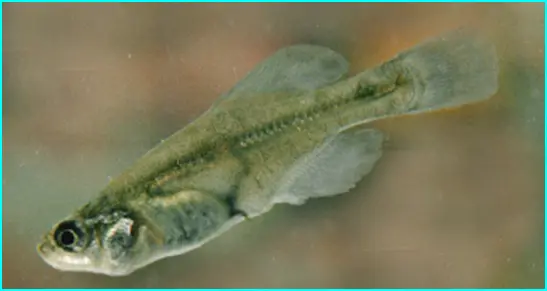
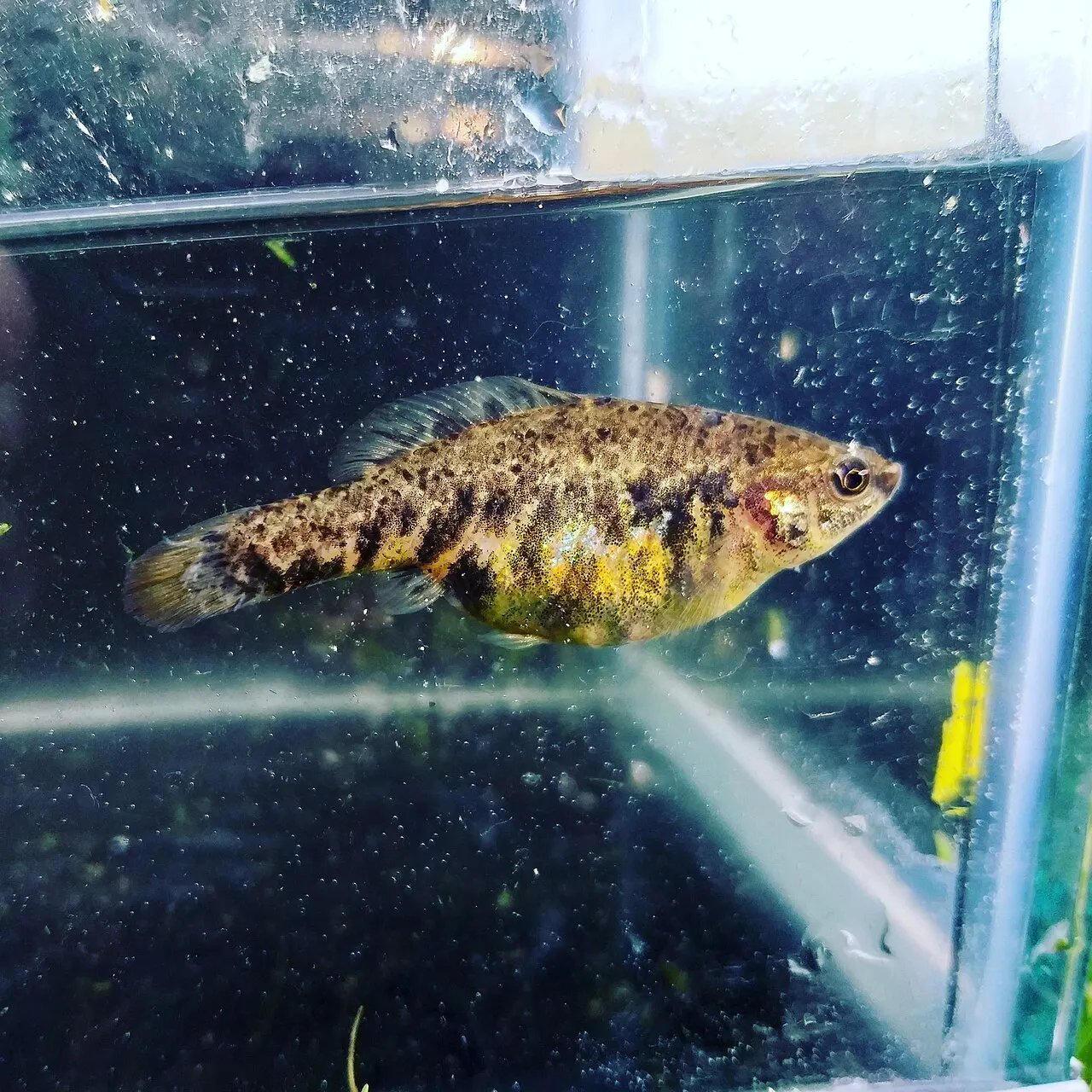
It is a small fish, up to about 5 cm in males and 6.5 cm in females. Females are dark above with a pale yellowish belly and dark blotches on the flanks. Males are greyish with a yellowish belly. It has the most dorsal fin rays of any known splitfin.
Like other members of its family, it gives birth to live young. Newborns have turned up in May, and large females may produce 20 to 40 young at once.
Where it lives
The type specimen came from Presa Cointzio, a reservoir near Morelia in Michoacan. Past records cover ponds, canals and lakes in the Rio Grande de Morelia basin, which drains toward Lake Cuitzeo, and Laguna de Yuriria in Guanajuato. It prefers quiet, shallow, heavily vegetated water over soft bottoms.
The 2019 Red List entry gives one remaining location, at about 1,980 m elevation, and estimates a reduction of about 65 percent in the past.
Pins are Wikidata “endemic to” fields. Orange dots, when present, are GBIF occurrence tiles — survey bias included.
Why it is in trouble
The Red List records housing and urban growth, silt from soil erosion, small farms and grazing, water taken for household use, and tourism and recreation areas as ongoing threats. Both historical basins are polluted and heavily altered.
Targeted surveys found none after the late 1980s, and a 2012 review by Burkhead put its extinction around 1990. A 2022 study by Moncayo-Estrada and colleagues reported that it still survives, though the recent records may involve the fish named ireneae.
What is being done
Mexico lists the species as in danger of extinction. The IUCN records it in at least one protected area and as subject to ex-situ conservation, and recommends site protection, species recovery, captive breeding and awareness work. The Goodeid Working Group knows of no captive populations, so it is unclear how much safety stock exists.
Sources
Written for this catalog in our own words from the sources below, checked against them on 12 November 2026. Population figures are estimates and carry the year they were made. Status and assessment year: IUCN. 2026. The IUCN Red List of Threatened Species. Version 2026-1. iucnredlist.org.