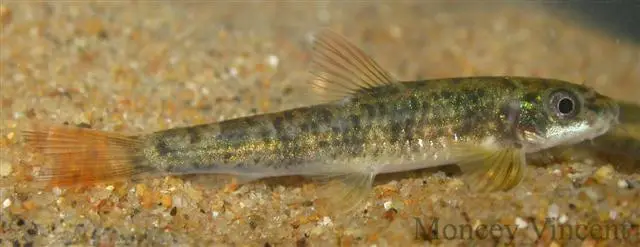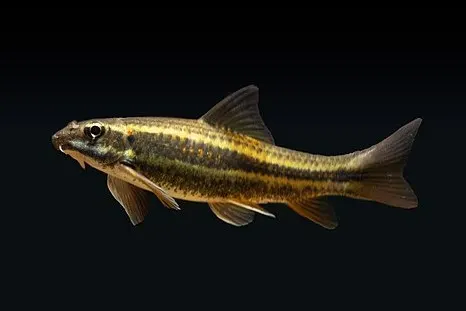
Endangered
Kalakad Stone Carp
Garra kalakadensis
The Kalakad stone carp (Garra kalakadensis) is a small freshwater fish found only in the headwater streams of the Tamiraparani river system in the Western Ghats of Tamil Nadu, India. The IUCN Red List rated it Endangered in 2011, with a decreasing population and a small range.
Where it lives
The species was described by K. Rema Devi in 1993 from the Kalakad Wildlife Sanctuary in Tirunelveli District, Tamil Nadu. One reference gives the paper as 1992.
It is endemic to India. The Red List gives its habitat as permanent streams and rivers at roughly 800 to 850 metres above sea level. It estimates the area of occupancy at 200 to 300 square kilometres, the extent of occurrence at 2,000 to 3,000, and counts two locations.
Pins are Wikidata “endemic to” fields. Orange dots, when present, are GBIF occurrence tiles — survey bias included.
Where it has been found
A survey of 25 streams and rivers in Kalakad-Mundanthurai Tiger Reserve between January 2011 and March 2012 recorded the species at 15 of the sites. The study, published in the Journal of Threatened Taxa in 2020, lists it among the minnows widely spread through the reserve's streams, alongside Garra mullya and Devario aequipinnatus, and describes it as restricted to the headwaters of the Tamiraparani within the reserve.
It often shares those streams with another local endemic, Garra joshuai, which turned up at 13 of the 15 sites where this species was found.
Why it is in trouble
The species lives in a small area, and the Red List records a continuing decline in both its habitat and its numbers, with a past population reduction put at 50 percent, based on direct observation. The pressures listed are herbicides and pesticides, which reach part of the range, and unintentional catches from small-scale fishing.
The 2020 survey adds detail on the water itself. It names tea garden operations, household waste from settlements and chemical runoff from tea estates as sources of habitat damage in parts of the reserve, and says these may make streams unsuitable for specialised fishes such as this one and Garra joshuai. It recommends waste management in tea garden areas and studies of the population status of the endemic fishes.
What is being done
The species occurs within a protected area, and conservation sites have been identified across its whole range. The assessment records no recovery plan, monitoring scheme, harvest plan or education programme in place. It lists site and habitat protection, captive breeding and a genome resource bank as the actions needed.
Sources
Written for this catalog in our own words from the sources below, checked against them on 12 November 2026. Population figures are estimates and carry the year they were made. Status and assessment year: IUCN. 2026. The IUCN Red List of Threatened Species. Version 2026-1. iucnredlist.org.