Endangered
Garra surendranathanii
Garra surendranathanii
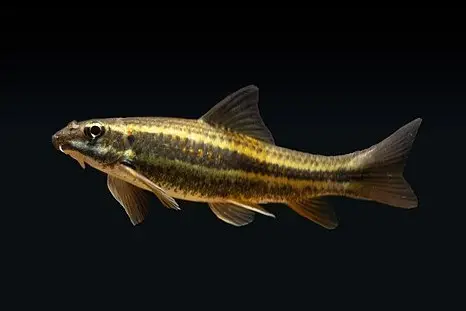
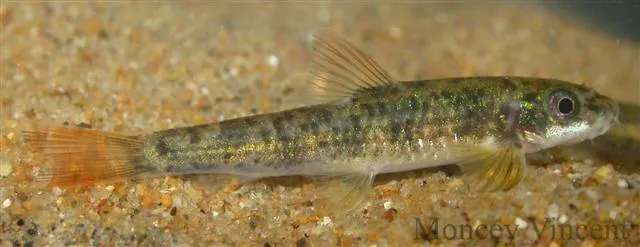
Garra surendranathanii, the Periyar garra, is a small freshwater fish of the Western Ghats in Kerala, India, known from only a few hill streams and rivers. The IUCN Red List rated it Endangered in 2011 and records a continuing decline in the area where it lives.
How to recognise it
It's a cyprinid, a member of the carp family, in the subfamily Labeoninae. It has an oral adhesive disc, a sucker-like attachment organ that suits fast-flowing, rocky water. FishBase records a maximum length of 14.7 cm. It's also called Surendran's stone sucker and, in Malayalam, kallemutti or kallotti.
The fish was described scientifically by Shaji, Arun and Easa in 1996. Its name honours a former Kerala Forest Department official, Surendranathan Asari.
Where it lives
The species is endemic to Kerala. It is recorded from four river systems: the Periyar, Chalakudy, Pamba and Achenkovil. The IUCN assessment gives its habitat as permanent rivers and streams, at elevations from 50 to 720 m, and counts four to five locations. FishBase lists three named sites, a Chalakudy tributary, Ayyappankovil on the Periyar and a Pamba tributary.
A 2023 survey of the Kallar, a tributary of the Achenkovil, found it at nine of twelve sites between 54 and 331 m elevation. It was the third most abundant fish there, with 150 individuals counted.
Pins are Wikidata “endemic to” fields. Orange dots, when present, are GBIF occurrence tiles — survey bias included.
How it lives
Little has been written about its diet or breeding. The Kallar survey describes a perennial stream of cascades, riffles, runs and pools over bedrock, boulders, cobbles and gravel, the kind of water this genus is built for.
Why it is in trouble
The IUCN lists a spread of pressures on its streams: sewage, silt and soil erosion, tourism and recreation areas, herbicide and pesticide run-off, and fishing for local food. It records a continuing decline in the area where it lives, while the population trend itself is marked unknown.
In the Kallar, the survey named destructive fishing as a threat. During the dry season, people from outside the forest dam small streams and use plant-based fish poisons. It also flagged conversion of forest to teak plantations and a proposed dam under the Pamba, Achenkovil and Vaippar river-linking project.
What is being done
The 2011 assessment records that conservation sites have been identified over its whole range, that the species occurs in at least one protected area, and that about 50 percent of the population is inside protected areas. No recovery plan or systematic monitoring was in place. The Kallar study recommends a ban or closed season on fishing in the dry season (November to February), when many upstream fishes breed, and stronger enforcement of fisheries and environmental law.
Sources
Written for this catalog in our own words from the sources below, checked against them on 12 November 2026. Population figures are estimates and carry the year they were made. Status and assessment year: IUCN. 2026. The IUCN Red List of Threatened Species. Version 2026-1. iucnredlist.org.