Endangered
Jarocho Goby
Elacatinus jarocho
The Jarocho goby (Elacatinus jarocho) is a tiny neon-type goby known only from coral reefs off Veracruz, Mexico, in the southwestern Gulf of Mexico. The IUCN rated it Endangered in 2015. It forms shoals that hover above the reef, which is unusual for its genus.
How to recognise it
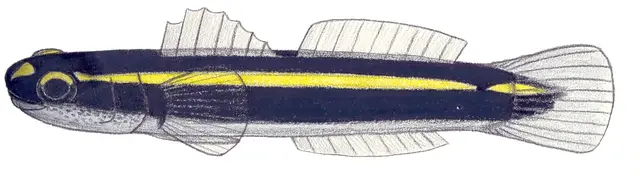
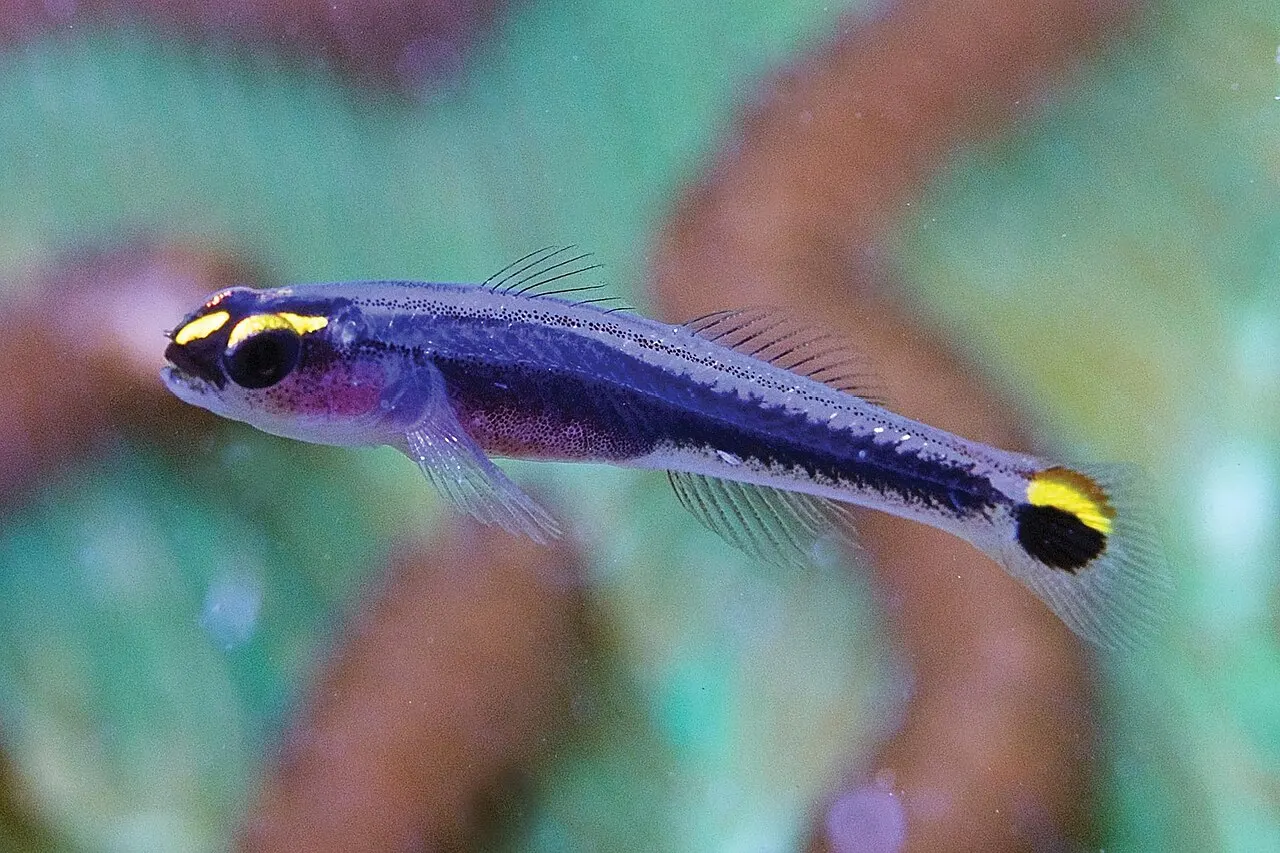
This is a very small fish. FishBase gives a maximum length of 2.7 centimetres. Like other neon gobies it has a bright yellow stripe, but here the stripe is broken. It shows as a band over the head and the base of the tail fin, plus a separate yellow line down the snout. A dark spot sits at the base of the tail.
It was described in 2007 by Michael Taylor and Lad Akins in the journal Zootaxa.
Where it lives
The species is known only from reef systems off Veracruz state: Tuxpan-Lobos in the north and Veracruz in the south. Records run from Isla de Lobos to Anton Lizardo, at depths of about 3 to 25 metres. It lives on high-relief coral reef, usually in shade near tall corals or overhangs.
The IUCN estimates an area of occupancy of just 32 square kilometres within an extent of about 8,400 square kilometres, and counts two locations. It occurs in at least one protected area.
Pins are Wikidata “endemic to” fields. Orange dots, when present, are GBIF occurrence tiles — survey bias included.
How it lives
Only one other neon goby, E. atronasus of the Bahamas, is known to school in the water column. The Jarocho goby never rests on a surface. Groups of roughly 12 to 60 hover about 5 to 25 centimetres above the coral, often alongside the small gobies Coryphopterus hyalinus or C. personatus. It has not been seen cleaning other fish.
Divers often, though not always, see it retreat toward cover when they come within about a metre. It is believed to feed on zooplankton.
Surveyors from the Reef Environmental Education Foundation first found it in 2003 during a training project in the Veracruz Marine Park.
Why it is in trouble
The IUCN records continuing decline in both area of occupancy and extent of occurrence, though the population trend itself is listed as unknown. Threats named include port and industrial development, shipping lanes, run-off, a disease of unknown cause and invasive red lionfish. Most are scored as low impact, with the lionfish impact unknown.
Coral cover off Veracruz fell by about 17 percent between 1965 and 1999, according to a study cited in the assessment, and a port expansion onto the reef has been sought. The IUCN records no specific conservation action beyond presence in a protected area.
Sources
Written for this catalog in our own words from the sources below, checked against them on 12 November 2026. Population figures are estimates and carry the year they were made. Status and assessment year: IUCN. 2026. The IUCN Red List of Threatened Species. Version 2026-1. iucnredlist.org.