Endangered
Nilgiri danio
Devario neilgherriensis
The Nilgiri danio (Devario neilgherriensis) is a slender, silvery schooling fish of hill streams in the Western Ghats of southern India, reaching about 10 centimetres. The IUCN Red List assessed it as Endangered in 2011, with its population declining and fragmented.
How to recognise it
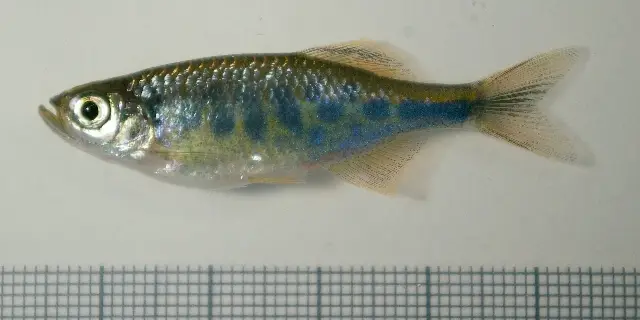
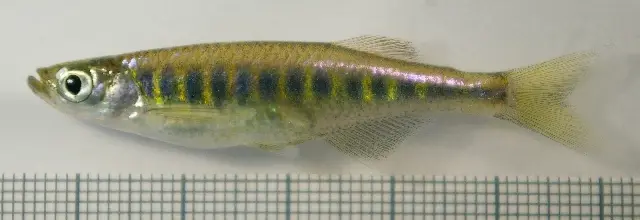
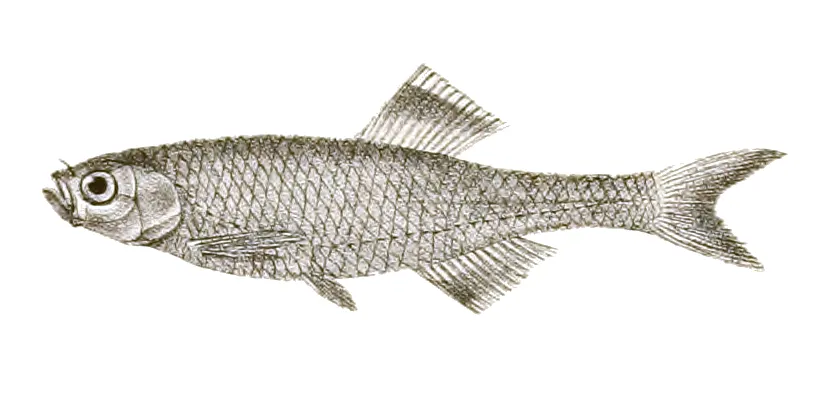
It is a danio, a small, active relative of carps and minnows, and it can reach about 100 millimetres in standard length. In Francis Day's original description the back is greenish and the flanks silvery with a purplish tinge along the belly. A broad, indistinct steel-blue stripe runs from behind the eye to the tail, edged above and below by a narrow bright yellow band, and the fins are yellowish with fine black dots.
Mature females are rounder-bellied, less colourful and slightly larger than males. Day described the species in 1867 from the Nilgiri Hills, originally under the genus Paradanio, and moved it to Danio in 1878. It has since been placed in Devario.
Where it lives
The IUCN treats the Nilgiri danio as endemic to India and the Western Ghats. It has been reported from Ooty Lake and the Pykara, Avalanche and Kaity streams in the Nilgiri Hills of Tamil Nadu, and from Wayanad in Kerala. Reports from Madhya Pradesh and Arunachal Pradesh are listed as uncertain and need confirmation. Its extent of occurrence is put at 4,000 to 5,000 square kilometres, and the population is severely fragmented. An aquarium reference describes it from tributaries of the Bhavani river system.
It lives in permanent rivers and streams, in shallow water between 0.1 and 1 metre deep, and prefers fast-flowing, clear headwater streams. The IUCN gives its elevation as 600 to 1,300 metres, while the aquarium reference says several habitats lie around 2,000 metres, so altitude figures differ. The same reference describes clear, well-oxygenated water, gravel and rock beds and overhanging vegetation, with flow and clarity changing a great deal through the year.
Pins are Wikidata “endemic to” fields. Orange dots, when present, are GBIF occurrence tiles — survey bias included.
How it lives
The IUCN describes it as a congregatory species, meaning it gathers in groups, and estimates a generation at about six months. In the wild it almost certainly eats mainly insects and their larvae. In aquariums it is a constant, vigorous swimmer that does best in groups of at least 8 to 10, and it is an accomplished jumper that needs a tight lid. Males show better colour when rivals are present. Its breeding has not been documented in the sources available.
The IUCN says it is not collected for the aquarium trade.
Why it is in trouble
The assessment records a decreasing population, with continuing decline in both the area occupied and the quality of habitat. Its main listed threat is the unintended effects of small-scale subsistence fishing, rated high impact, affecting most of the population and causing very rapid declines. The text names poisoning and dynamite fishing, along with habitat destruction and drought.
Introduced tilapia are also listed as a threat, though their scale is unknown. The assessment marks the causes of the past decline as understood.
What is being done
Protection is limited. Conservation sites have been identified over part of the range, and the species is recorded from Wayanad Wildlife Sanctuary. The assessment records no recovery plan, no systematic monitoring, no harvest management plan, no captive population and no invasive species control.
The IUCN suggests habitat restoration and removing exotic species from the streams. Its research priorities are population and habitat trends, threats and ecology, and an area-based management plan.
Sources
Written for this catalog in our own words from the sources below, checked against them on 12 November 2026. Population figures are estimates and carry the year they were made. Status and assessment year: IUCN. 2026. The IUCN Red List of Threatened Species. Version 2026-1. iucnredlist.org.