Endangered
Desbruyeresia marisindica
Desbruyeresia marisindica
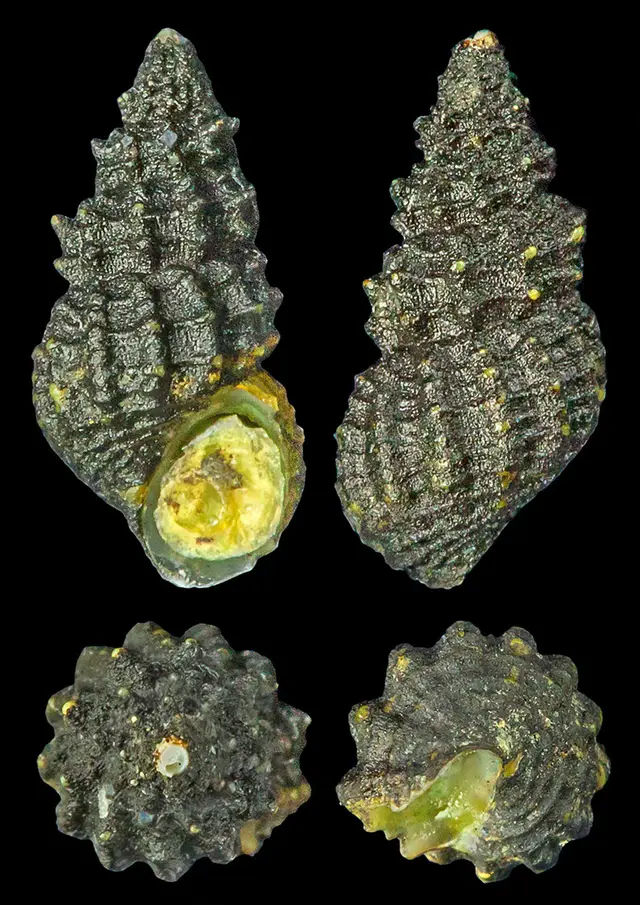
Desbruyeresia marisindica is a deep-sea snail from hydrothermal vents on the Central Indian Ridge in the Indian Ocean. It is known from just two locations, which the IUCN lists under Mauritius, and was rated Endangered in 2019, with mining listed as its only threat.
What it is
This is a sea snail, a gastropod in the family Provannidae, a group that lives around hot vents on the ocean floor. Okutani, Hashimoto and Sasaki described it in 2004 from specimens collected at the Kairei vent field. The name marisindica combines Latin words for sea and Indian, after the ocean where it lives.
Where it lives
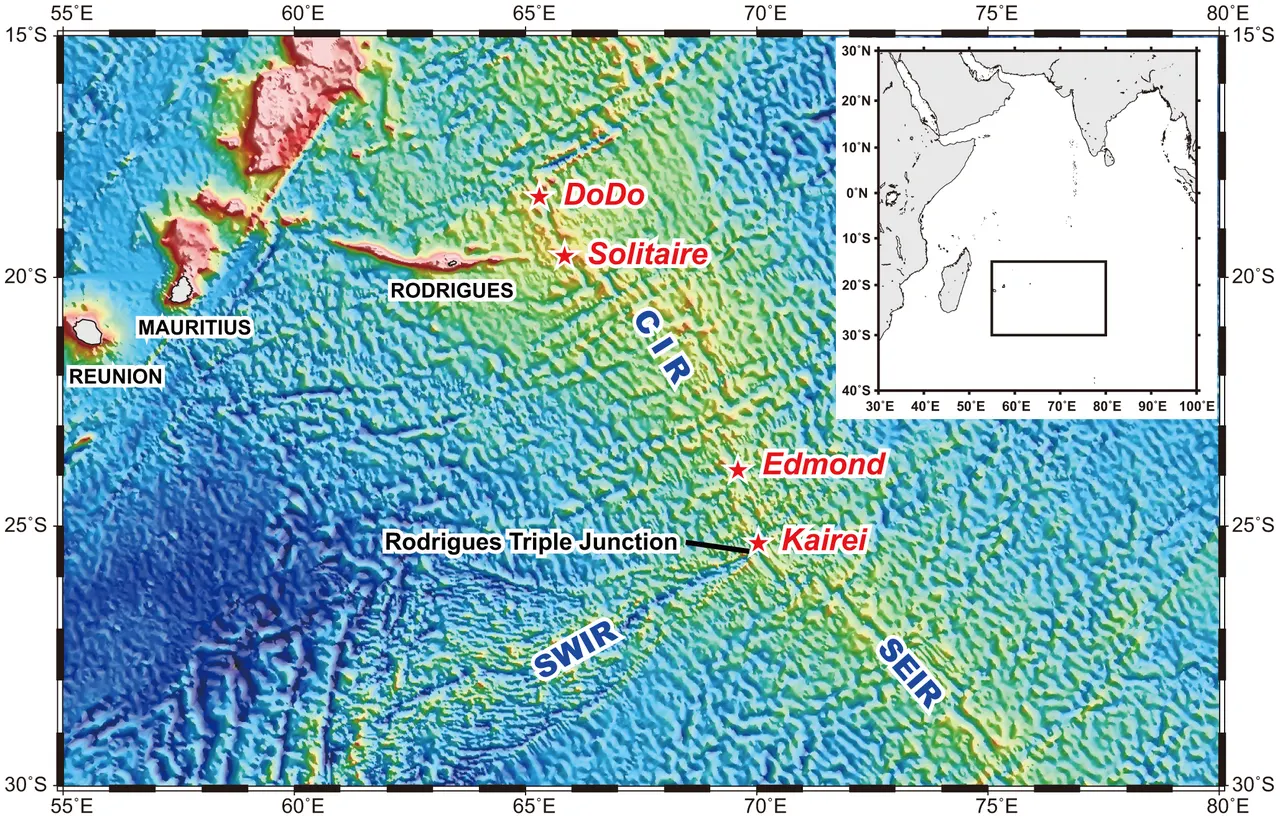
The type locality is Kairei, on the Central Indian Ridge just north of the Rodrigues Triple Junction, where three ocean ridges meet. Kairei was the first active vent field found in the Indian Ocean, during a Japanese research cruise in 2000. Its vent activity covers an area of roughly 40 by 80 m, with black smokers that in places stand more than 10 m tall.
The IUCN assessment records two locations at depths of about 2,420 to 2,610 m. Its estimated area of occupancy is just 8 square kilometres, and its extent of occurrence about 1,546 square kilometres. The snail is not a migrant.
Pins are Wikidata “endemic to” fields. Orange dots, when present, are GBIF occurrence tiles — survey bias included.
How it lives
Little is known about its biology. Shells of vent snails are often coated with minerals whose chemistry reflects the local vent fluid, and a 2025 study in Scientific Reports examined such coatings on six vent snail shells, including one of this species.
Why it is in trouble
The single threat listed in the assessment is mining and quarrying. A 2022 review in Frontiers in Marine Science found that eight of the 13 known active vent fields in the Indian Ocean, including Kairei, lie within areas under exploration contracts with the International Seabed Authority.
The same review said no experiments have simulated mining at vent ecosystems, so the expected damage is projected, not measured. It added that vent animals have recolonised slowly after past disturbance.
What is being done
Almost nothing specific so far. The assessment records no protected area covering the species, no recovery plan and no monitoring scheme. It lists resource and habitat protection, international-level action and awareness as conservation actions. The 2022 review concluded that all active vent fields in the Indian Ocean need protection.
Sources
Written for this catalog in our own words from the sources below, checked against them on 12 November 2026. Population figures are estimates and carry the year they were made. Status and assessment year: IUCN. 2026. The IUCN Red List of Threatened Species. Version 2026-1. iucnredlist.org.