Endangered
Ctenophila setiliris
Ctenophila setiliris
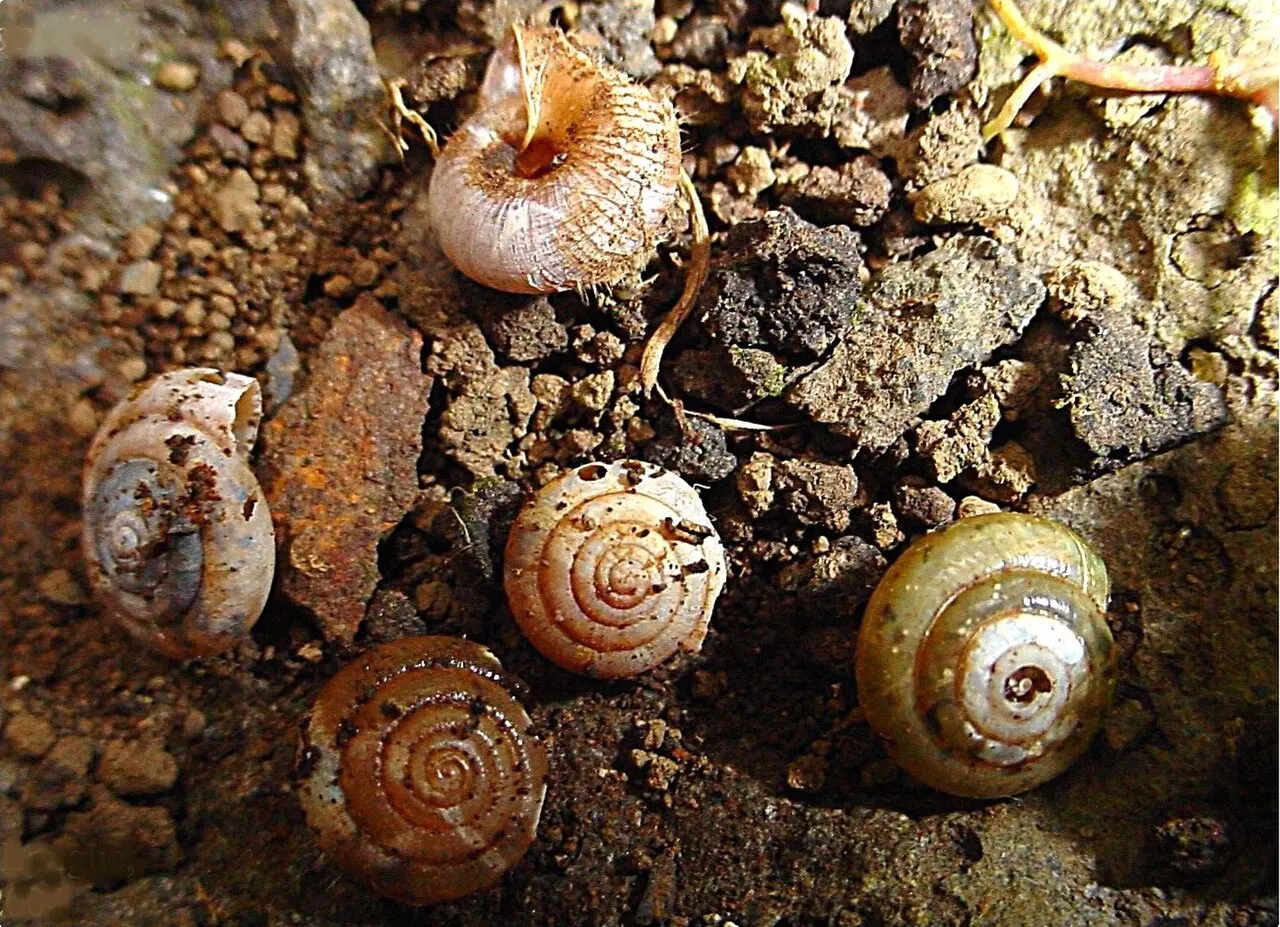
Ctenophila setiliris, now usually called Erepta setiliris, is a small air-breathing land snail from the Mascarene islands in the Indian Ocean. The Red List treats it as endemic to Réunion and classed it as Endangered in its 1996 assessment, the latest on record. Almost nothing else about its biology is recorded.
What kind of animal it is
It is a terrestrial pulmonate, a land snail that breathes air through a lung. MolluscaBase places it in the family Helicarionidae, while the Red List files it under Euconulidae. W. H. Benson described it in 1859 as Helix setiliris, in a paper on new land shells from Mauritius. Since then it has been moved between genera, including Tachyphasis, Ctenophila and Erepta. A second name, Helix vinsoni, is treated as a synonym.
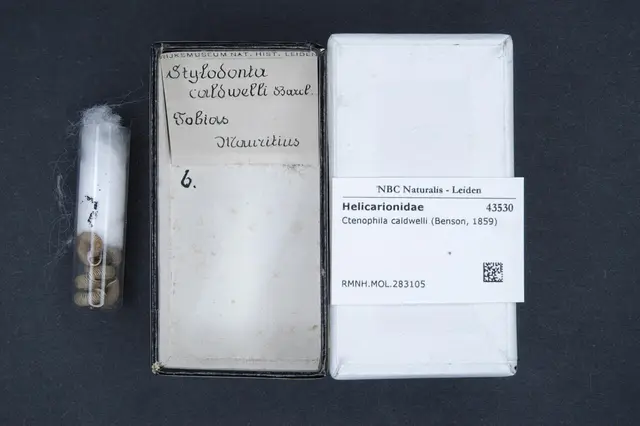
The Red List still uses Ctenophila setiliris, while MolluscaBase lists Erepta setiliris as the accepted name. They refer to the same animal. Syntype specimens are held at the University Museum of Zoology, Cambridge.
Where it lives
The Red List gives Réunion, the French island east of Madagascar, as its only location. Observations logged on GBIF fit that. One is from Saint-Philippe in 2000, and another is from the Basse Vallée trail toward the volcano in 2007, where a preserved specimen was also logged.
The picture is slightly muddier than a simple island endemic. MolluscaBase gives the type locality as Mauritius, and preserved specimens in several museum collections carry Mauritius labels. Whether the snail still lives on Mauritius, or those labels reflect old collecting records, is not settled by the sources available.
Pins are Wikidata “endemic to” fields. Orange dots, when present, are GBIF occurrence tiles — survey bias included.
Its Red List status
An earlier assessment in 1994 used the older Endangered code. The snail was reassessed in 1996 as Endangered under criterion B1+2a, a test based on a small range and a small area occupied. The record lists no habitat, population trend, threats or conservation actions, and no population figure exists.
No newer assessment has been published, so the snail's present numbers and the pressures on it are undocumented.
Sources
Written for this catalog in our own words from the sources below, checked against them on 12 November 2026. Population figures are estimates and carry the year they were made. Status and assessment year: IUCN. 2026. The IUCN Red List of Threatened Species. Version 2026-1. iucnredlist.org.