Critically Endangered
Common guitarfish
Rhinobatos rhinobatos
The common guitarfish (Rhinobatos rhinobatos) is a bottom-dwelling ray of the eastern Atlantic and Mediterranean that cruises over sandy and muddy seabeds close to shore. The IUCN Red List rated it Critically Endangered in 2021. Fishing, mostly as bycatch, has removed it from parts of its range.
How to recognise it
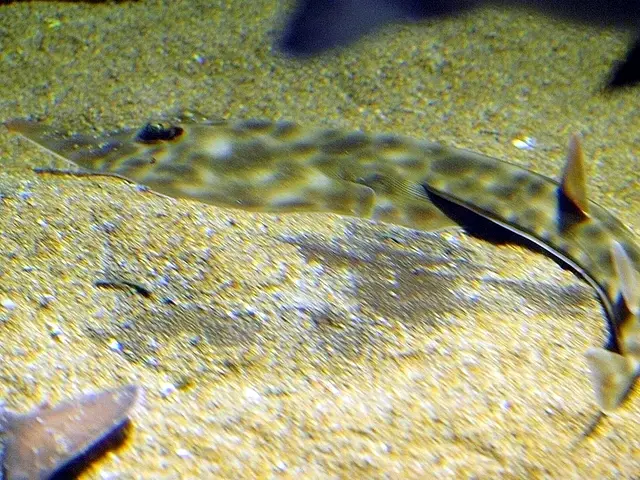
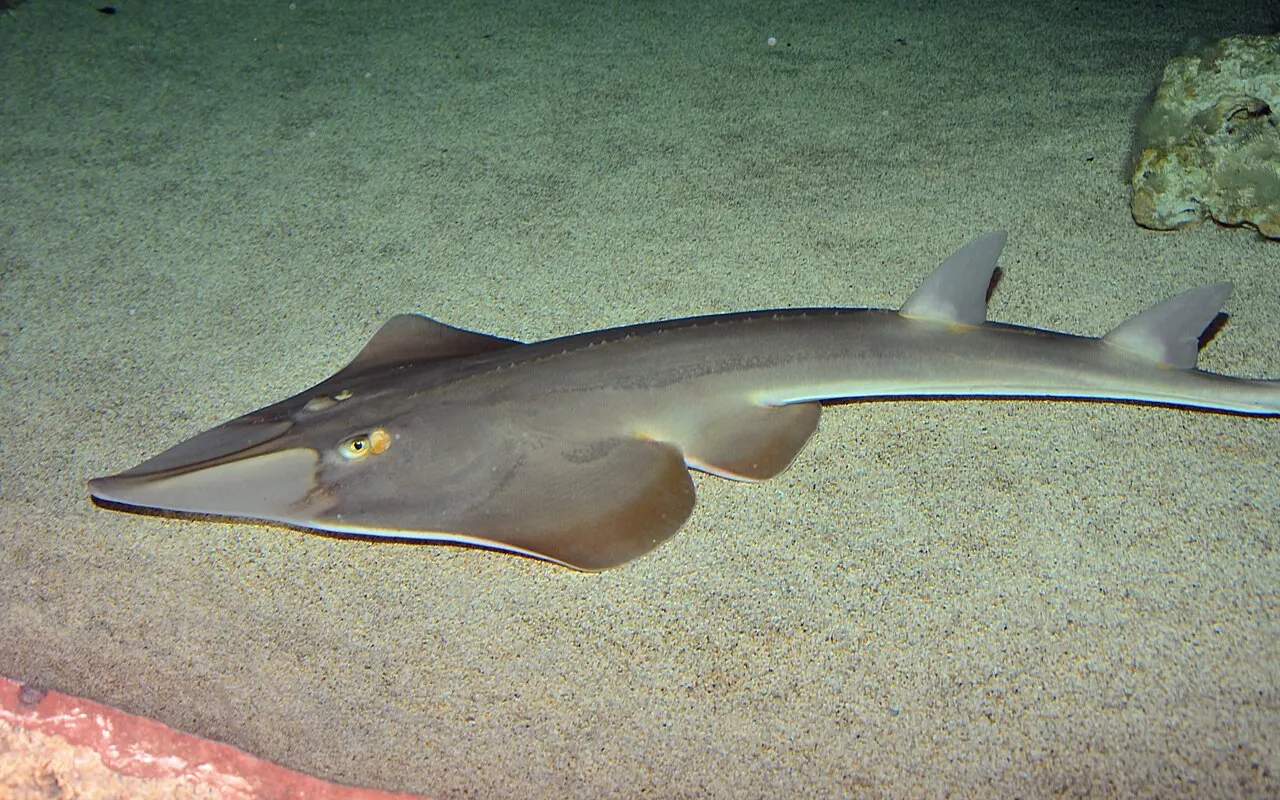
The upper side is khaki-brown and the underside is white. Typical adults measure around 80 cm. Maximum length is given as roughly 147 cm in some accounts, 181 cm in others and 185 cm in FishBase.
It is easily confused with the blackchin guitarfish (Glaucostegus cemiculus), which shares its waters. The common guitarfish is generally the smaller of the two and has larger eyes.
Where it lives
The species ranges from the southern Bay of Biscay down the African coast to Angola, and through the Mediterranean, mainly in the south from Tunisia to Turkey. The IUCN assessment lists dozens of countries and territories, from Spain and Italy to Nigeria, Namibia and the Democratic Republic of the Congo.
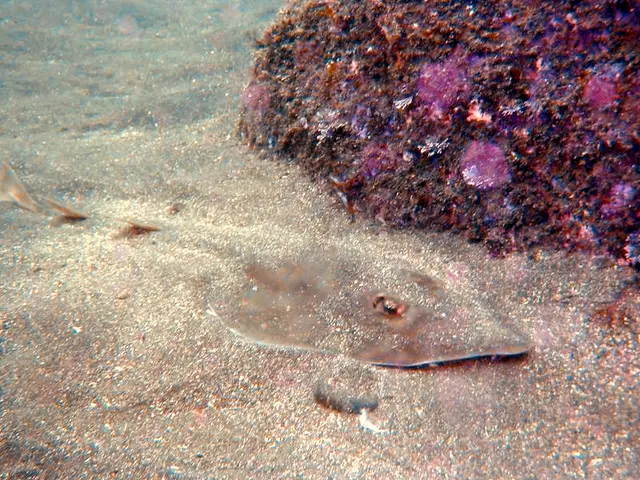
It cruises just above sand and mud, and sometimes near rocky reefs, from the shoreline down to about 100 m (the IUCN habitat data allow depths to 180 m). It sometimes rests on the bottom and partly covers itself with sediment.
Pins are Wikidata “endemic to” fields. Orange dots, when present, are GBIF occurrence tiles — survey bias included.
How it lives
Guitarfish hunt on the seabed. The common guitarfish feeds mainly on crustaceans, along with other invertebrates and small fish, and pins prey down with its snout before sucking it in.
Females keep their eggs inside the body and give birth to live young. A litter is 4 to 10 pups, born once or twice a year, mostly from late summer to early autumn in shallow water. Pups are about 25 to 34 cm long. Males mature at around 56 cm and females at around 64 cm. The IUCN assessment gives a generation length of 14 years, so this is not a species that rebounds quickly.
Why it is in trouble
Living in shallow water close to the coast puts it where trawlers, gill nets and other gear operate. Off West Africa it is caught by shrimp trawlers, cephalopod trawl fisheries and local gill-net fishers. Its meat can be salted and exported, and the fins are sold to Asia.
In the northern Mediterranean it was once landed at ports such as Palermo, but it is no longer seen there and is probably gone from that area. It has also disappeared from the Balearic Islands. The southern Mediterranean may be the safest area, though most fish landed there are reportedly immature. The IUCN lists the population trend as decreasing.
What is being done
Catching, keeping and selling guitarfishes is prohibited across the Mediterranean under a 2018 General Fisheries Commission for the Mediterranean recommendation (GFCM/42/2018/2). As of a December 2025 project update, the rule had not been written into Tunisian national law, and anecdotal reports there pointed to growing demand for guitarfish meat as other fish stocks decline.
The Save Our Seas Foundation is working with local partners in Tunisia on outreach. After hearing about the species' slow breeding, many fishers agreed that releasing pregnant females and undersized juveniles helps the population. The species is also listed on CITES Appendix II. No recovery plan exists, and the IUCN assessment records no systematic monitoring scheme.
Sources
Written for this catalog in our own words from the sources below, checked against them on 12 November 2026. Population figures are estimates and carry the year they were made. Status and assessment year: IUCN. 2026. The IUCN Red List of Threatened Species. Version 2026-1. iucnredlist.org.