Endangered
Clarence galaxias
Galaxias johnstoni
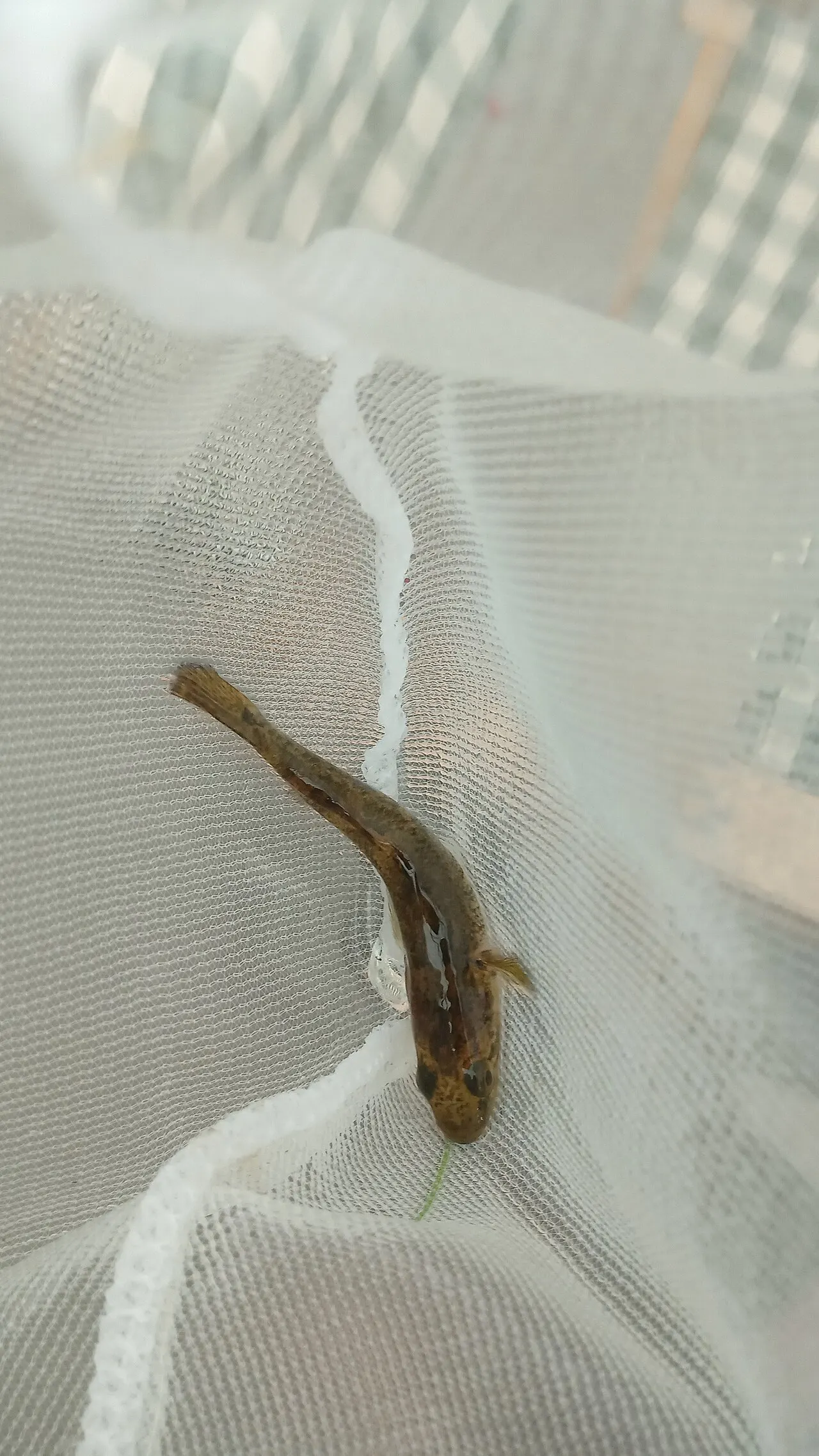
The Clarence galaxias (Galaxias johnstoni) is a scaleless freshwater fish confined to a handful of high-altitude lakes, marshes and streams on Tasmania's Central Plateau. It is listed as Endangered by the IUCN (assessed 2019). Introduced brown trout have pushed it out of much of its former range.
How to recognise it
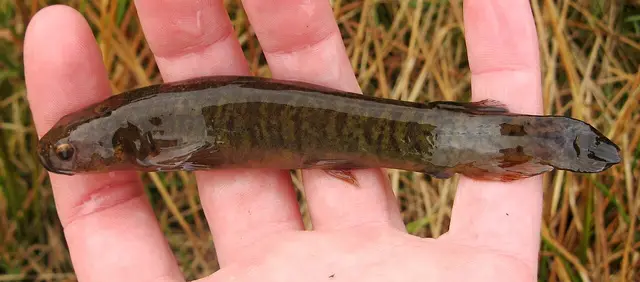
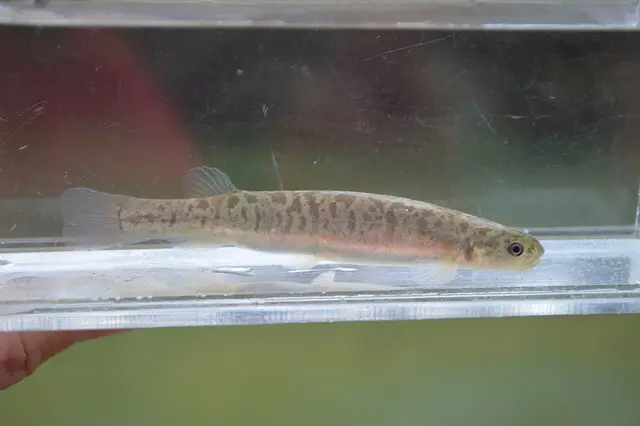
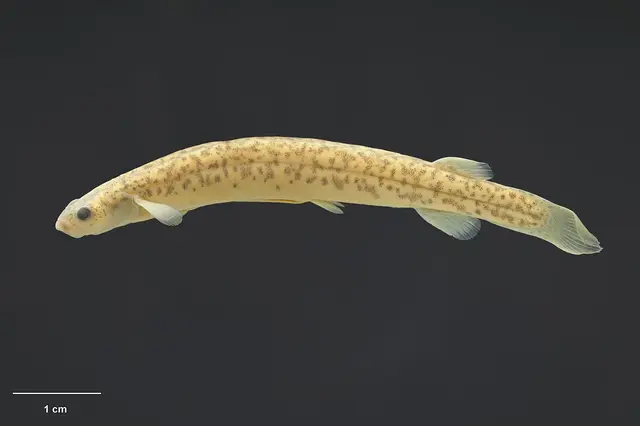
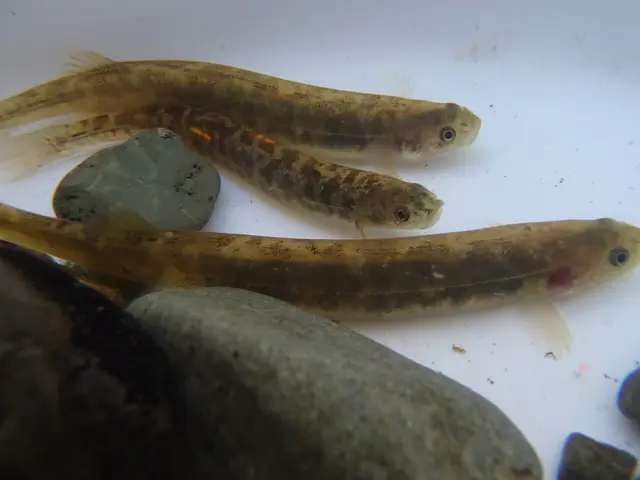
It is a stout, tube-shaped fish with a blunt head, a large mouth and no scales. Adults are dark brown above, with bars and blotches running down the sides, and yellowish or silvery-cream underneath. Fish usually grow past 70 mm, and the largest reach about 127 to 140 mm, depending on the source.
Young fish are pale and start to take on adult colouring at around 40 mm. Many fish carry tiny black spots, which are parasites, not natural markings.
Where it lives
The species is found only in central Tasmania, in the upper Clarence, Nive and Derwent catchments. It was first described in 1936 from specimens collected in a tributary of the lower Clarence River. By the mid 1980s the only known population was in Clarence Lagoon.
Surveys since then turned up more. A 1987 to 1989 survey found five populations, and further finds in 1997 and 1998 brought the total to seven, one of them in a small headwater of the Nive. A current Tasmanian government profile counts eight, while an older fact sheet says six, so the exact number depends on the source and year. Clarence Lagoon and Lake Knight (once an unnamed lagoon in the Wentworth Hills) hold the largest groups. The IUCN puts the largest single population at about 3,000 fish.
Adults live in streams, marshes and lakes, staying near the bed and among cover. They are not fussy about the type of water body. The firm requirement is that brown trout are absent.
Pins are Wikidata “endemic to” fields. Orange dots, when present, are GBIF occurrence tiles — survey bias included.
How it lives
Spawning happens in spring. Eggs are laid in masses stuck to rocks in the lower reaches of a stream flowing into a lagoon. They hatch after one to two months, and the larvae gather in small schools in open water. Fish take on adult colour and move to the bottom at about 40 mm.
Larvae feed on tiny planktonic crustaceans. Adults browse the bottom for crustaceans and insects. They live for at least four years, and probably four to five.
Why it is in trouble
Brown trout are the central problem. They were introduced into the Clarence and Nive catchments before the galaxias was even discovered, and the little fish cannot coexist with them, through predation, competition or both. Most remaining populations are protected from trout by barriers such as waterfalls or fluctuating water levels. The exception is Clarence Lagoon, where the galaxias lives alongside brook trout. Brown trout, rainbow trout and redfin perch are all named as exotic fish to keep out, and further introductions, by natural spread or illegal stocking, are called a significant threat.
The IUCN also lists drought, more frequent and intense fire, and temperature extremes as ongoing pressures. Its assessment records the overall trend as stable, but notes a continuing decline in the number of locations.
What is being done
The fish is listed as Endangered under both Tasmanian and Australian law, and it cannot be taken without a permit. A recovery plan dates from 1997, and the IUCN assessment records invasive-species control, monitoring, education and an area management plan as in place. Parts of its range lie inside the Central Plateau Protected Area, and a 1998 Tasmanian listing statement says state forest around three other sites is managed as a wildlife priority area.
The same statement points to translocation as a tool, citing the apparent success of moves for the Pedder and Swan galaxias, and calls for captive-breeding protocols. The IUCN assessment records no successful reintroduction of the Clarence galaxias so far.
Sources
Written for this catalog in our own words from the sources below, checked against them on 12 November 2026. Population figures are estimates and carry the year they were made. Status and assessment year: IUCN. 2026. The IUCN Red List of Threatened Species. Version 2026-1. iucnredlist.org.