Critically Endangered
Chondrostoma soetta
Chondrostoma soetta
The Italian nase (Chondrostoma soetta), known locally as savetta, is a silvery freshwater fish of northern Italy's rivers and great lakes. The IUCN Red List rated it Critically Endangered in 2024, citing an estimated 80 percent decline, and it has disappeared from Slovenia.
How to recognise it
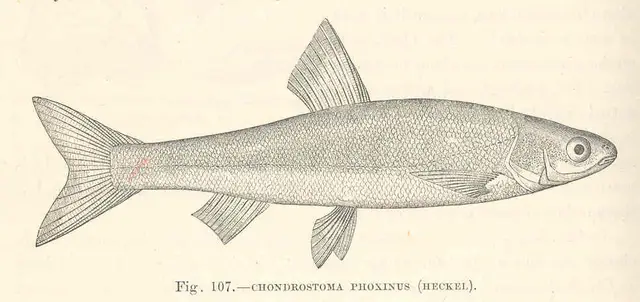
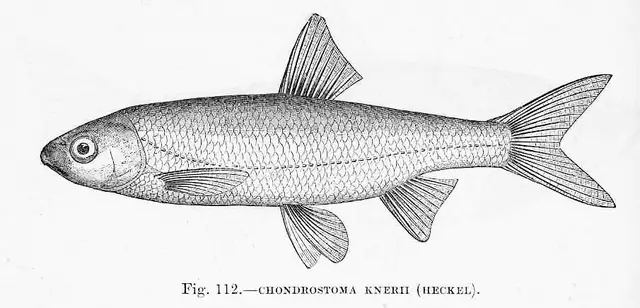
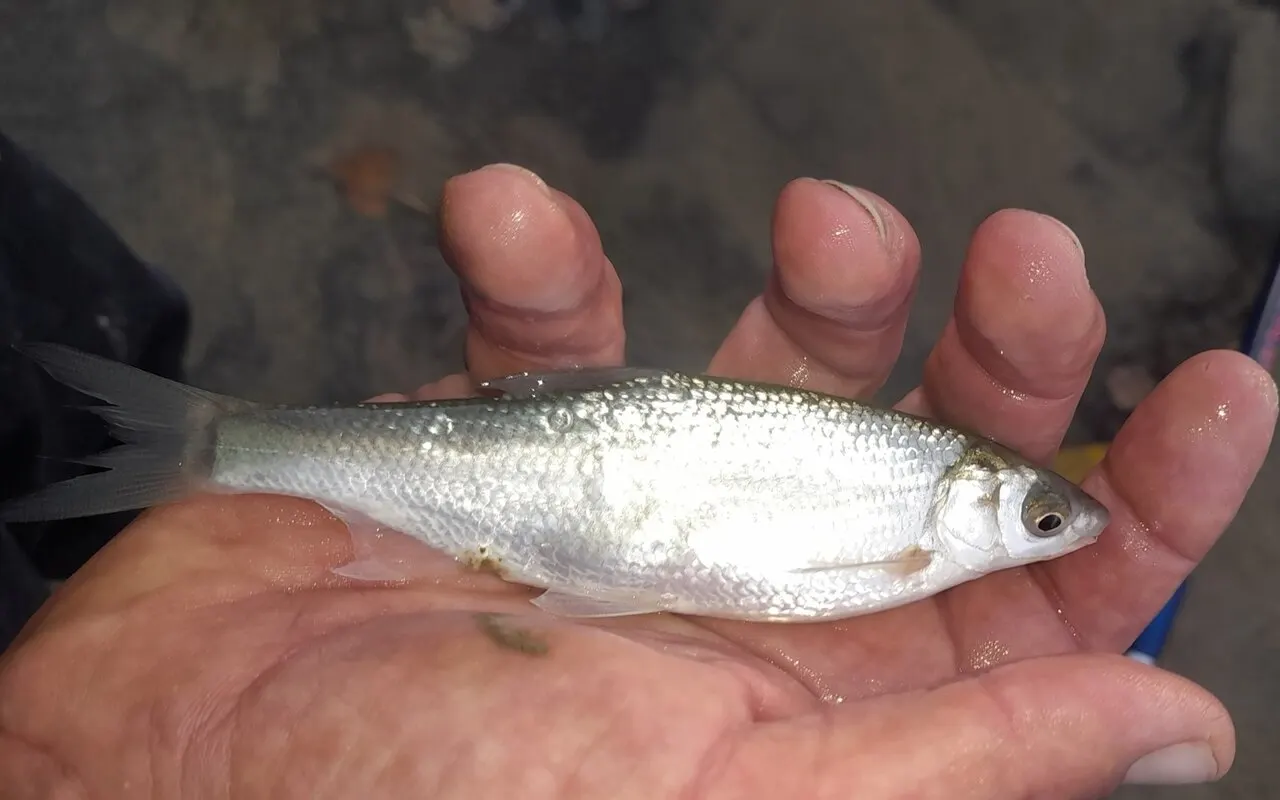
It's a deep-bodied, elongated fish of the leuciscid (minnow-like) family that can reach 45 cm. The mouth is straight, with a thick horny lower lip that gives the genus its name (from Greek words for cartilage and mouth). It has 54 to 62 scales along the lateral line and no broad dark stripe along its flank.
Where it lives
The species is native to the Adriatic basin in Italy and Slovenia, and also occurs in Switzerland. It lives in lakes and in the lower and middle reaches of rivers with moderate current, in deep water over gravel. Lakes where it has declined include Como, Lugano, Maggiore, Iseo and Garda. Populations descended from fish introduced to other Italian lakes appear to be doing well. The IUCN lists the estimated extent of occurrence at about 150,635 square km.
Pins are Wikidata “endemic to” fields. Orange dots, when present, are GBIF occurrence tiles — survey bias included.
How it lives
Italian nase are gregarious, feeding on invertebrates and plants. In April and May, large groups migrate up smaller tributaries to spawn. The IUCN classes it as a full migrant that gathers in groups year-round, with a generation length of about 6 years. Its low resilience means a depleted stock needs 4.5 to 14 years to double.
Why it is in trouble
The IUCN estimates the population fell by about 80 percent in the past, with a further 30 percent projected, and records the trend as decreasing. Listed pressures include small and large dams (which can block spawning migrations), water abstraction, sedimentation, pesticides, nutrient and sewage pollution, drought, and introduced species. Predation and competition from non-native roach, wels catfish and common nase have also reportedly been named as threats.
A 2024 study in the Journal of Limnology synthesised about 30 years of fish surveys in the upper Po basin, 1988 to 2019, and described the species as in a very critical situation, with very few remaining populations. The wels catfish and oriental weatherloach expanded sharply over the same period.
What is being done
According to the IUCN, a recovery plan exists, conservation sites have been identified over part of the range, the fish occurs in at least one protected area, and invasive species control is in place. There's no systematic monitoring scheme and no captive breeding programme.
Sources
Written for this catalog in our own words from the sources below, checked against them on 12 November 2026. Population figures are estimates and carry the year they were made. Status and assessment year: IUCN. 2026. The IUCN Red List of Threatened Species. Version 2026-1. iucnredlist.org.