Endangered
Santa Marta white-fronted capuchin
Cebus malitiosus
The Santa Marta white-fronted capuchin (Cebus malitiosus) is a medium-sized monkey of northern Colombia, living in forests near the base of the Sierra Nevada de Santa Marta. The IUCN Red List, which treats it as a full species, assessed it as Endangered in 2020. Whether it is a separate species at all is disputed.
How to recognise it
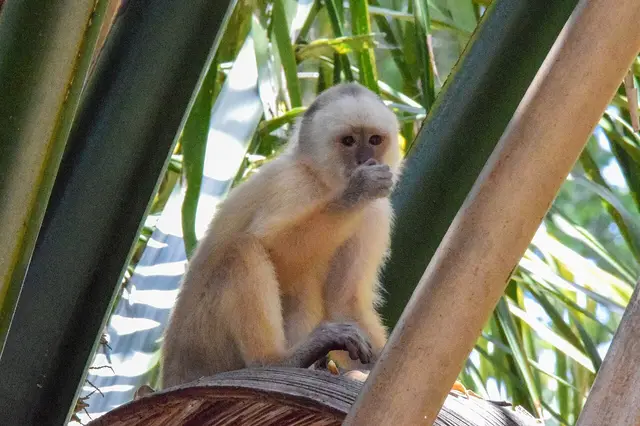
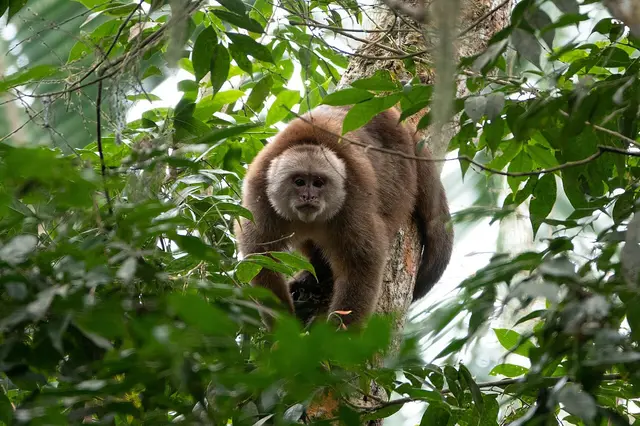
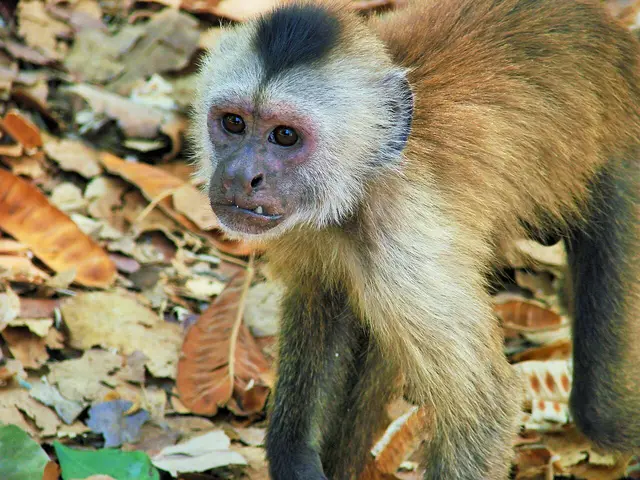
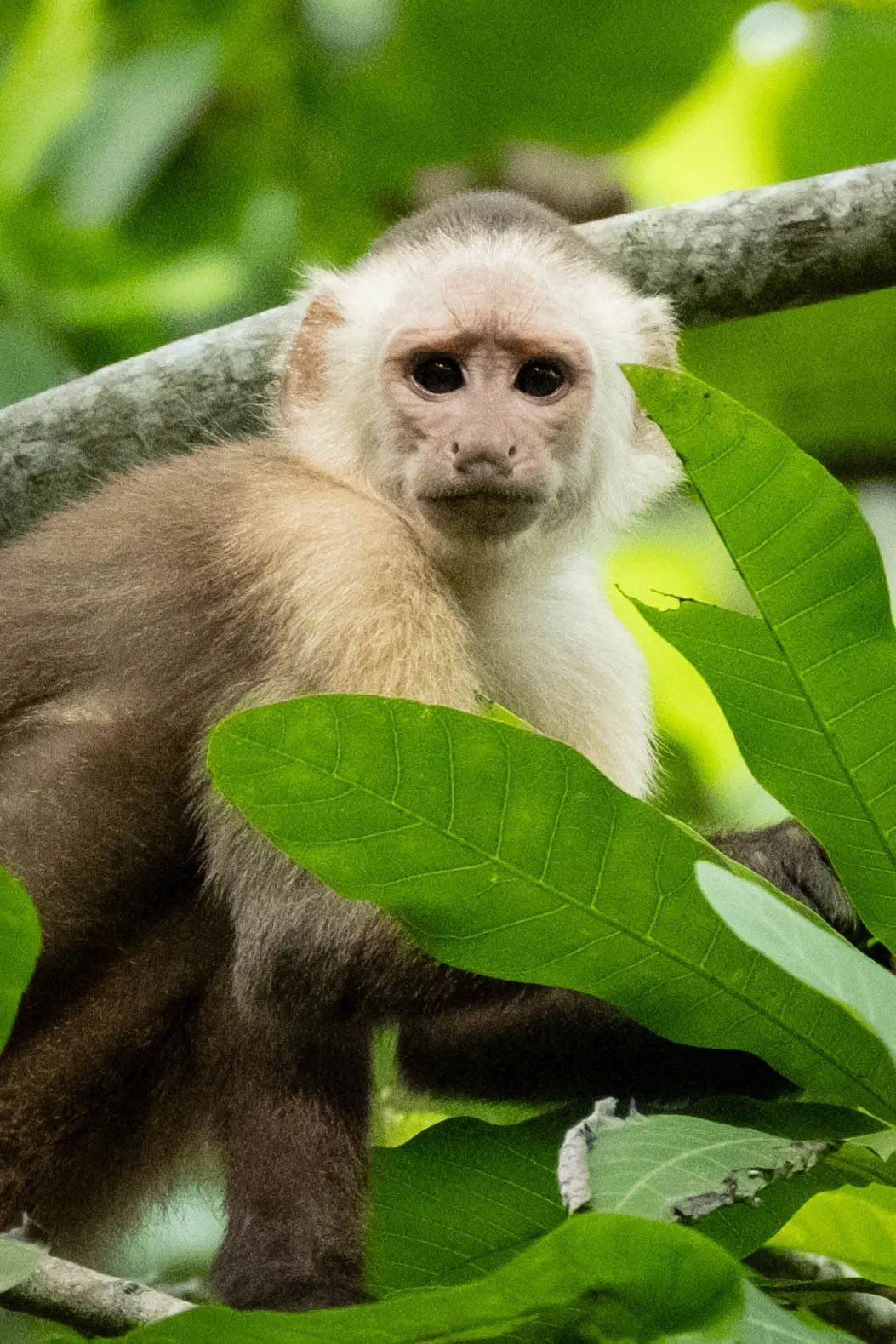
A slender monkey with long limbs and a semi-prehensile tail. Only adult males have been measured, at about 45.7 cm from head to rump with a tail of about 43.3 cm. The body is dark brown, with light yellow shoulders and sides of the head and a paler, ochre to cinnamon underside. The face is bare and flesh-coloured.
Is it a separate species?
Daniel Giraud Elliot named it in 1909. Later authors treated it as a subspecies of the white-fronted capuchin (Cebus albifrons) or as a synonym of the white-faced capuchin (Cebus capucinus). Mittermeier and Rylands raised it to species level in 2013, and the IUCN Red List assesses it as Cebus malitiosus on that basis.
Not everyone agrees. The Mammal Diversity Database lists malitiosus as a synonym and keeps it tentatively within Cebus albifrons, citing limited data and a need to revise capuchin taxonomy. A 2010 genetic study in Molecular Phylogenetics and Evolution found it to be one of three distinct genetic groups of white-fronted capuchins in northern Colombia. A 2019 mitogenome study in Mitochondrial DNA Part A concluded that malitiosus and the neighbouring hypoleucus are the same taxon, Cebus albifrons hypoleucus, and that the population is heavily hybridised with white-faced capuchins. The question is not settled.
Where it lives
The species occurs only in Colombia, in forests near the northwest base of the Sierra Nevada de Santa Marta. The IUCN records it in tropical moist lowland forest, dry forest and moist montane forest, from sea level to about 1,300 m, and describes its population as severely fragmented. Parts of its range lie in Sierra Nevada de Santa Marta National Natural Park and, reportedly, Tayrona National Natural Park.
Pins are Wikidata “endemic to” fields. Orange dots, when present, are GBIF occurrence tiles — survey bias included.
How it lives
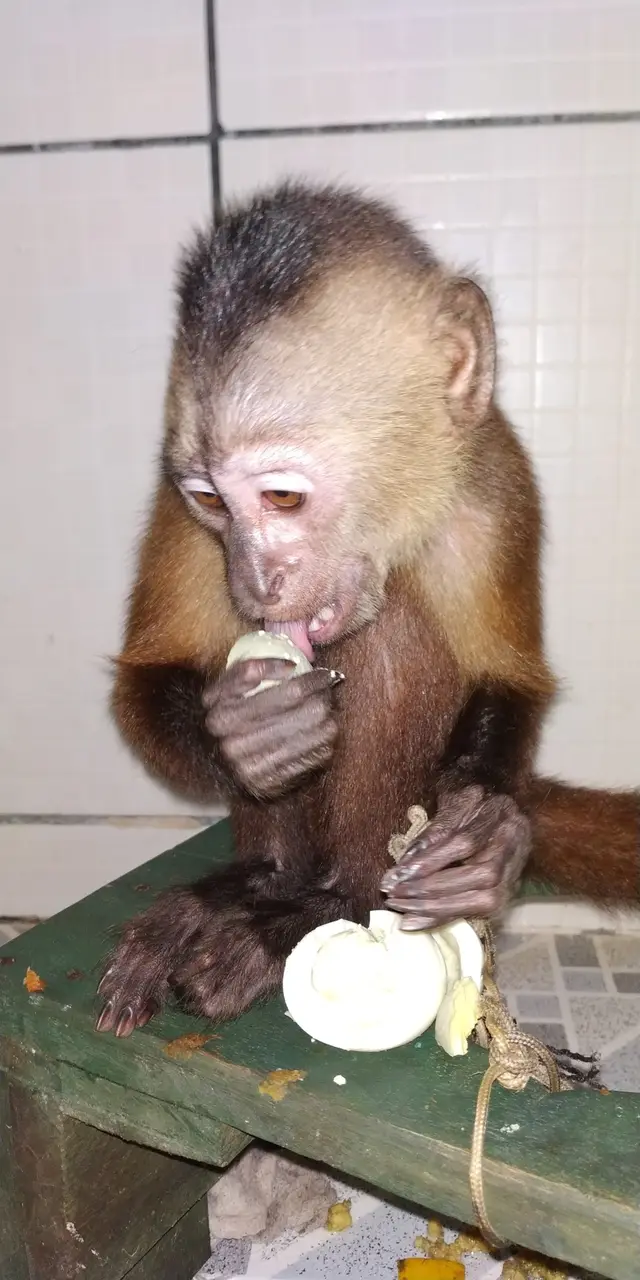
Very little fieldwork has been published on this monkey, and much of what is said about it is inferred from other white-fronted capuchins. It is presumed to be an omnivore eating fruit, seeds, flowers, young leaves, insects and larvae, and eggs. Adult males tolerate each other within a group, females are thought to stay in the group where they were born for life, and males leave at maturity to join or form another.
Why it is in trouble
The IUCN lists agro-industrial farming as an ongoing threat, and cattle ranching and oil palm are named as drivers of forest loss in the region. Area of occupancy, extent of occurrence and habitat quality are all recorded as still declining. The assessment infers a population reduction of about 50 percent over three generations (generation length is put at 16 years), based on habitat decline and levels of exploitation.
Hunting for food and capture for the pet trade are listed as uses, and the pet trade may become a pressing threat where tourism is common. Crop raiding by the monkeys also brings conflict with farmers.
What is being done
The species occurs in at least one protected area, and the IUCN lists site and area management as a conservation action. In 2020 the Mohamed bin Zayed Species Conservation Fund gave $12,000 to the Asociación Primatológica Colombiana for community-based monitoring with camera traps and surveys, workshops on crop-raiding prevention, DNA studies, and training in biodiversity-friendly livelihoods.
Sources
Written for this catalog in our own words from the sources below, checked against them on 12 November 2026. Population figures are estimates and carry the year they were made. Status and assessment year: IUCN. 2026. The IUCN Red List of Threatened Species. Version 2026-1. iucnredlist.org.
- IUCN Red List assessment, Cebus malitiosus (2020)
- Wikipedia, Santa Marta white-fronted capuchin
- New England Primate Conservancy, Santa Marta white-fronted capuchin
- Mammal Diversity Database, Cebus albifrons
- Ruiz-Garcia et al. 2019, Mitochondrial DNA Part A 30(3)
- Ruiz-Garcia et al. 2010, Molecular Phylogenetics and Evolution 57(3)
- Mohamed bin Zayed Species Conservation Fund, Santa Marta white-fronted capuchin grant