Critically Endangered
Canariella jandiaensis
Canariella jandiaensis
Canariella jandiaensis is a small land snail found only in the mountains of the Jandía Peninsula, in the south of Fuerteventura in the Canary Islands. It was described in 2006. The IUCN Red List rates it Critically Endangered (assessed 2025), with a single location and an area of occupancy of just 8 square kilometres.
How to recognise it
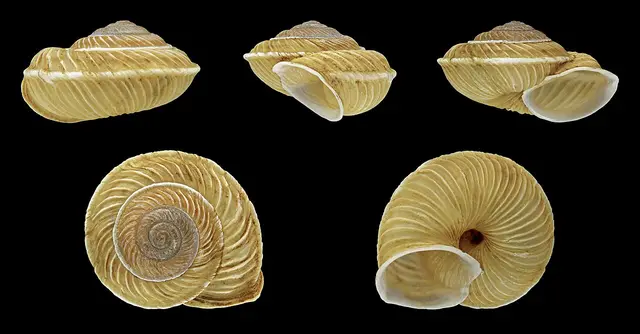
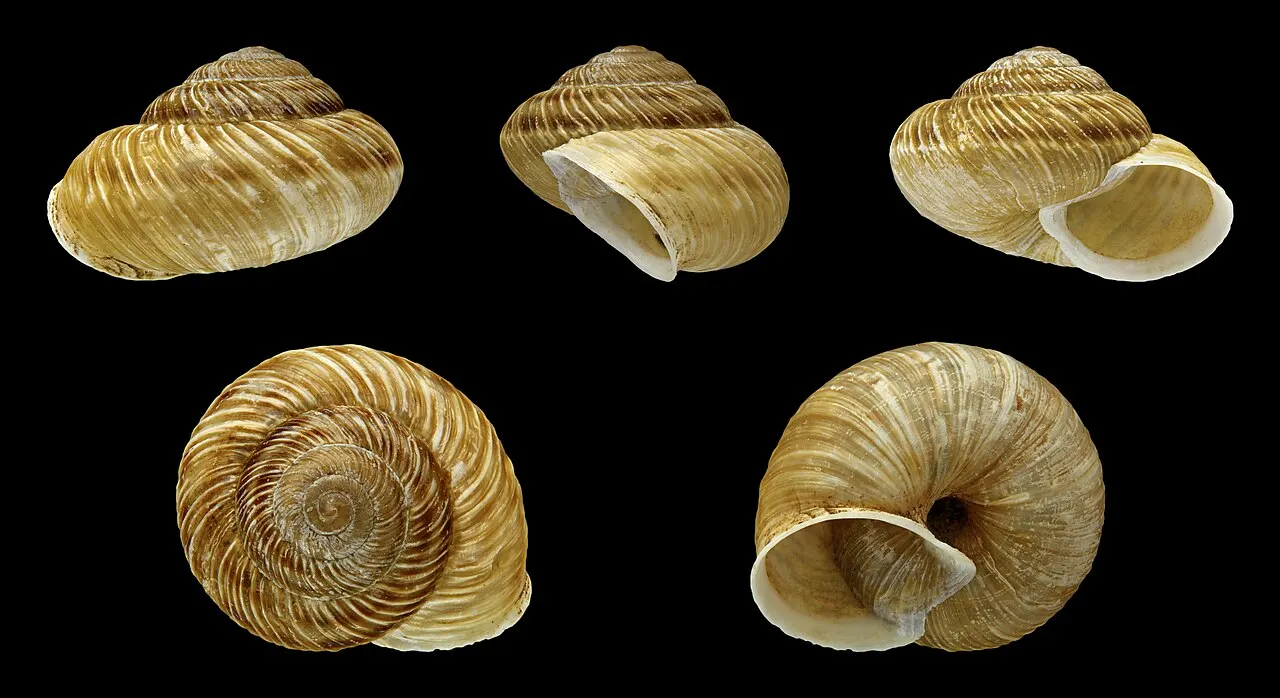
The shell is nearly round and has no keel, the ridge that runs around the edge of some relatives. Compared with its closest relative, Canariella eutropis, it is a little smaller but taller, and it carries more radial ribs that are less rough. Neither species has hairs on the shell.
Together the two form the subgenus Majorata, described in the same 2006 paper. The describers also told them apart by the internal structure of the penis.
Where it lives
The species is known only from the Jandía mountains, in the south of Fuerteventura. The Red List records one location between about 550 and 807 metres above sea level, with rocky ground and Mediterranean-type shrubland as its habitats, and puts its area of occupancy at 8 square kilometres. The original description gave a smaller figure, under one square kilometre.
It lives on the ground rather than on rock faces. A 2007 paper in the Journal of Conchology notes that it shares these mountains with a rock-dwelling snail, Napaeus lichenicola, which hides among lichens on open rock exposed to humid trade winds. The two are not thought to compete.
Pins are Wikidata “endemic to” fields. Orange dots, when present, are GBIF occurrence tiles — survey bias included.
Why it is in trouble
The 2006 describers recommended a Critically Endangered listing because of the tiny range and the large numbers of free-range livestock, mainly goats. In their view, grazing goats were damaging habitat across the whole of the Jandía mountains. They also pointed out that the range of the subgenus has been shrinking for about 30,000 years.
The Red List assessment names recreation, tourism and drought among the pressures, and records a continuing decline in the area where the snail lives. The 2007 paper on its neighbour said tourism has a significant effect across the whole zone.
What is being done
The describers called for strict livestock control as the main measure. According to the 2007 paper, the Jandía Natural Park lies within a site proposed as a Special Area of Conservation under the European Natura 2000 network (code ES7010033).
The Red List assessment records site protection and invasive species control as actions, with 91 to 100 percent of the population inside protected areas. It also records no recovery plan and no systematic monitoring scheme.
Sources
Written for this catalog in our own words from the sources below, checked against them on 12 November 2026. Population figures are estimates and carry the year they were made. Status and assessment year: IUCN. 2026. The IUCN Red List of Threatened Species. Version 2026-1. iucnredlist.org.