Endangered
Canariella eutropis
Canariella eutropis
Canariella eutropis is a medium-sized land snail found only in the Jandia mountains of southern Fuerteventura, in Spain's Canary Islands. The IUCN Red List assessed it as Endangered in 2025. Its living range is only about 11 to 24 square kilometres of high ridges and north-facing cliffs, much smaller than it once was.
How to recognise it
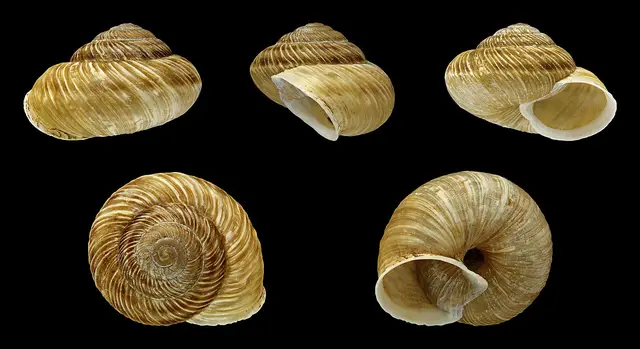
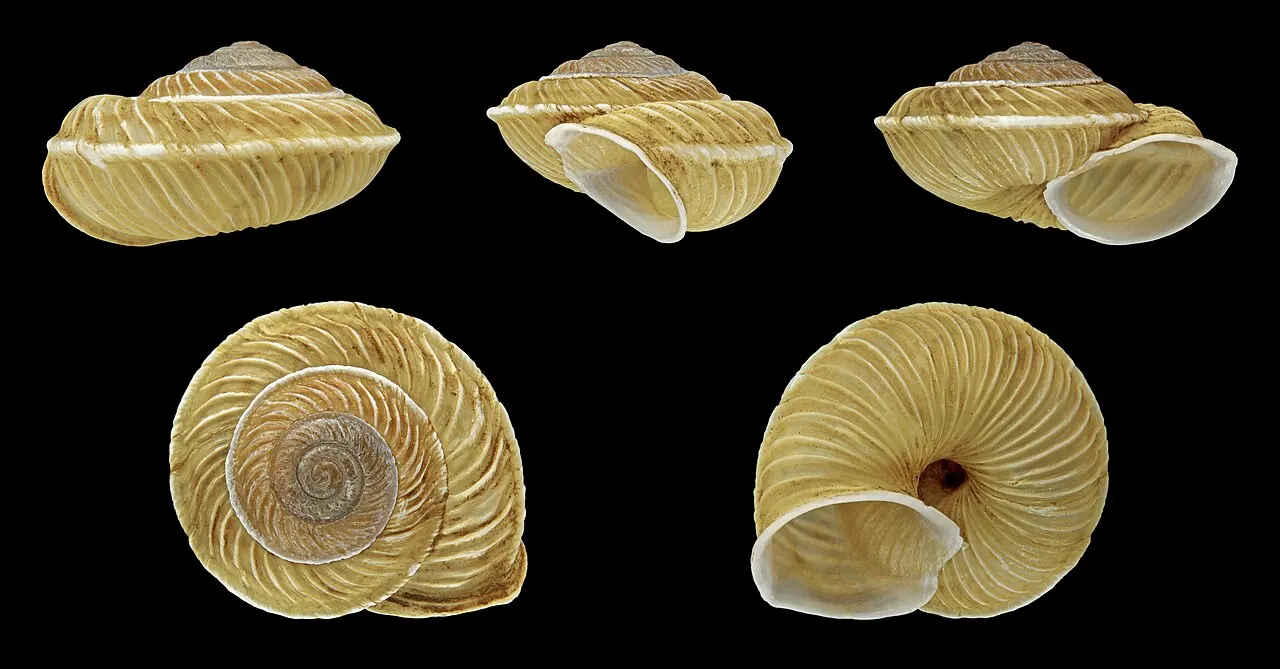
The shell is brown and dull, with a flattened, keeled outline: flat on top and rounded below, with a large umbilicus and about five whorls. Strong, widely spaced radial ribs run across it. The Spanish inventory of threatened invertebrates gives its size as 14 to 17 mm. The species was described in the early 1860s as Helix eutropis and now sits in the family Canariellidae.
Where it lives
Living animals are confined to the Jandia massif at the southern end of Fuerteventura, between roughly 300 and 800 m. They live mostly on the summits and on nearly inaccessible north-facing cliffs, among the remains of an old warm-climate forest. The IUCN names shrubland and rocky areas as its habitats and counts two locations.
A desert belt of dunes across the isthmus of La Pared isolates these mountain snails from the rest of the island. Area estimates vary. The IUCN gives an occupied area of 24 square kilometres, while the Spanish atlas, using a 2006 survey, gave about 11 square kilometres.
Pins are Wikidata “endemic to” fields. Orange dots, when present, are GBIF occurrence tiles — survey bias included.
Why it is in trouble
Empty shells show how much has been lost. Fossil and sub-fossil shells about 30,000 years old turn up on lower ground, and the snail's range may once have covered at least 50 square kilometres, down to 40 m. The 2006 atlas puts the early shrinkage down to climate change since the last glaciation, with human activity added over the past 500 years.
Today the IUCN scores increased fire frequency as a high-impact, ongoing threat. Goats, which graze freely over the peninsula, are listed as a low-impact ongoing threat, and tourism and recreation areas as a low-impact future one. Road building is a negligible future concern. The assessment (criteria B1ab(iii)+2ab(iii)) records continuing decline in area, with population trend unknown.
What is being done
The IUCN reports that all of the known population lies within protected areas. The assessment lists site protection and control of invasive species, and calls for research on habitat trends and population size. The 2006 atlas, by contrast, recorded no legal protection or conservation measures, and recommended a strict nature reserve for the Jandia ridge with tight control of livestock and tourism.
Sources
Written for this catalog in our own words from the sources below, checked against them on 12 November 2026. Population figures are estimates and carry the year they were made. Status and assessment year: IUCN. 2026. The IUCN Red List of Threatened Species. Version 2026-1. iucnredlist.org.