Critically Endangered
African wedgefish
Rhynchobatus luebberti
The African wedgefish (Rhynchobatus luebberti) is a shark-like ray of the shallow seas off West Africa, the only wedgefish found in the Atlantic. Adults are usually around 1.5 m long. The IUCN rated it Critically Endangered in 2019 after heavy fishing, driven largely by the value of fins.
How to recognise it
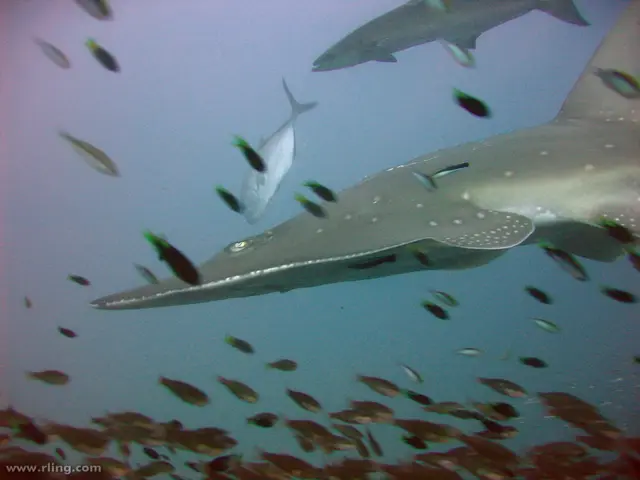
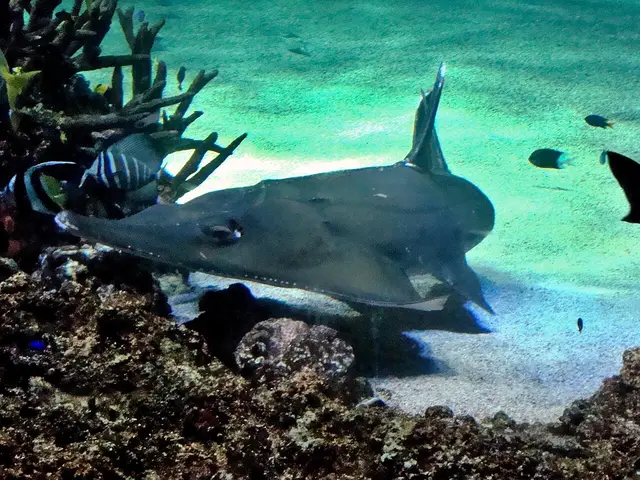
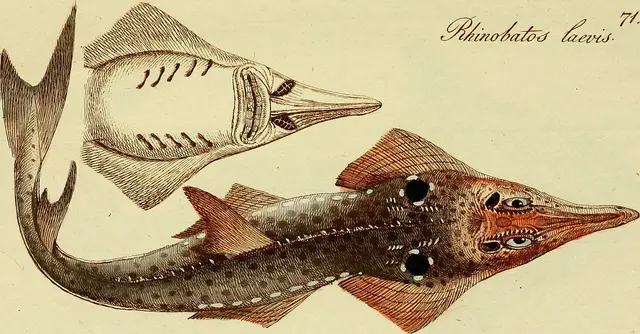
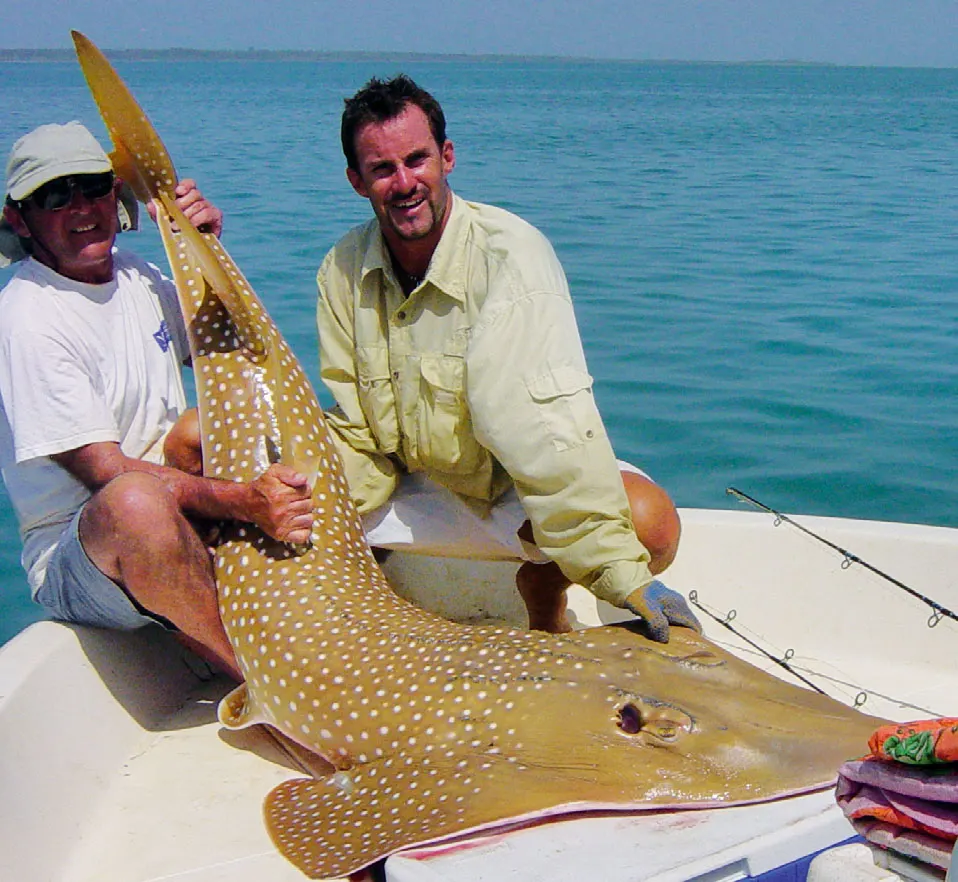
Wedgefish look like a cross between a shark and a ray, with a flattened body, a triangular snout and a shark-style tail. This one is pale olive-brown or grey, scattered with white spots that run all the way to the tail. Young fish have faint dark bars between the eyes, and two large dark blotches on the shoulders fade with age. Paired rows of thorns run along the snout.
Adults are commonly about 1.5 m long, and the maximum recorded is around 3 m. It is named for Hans Julius Lübbert, a German fisheries inspector.
Where it lives
It lives in the eastern Atlantic along the West African coast. The IUCN lists 19 countries, from Mauritania and Senegal in the north to Angola in the south. It is a bottom-dwelling fish of shallow water, from the surface down to about 35 m, over sand, sandy mud and mud, and it also uses estuaries and coral reefs.
Pins are Wikidata “endemic to” fields. Orange dots, when present, are GBIF occurrence tiles — survey bias included.
How it lives
It eats small bony fish and invertebrates. Females give birth to live young, two to five pups per litter, each about 79 to 85 cm long at birth. Embryos first feed on yolk, then take in nourishment from fluid in the mother's uterus.
Size at maturity is not known. The IUCN uses a generation length of 15 years, and FishBase rates the species' resilience to fishing as low, so losses are slow to recover.
Why it is in trouble
Fishing is the threat. Wedgefish are caught on purpose and as bycatch, using nets, trawls and longlines in the same shallow coastal waters the animals live in. A 2019 Wildlife Conservation Society identification guide says wedgefish and giant guitarfish are kept mainly for their fins, while the meat is often eaten locally. Their dried fins can sell for up to US$964 per kg in Hong Kong.
The IUCN assessment estimates a past population reduction of about 80%, based on levels of exploitation. The same guide says the species has already disappeared from much of its former range.
What is being done
The African wedgefish is listed on CITES Appendix II, which means international trade needs permits. The IUCN's 2019 assessment found no recovery plan, monitoring scheme or harvest management plan in place, though it recorded the species in at least one protected area. It lists harvest and trade management, species recovery and awareness work among the actions needed.
Sources
Written for this catalog in our own words from the sources below, checked against them on 12 November 2026. Population figures are estimates and carry the year they were made. Status and assessment year: IUCN. 2026. The IUCN Red List of Threatened Species. Version 2026-1. iucnredlist.org.