Iran
3 catalog pins
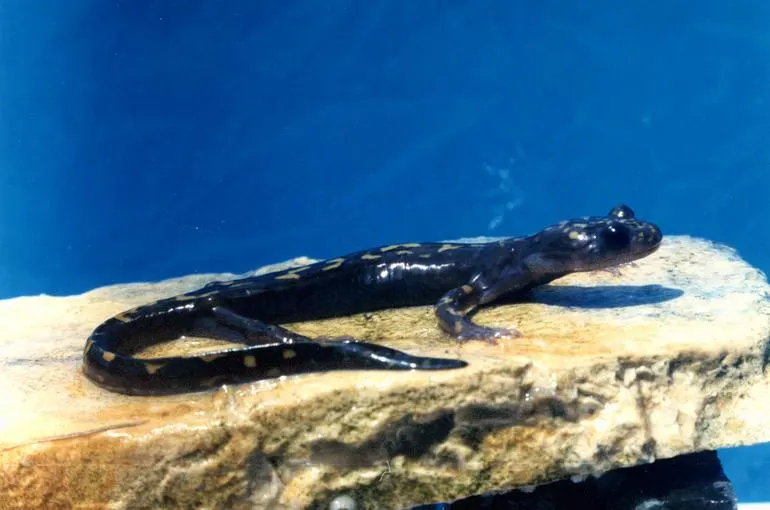
3 animals in this catalog carry a structured country pin for Iran. That is a filing fact, not a claim that the crisis is only here.
The photograph is one of those animals: Gorgan salamander. Open a dossier for the text, the status, and the map. Use the world map to jump to another country. Confirm official distributions on the Red List.
Iran is a large, mountainous country where several biogeographic regions meet. Most of it lies in the Palearctic realm, with African influence in the southwest and Indo-Malayan influence in the southeast. Its coasts border both the Caspian Sea and the Persian Gulf, and its forests include the Caspian (Hyrcanian) forests of the north.
Iran's CBD profile reports about 8,200 plant species, roughly 1,900 of them endemic, along with over 500 bird species and about 160 mammals. Persian Gulf, Caspian and inland waters add around 1,035 fish species.
Where the pressure comes from
The CBD profile cites desertification, soil erosion, overgrazing, overexploitation including overfishing, and pollution of coastal habitats and water by oil, industry and agriculture. A general wildlife overview adds that some large development projects were approved without studying their impact on wildlife habitat, and that leopards are sparse because of habitat loss, prey loss and fragmentation.
The Hyrcanian forests cover about 55,100 square kilometres along the southern Caspian coast and northern Alborz slopes (plus part of Azerbaijan), and roughly half of that habitat has been lost. Causes include conversion to tea and other plantations, unsustainable forestry, poaching and urban growth. The box tree moth and box blight have caused heavy dieback of the endemic Hyrcanian boxwood.
What is being done
The Hyrcanian forests were listed as a UNESCO World Heritage Site on 5 July 2019, covering 129,485 hectares plus a buffer zone, and the listing was extended in September 2023 to include forest in Azerbaijan. About 10.3% of the wider forest region is protected. Iran has been a party to the Convention on Biological Diversity since 1996, produced its first national strategy in 2003 and has begun updating it. The profile says the current plan calls for strengthening the protected-area network but gives no area figure.
Reading the catalog for Iran
Iran has three records in the catalog: an amphibian, a lizard and a butterfly. The amphibian, Paradactylodon gorganensis, is listed as Critically Endangered, and the lizard and butterfly as Endangered. Three records is a small sample, so it is no guide to the full number of Iranian animals at risk.
Sources for this section
- Iran country profile, CBD: realms, plant and animal counts, endemism, threats, CBD dates, strategy 2003, protected-area plan
- Hyrcanian forests, Wikipedia: extent, habitat loss, threats, UNESCO 2019 and 2023, protected share
- Wildlife of Iran, Wikipedia: development projects without impact studies, leopard decline
What the catalog records for Iran
The catalog has 3 animals with a country pin for Iran: 1 Critically Endangered and 2 Endangered. By GBIF class the largest groups are Amphibia (1), Squamata (1), Insecta (1). The families with the most records are Hynobiidae (1), Lacertidae (1), Nymphalidae (1). A pin means a structured source (Wikidata or a GBIF match) places the animal in Iran; it does not say the animal lives only there.
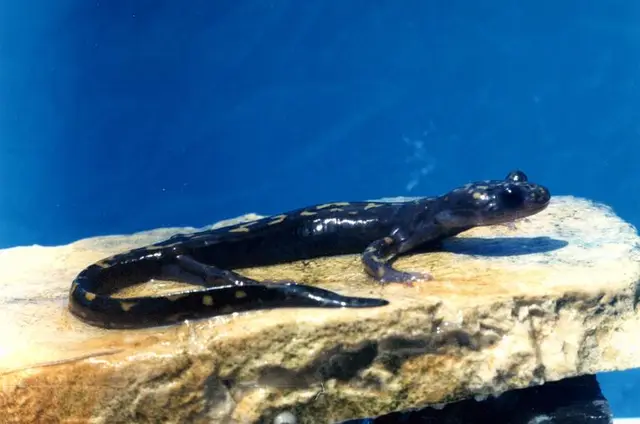 CR
Gorgan salamander
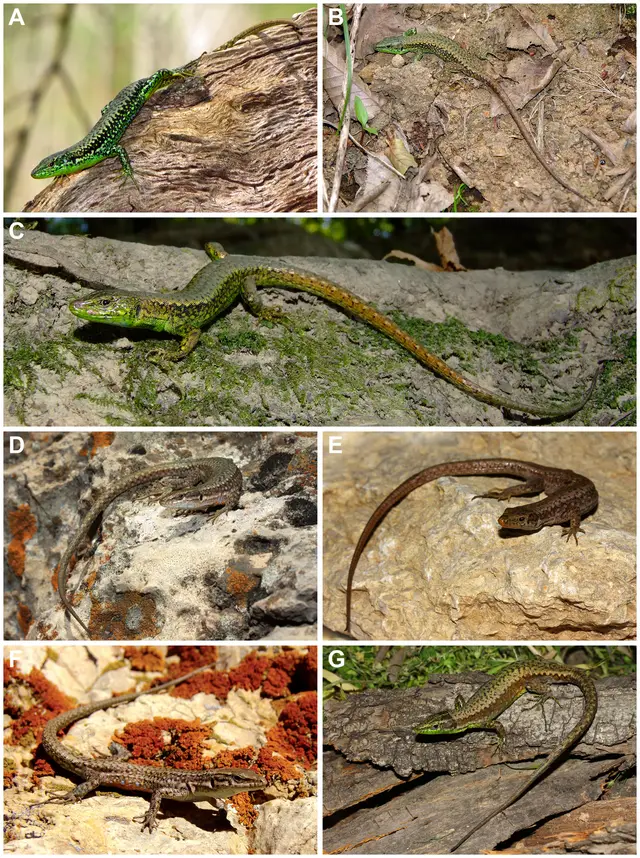 EN
Darevskia kopetdaghica
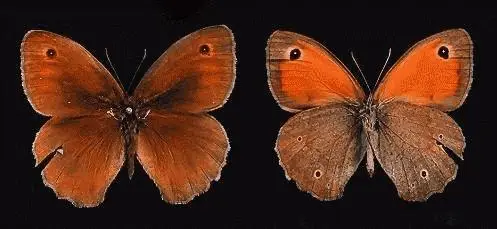 EN
Thomson's Meadow Brown
Total pins: 3.
Quick answers
- Do all these animals live only in Iran?
- No. A pin means a Wikidata place field resolved here. Official ranges can be wider.
- Is this a government list?
- No. It is a slice of this catalog.